
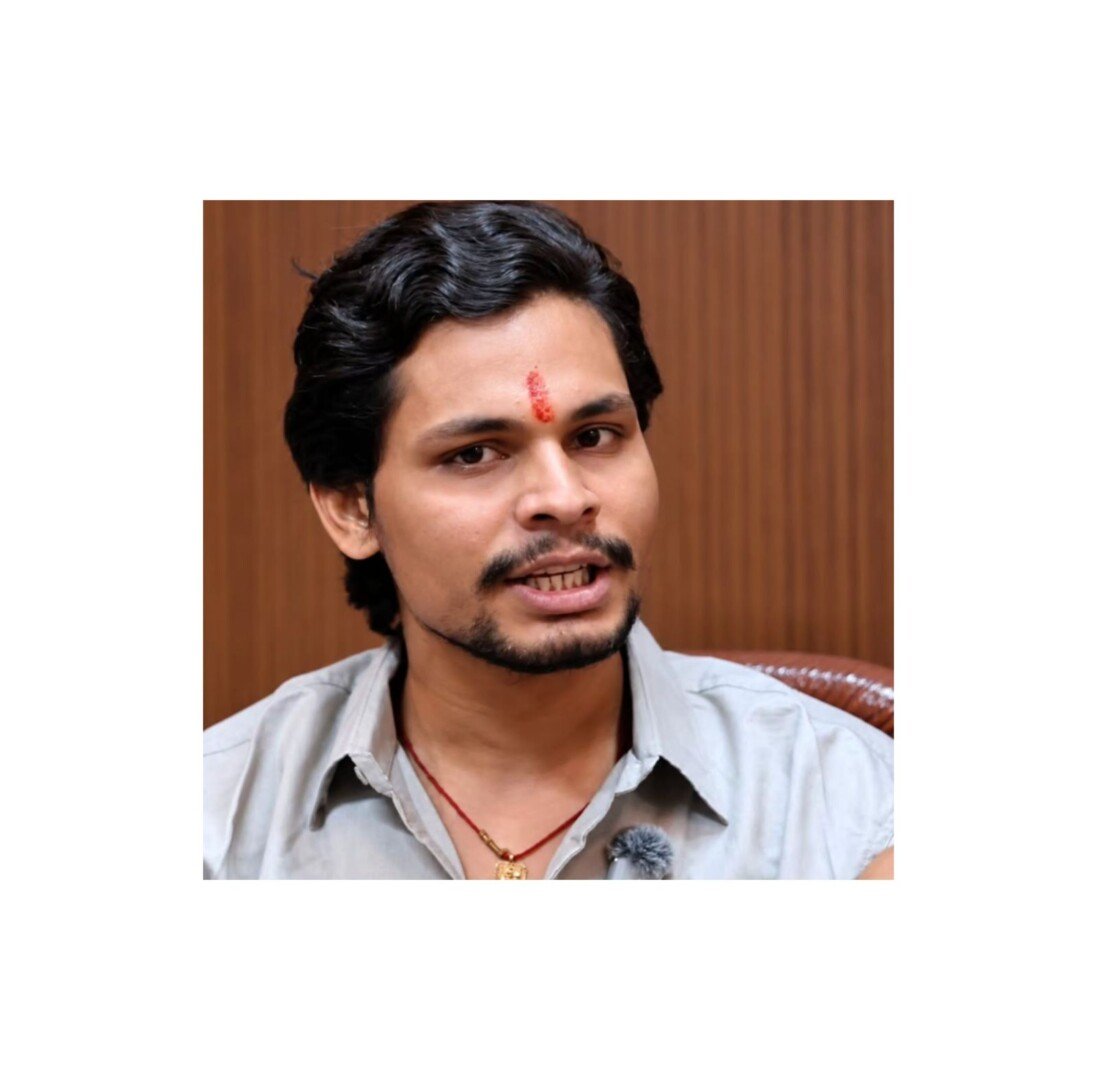
“I Cracked His Skull”: Influencer Swatantra Bhardwaj Remanded to 14-Day Judicial Custody Over Jantar Mantar Assault
(By Syed Ali Taher Abedi)
New Delhi, September 7, 2026-In a case that has come to embody the intersection of social media bravado, caste-based violence, and the criminal accountability that the law demands regardless of political affiliation or online following, a Delhi court on Monday remanded right-wing social media influencer Swatantra Bhardwaj to judicial custody for fourteen days the consequence of an arrest that was itself precipitated, in no small measure, by the accused’s own public boasting about the very offence for which he now faces criminal proceedings.
Additional Sessions Judge Saurabh Partap Singh Laler of the Patiala House Courts passed the remand order after Bhardwaj was produced before him through video conference following his arrest from Uttar Pradesh on September 5 nearly two months after the alleged assault that gave rise to the criminal case.
The Background: Violence at the Margins of a National Protest
The case against Bhardwaj arises from the Cockroach Janta Party protests at Jantar Mantar in New Delhi the student-led movement that had, across July 2026, focused national attention on the NEET-UG examination paper leak, demanded accountability from the Union Education Ministry, and drawn to the streets tens of thousands of young Indians whose faith in the integrity of India’s examination system had been shattered by successive institutional failures.
Among those who attended the Jantar Mantar protests was a young Dalit student-activist who had found in the CJP movement a platform to articulate her generation’s legitimate demands for fair and transparent examinations.
Her father accompanied her as a parent’s protective instinct often compels when children place themselves in the charged atmosphere of a public political demonstration.
It is the father a Dalit man who had done nothing more than accompany his daughter to a lawful public protest who allegedly became the target of an assault by Bhardwaj.
The Initial Booking and the Self-Incriminating Social Media Post
Bhardwaj was initially booked for offences under Section 115(2) of the Bharatiya Nyaya Sanhita causing simple hurt and Section 126(2) wrongful restraint. These are comparatively minor penal provisions whose invocation, standing alone, would have resulted in limited criminal exposure.
What transformed the legal landscape of this case beyond recognition was not the subsequent police investigation but the accused’s own conduct on social media in the aftermath of the alleged assault.
Bhardwaj took to social media and publicly claimed that he had cracked the skull of the girl’s father a self-description of the alleged violence that went considerably beyond anything that the initial FIR had attributed to him, and that constituted, in effect, a public admission of aggravated conduct.
He further claimed that he had been detained by police for only a few hours framing his brief detention as evidence of institutional indulgence, and his release as confirmation that those in authority regarded his conduct as acceptable.
He additionally claimed proximity to NDA leaders Kapil Mishra and Chirag Paswan an assertion of political protection that was swiftly and specifically denied by Union Minister Chirag Paswan, who not only repudiated any association with Bhardwaj but filed a separate complaint against him for the misuse of his name.
The social media conduct the boast about cracking a skull, the claim of political protection from named leaders, and the casual dismissal of the criminal process as a temporary inconvenience provoked precisely the institutional response that the accused had apparently not anticipated.
The Escalation: SC/ST Act and POCSO Added After Protests at Parliament Street
Following Bhardwaj’s social media posts, Cockroach Janta Party leaders accompanied by the Dalit student-activist and her father, the alleged victim of the assault staged a protest at the Parliament Street Police Station demanding that the serious charges the influencer’s own account of events appeared to justify be formally reflected in the FIR.
The protest at the police station produced a consequential institutional response. More serious charges were added to the booking bringing the case within the ambit of two of India’s most stringent statutory frameworks.
Bhardwaj has now been booked under the Scheduled Castes and Scheduled Tribes (Prevention of Atrocities) Act the legislation specifically enacted to address caste-based violence and discrimination directed at members of the most vulnerable communities, and which prescribes enhanced punishment and restricts the grant of anticipatory bail to accused persons.
He has also been booked under the Protection of Children from Sexual Offences Act a provision whose precise application to the facts of this case will be examined by the court as the investigation develops.
The addition of SC/ST Act charges is constitutionally and legally significant in a manner that extends beyond the quantum of punishment it attracts.
The SC/ST (Prevention of Atrocities) Act represents Parliament’s recognition that violence directed at Dalit citizens carries a dimension of systemic harm the perpetuation of caste-based subjugation through targeted violence that the ordinary provisions of the penal code do not adequately address.
An attack on a Dalit man attending a lawful public demonstration, if established as motivated by or connected to his caste identity, falls squarely within the social evil that the Act was enacted to combat.
The Arrest: Two Months Later, From Uttar Pradesh
The arrest of Swatantra Bhardwaj on September 5 approximately two months after the alleged assault at Jantar Mantar came from Uttar Pradesh, where he had been located by Delhi Police.
The interval between the alleged offence and the arrest is a detail that the court will examine in the context of bail and one whose explanation will form part of the police’s response to any future bail application.
A period of two months between an alleged assault and an arrest, in a case where the accused was not merely identifiable but publicly boasting about the alleged offence on social media, raises questions about the diligence and urgency with which the initial investigation was pursued.
The subsequent escalation of charges from simple hurt to SC/ST Act and POCSO offences following the victim’s protest at the police station suggests that the initial response to the complaint may have been inadequate to the gravity of the alleged conduct, and that institutional pressure was required before the full weight of the applicable statutory framework was brought to bear on the case.
The Remand Hearing: Video Conference and Judicial Custody
Bhardwaj was produced before Additional Sessions Judge Saurabh Partap Singh Laler through video conference on Monday a procedural modality that the Delhi courts have normalised across the post-pandemic landscape of criminal proceedings, but whose deployment in a high-profile remand hearing of this character is worth noting for its institutional ordinariness.
The court committed Bhardwaj to judicial custody for fourteen days a standard remand period that places him under the authority of the jail administration rather than police custody, and that will enable the investigation to proceed without the accused having direct access to potential witnesses, electronic devices, or other materials that might be relevant to the probe.
Judicial custody is a constitutionally significant status. It transfers the physical custody of the accused from the police whose interest in custodial access is investigative to the court whose interest is the orderly conduct of the criminal process, including the protection of the accused’s constitutional rights under Articles 21 and 22.
The Habeas Corpus: Bhardwaj Challenges His Arrest at the Delhi High Court
In a parallel legal development that reflects the accused’s immediate resort to the constitutional courts, Bhardwaj has approached the Delhi High Court by way of a habeas corpus petition alleging that his arrest was illegal and seeking his release on that ground.
The habeas corpus petitions the ancient common law writ preserved in India’s constitutional framework under Article 226 and Article 32 is the most direct available constitutional challenge to an illegal detention.
If the High Court finds that the arrest was made without following the mandatory procedural safeguards prescribed by the Supreme Court in DK Basu, or that the escalation of charges was without legal authority, it may direct Bhardwaj’s release.
If, on the other hand, the court is satisfied that the arrest was legally conducted and the charges properly added, the habeas corpus petition will fail and Bhardwaj will remain in judicial custody pending the investigation’s completion and any subsequent bail application.
The Broader Context: Accountability Without Distinction
The case of Swatantra Bhardwaj sits within the broader judicial and political landscape of the Cockroach Janta Party protest movement a movement born of legitimate student grievances about examination integrity that attracted, at its edges, both those who sought to disrupt it and those who sought to exploit its visibility for political ends.
The Supreme Court of India, in its ongoing supervision of the protest-related matters, has made plain that accountability for violence connected to the protests runs in both directions that those who committed acts of violence against protesters, and those who committed acts of violence against police and property, must each face the law’s processes without institutional favour.
The remand of Swatantra Bhardwaj a self-described right-wing influencer who publicly celebrated an alleged assault on a Dalit man attending a lawful protest and claimed political connections as protection against consequences to fourteen days of judicial custody is a concrete illustration of that principle.
The law has not been deterred by the size of his social media following, the political proximity he claimed, or the brevity of his initial detention.
The Additional Sessions Judge has spoken. Judicial custody for fourteen days. The investigation proceeds. The Delhi High Court will hear the habeas corpus petition. And the case that began with a boast on social media now moves, methodically and without deference to platform or political connection, through the machinery of the criminal law.


