All India Bar Association Urges PM to Address Safety Concerns of Retired Judicial Members
(Judicial Quest News Network)
New Delhi,13, May,2026-A formal letter addressed to Prime Minister Narendra Modi has placed before the highest executive office in the country a question that strikes at the very foundation of judicial independence who protects the men and women who protect the Constitution, once they have laid down their robes and returned to private life?
The Occasion: Commending a Reform, Pressing for Another
The letter opens by acknowledging and commending a significant structural reform recently enacted by the Central Government the expansion of the sanctioned strength of judges of the Supreme Court of India from 34 to 38. This increase, the author submits, reflects a commendable executive commitment to strengthening the justice delivery system and addressing the mounting backlog of cases that has long burdened India’s higher judiciary.
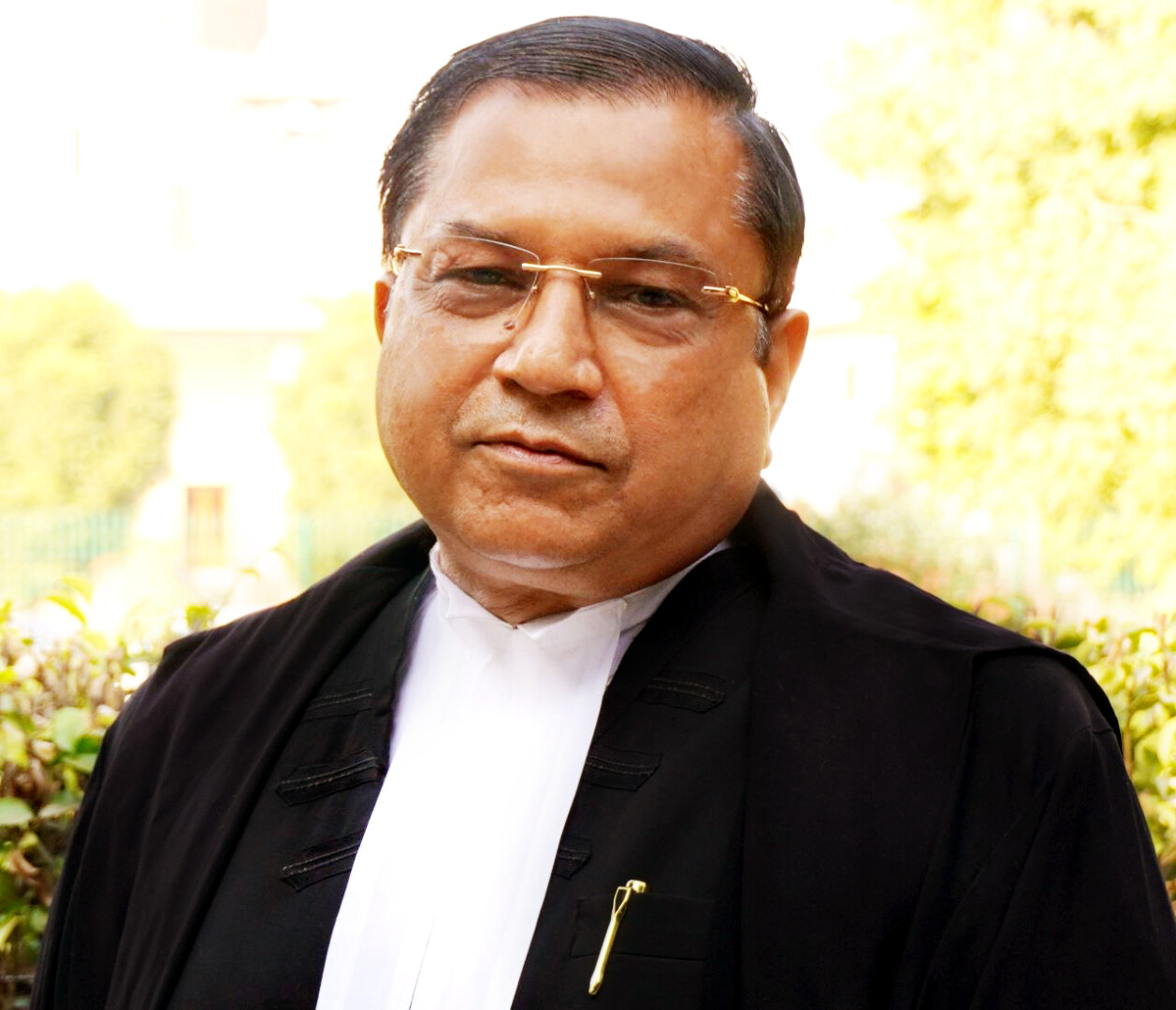
The above representation has been submitted by Dr. Adesh C. Agarwala, Chairman of the All-India Bar Association and Senior Advocate, who has written to the Prime Minister with deep conviction and institutional commitment to the cause of judicial safety and independence.
But the letter does not rest at commendation. It proceeds, with considerable urgency and institutional gravitas, to lay before the Prime Minister a proposal that has for too long remained unaddressed in the architecture of judicial service conditions the question of security for judges after they demit office.
The Core Submission: Why Judicial Risk Does Not Retire with the Judge
The central argument advanced in the representation is one that any practitioner of law, or indeed any careful observer of how justice functions in the real world, will recognise immediately.
Judges of the Supreme Court, the High Courts, and the district judiciary are not ordinary public servants.
In the exercise of their constitutional functions, they routinely decide disputes that pit powerful litigants against one another disputes involving criminal liberty, property, political authority, and personal honour.
Every judgment that is rendered produces, by its very nature, a winner and a loser. And in the landscape of Indian litigation, some of those losers are not merely disappointed. They are dangerous.
The letter submits that the risks attending judicial office do not dissolve upon retirement. A judgment delivered a decade ago a conviction upheld, a bail refused, a civil claim dismissed, a constitutional challenge rejected may have generated animosity in the mind of a convicted criminal, a disgruntled litigant, or an organised group that endures long after the judge concerned has vacated the Bench.
The affected party’s grievance, real or imagined, does not expire with the judge’s tenure. And yet, under the current framework, institutional security protection largely does.
The Human Dimension: Fear Behind Closed Doors
The letter moves beyond the structural and constitutional argument to offer a profoundly human observation one drawn from personal acquaintance with retired members of the higher judiciary.
The representation states that many retired judges are compelled to live under conditions of constant psychological stress and apprehension, haunted by the possibility that a disgruntled litigant or affected party may target them at any moment.
What makes this situation particularly acute and particularly difficult to address through existing mechanisms is that many of these judges are reluctant to formally communicate their threat perception to the government or to security agencies.
This reluctance is not surprising. The temperament that equips a person to sit in judgment over others the discipline, the reserve, the disinclination toward self-dramatization may also make it difficult for a retired judge to present themselves to the state as a person in need of protection.
The result is a population of former constitutional officers living restricted, constrained, and in some cases genuinely frightened lives, their anxieties invisible to the administrative machinery that could, in principle, address them.
The Inadequacy of Existing Mechanisms: Why “Threat Perception” Reports Fall Short
The representation specifically identifies a structural flaw in the current approach to judicial security the reliance on periodic “security assessment” or “threat perception” reports as the basis for determining whether protection is warranted.
The letter argues, with considerable force, that this framework is fundamentally unsuited to the nature of judicial risk.
A judge who presided over a high-profile criminal trial five years ago cannot be said to face a quantifiable, assessable threat in the same way as a politician facing an identifiable political adversary.
The threat may be latent, diffuse, and entirely without warning. It arises not from a specific and documented intelligence input but from the structural reality that the exercise of judicial power creates lasting enemies whose intentions and capabilities cannot be periodically assessed in any reliable way.
To subject a retired judge’s security to the findings of a threat perception report is, the letter suggests, to misunderstand the nature of the risk entirely.
The Two-Tier Proposal: Life and Decade
The representation advances a clear, graduated, and eminently reasonable proposal for executive action.
For judges of the Supreme Court and the High Courts, the letter requests that appropriate amendments be made to service conditions and security-related rules to provide lifelong security protection following retirement.
The dignity of constitutional office, the argument runs, demands nothing less and the independence of the judiciary as an institution depends, in part, on retired judges being free from fear for the remainder of their lives.
For retired judicial officers of the district judiciary the judges of trial courts and subordinate courts who handle the full weight of India’s criminal, civil, and sensitive litigation at the grassroots level the letter requests a minimum of ten years of security protection following retirement.
These are the officers who convict, who acquit, who grant and refuse bail, who decide custody and property and livelihood at the level where justice is most directly felt by ordinary citizens. Their exposure to threat is no less real for being less visible.
The Constitutional Argument: Independence Demands Protection
Underlying the practical proposals is a constitutional argument of considerable depth. The letter submits that the independence of the judiciary a value that the Supreme Court has itself identified as part of the basic structure of the Constitution can only be meaningfully preserved if judges at every level are assured that the State will continue to protect their life and dignity even after they have left office.
This is not merely a matter of individual welfare. It is a matter of institutional integrity. A judicial officer who, while still on the Bench, must contemplate a post-retirement life of unprotected vulnerability is a judicial officer whose freedom of judgment is, at least potentially, compromised.
The assurance of institutional protection after retirement is, in this sense, a pre-condition for the fearless and independent discharge of judicial functions during tenure.
The Request: Executive Action at the Highest Level
The letter concludes with a respectful but clear request that under the Prime Minister’s leadership, this issue receive the considered attention it merits, and that the necessary amendments to service conditions and security rules be taken up as a matter of priority.
It is a representation that deserves to be heard. The men and women who have spent their careers interpreting, applying, and upholding the Constitution of India should not spend their retirements looking over their shoulders. The State that charged them with that solemn duty owes them, at the very minimum, the assurance that it will continue to stand between them and those who would do them harm.