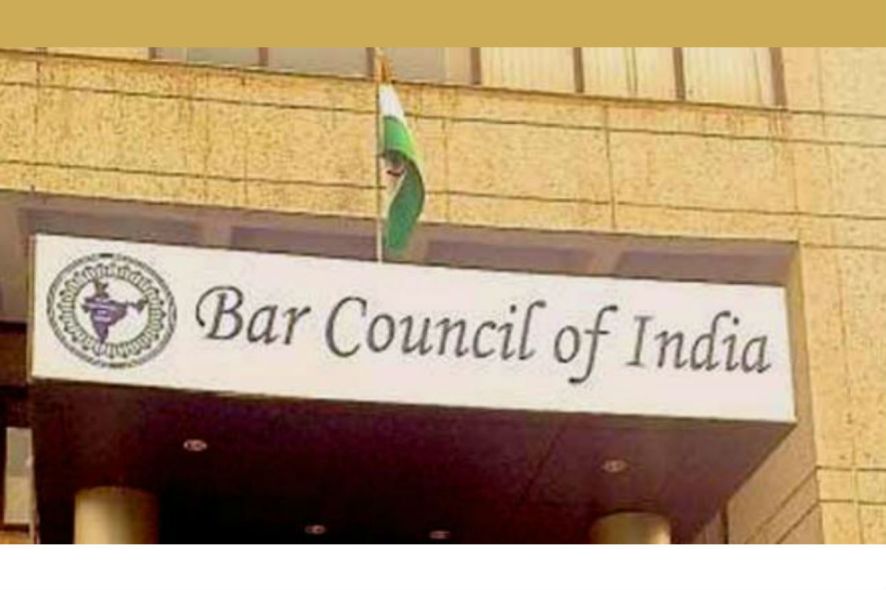
Voice of the Ballot Shall Prevail: BCI Moves Supreme Court to Co-opt Highest-Polling Women Candidates into State Bar Councils
(By Syed Ali Taher Abedi)
21-5-2026- In a significant move aimed at fortifying the democratic foundations of legal representation, the Bar Council of India (BCI) has filed an application before the Hon’ble Supreme Court of India, seeking judicial imprimatur for a transparent and merit-based mechanism to co-opt women members into State Bar Councils.
The BCI has approached the apex court for approval of its proposal to secure 10% women’s representation in State Bar Councils through co-option over and above the 20% elected women members by inducting the highest vote-polling women candidates from the concluded state bar council elections.
Rather than leaving the co-option process open to subjective discretion, the BCI has proposed that women candidates who narrowly fell short of election to the State Bar Councils be co-opted against the designated 10% quota, thereby ensuring that the selection is anchored in the democratic verdict already rendered by the advocate electorate.
In specific terms, the BCI has urged the Court to direct that where 25 members are to be elected, those women candidates finishing in the 6th and 7th positions beyond the elected quota be co-opted where 20 members are to be elected, those placed at the 5th and 6th positions and where 15 members are to be elected, the candidate at the 4th position be co-opted accordingly.
The BCI contended that this approach is consonant with the democratic scheme enshrined in the Advocates Act, 1961, as the co-option would be grounded in votes already cast by the electorate.
The application further asserts that the process would be “fair, objective, transparent and least susceptible to arbitrariness,” effectively insulating the co-option exercise from allegations of favouritism, discrimination, or subjective selection.
According to the BCI, tethering co-option to actual votes polled by women candidates would ensure that the process remains faithful to the democratic choice expressed by advocates, while simultaneously advancing the larger institutional objective of enhancing women’s representation in State Bar Councils.
Background & Court Directions
The Supreme Court had, in December of the preceding year, directed that Bar Councils must ensure 30% women’s reservation, with a clarification that should an insufficient number of women candidates contest, 10% of those seats may be filled through the mechanism of co-option.
Subsequently, on April 13, the Supreme Court had requested the High-Powered Supervisory Committee, chaired by Justice (Retd.) Sudhanshu Dhulia, to determine the precise manner in which this 10% co-option of women candidates is to be carried out.
In a press note issued on May 20, the BCI confirmed that it has endorsed Option (a) as outlined in the Supreme Court’s April 13 order namely, that co-option shall be drawn from among contesting women candidates who secured the highest number of votes, though they could not be elected within the initial 20% representation threshold.
The BCI has accordingly prayed for a formal direction from the Court sanctioning this mechanism as the governing framework for co-option going forward.
Case: M. Vardhan v. Union of India | W.P.(C) No. 1319 of 2023