Paper over Plastic? HC Questions Constitutionality After SEC Scraps EVMs in Punjab
(By Syed Ali Taher Abedi)
Seven days before Punjab’s local body elections. A State Election Commission that has quietly reverted to paper ballot voting after years of electronic voting.
Petitioners who argue that the Supreme Court itself has said there is no going back. And a Division Bench of the Punjab and Haryana High Court that wants to see, in black and white, exactly what the Election Commission of India told the State about the machines it could not provide.
The stage is set for a judicial examination of a decision that goes to the heart of electoral integrity in one of India’s most politically significant states.
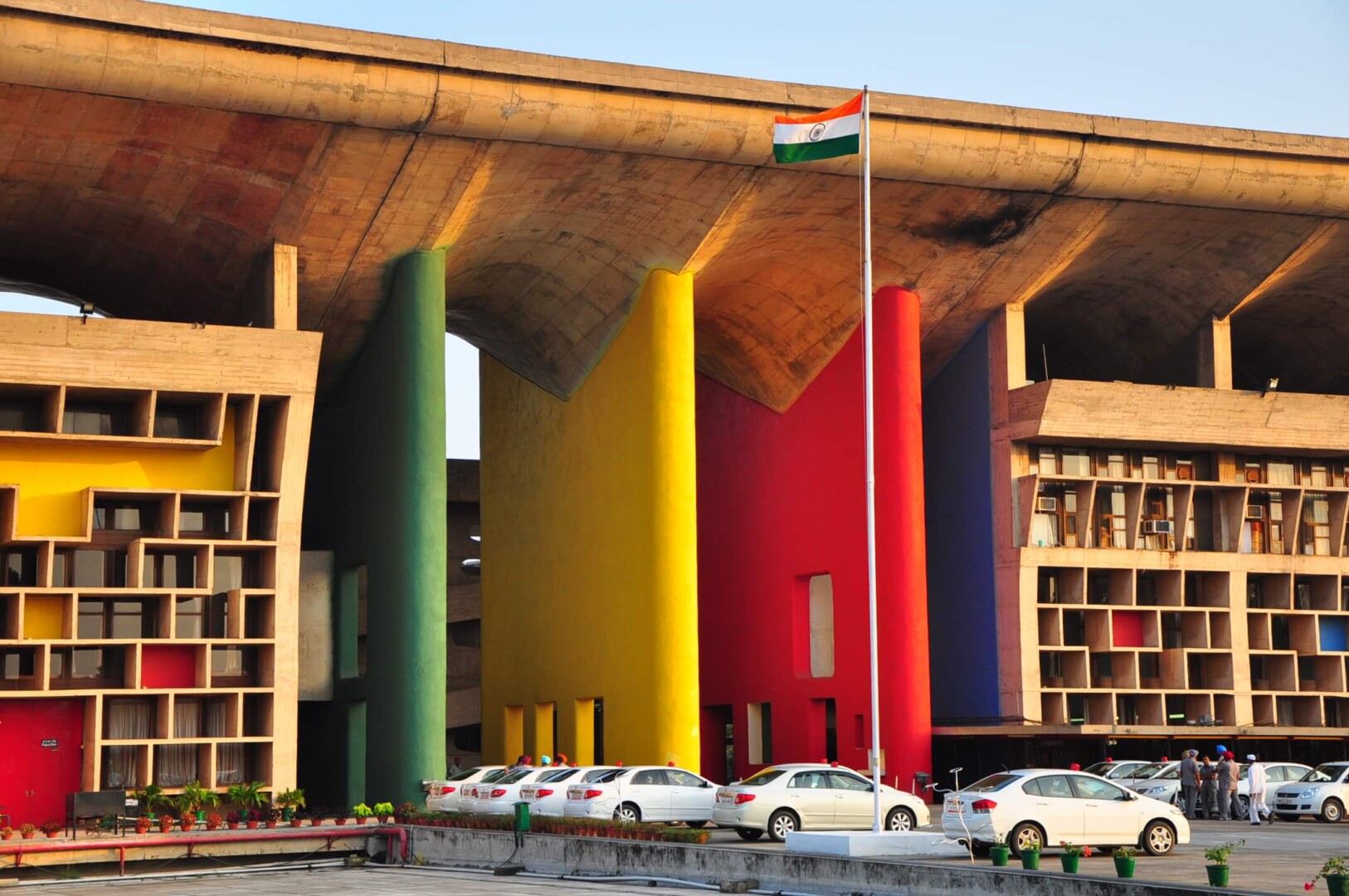
A Division Bench comprising Chief Justice Sheel Nagu and Justice Sanjiv Berry of the Punjab and Haryana High Court took up the matter on Tuesday after hearing two petitions challenging the Punjab State Election Commission’s decision to conduct the upcoming municipal elections using ballot papers instead of Electronic Voting Machines.
The Division Bench presided over by the Chief Justice himself is a measure of the constitutional and democratic significance the court has attached to the challenge.
The High Court’s inquiry is not merely administrative. It goes to the question of whether a State Election Commission can, on its own institutional judgment, retreat from a method of voting that has been progressively adopted and judicially endorsed across India’s democratic landscape and if it can, what justification it must offer to the electorate and the courts for doing so.
The Elections: Dates, Stakes, and the Democratic Context
The elections for local bodies across Punjab are scheduled to be held on May 26, with the counting of votes scheduled to take place on May 29.
The proximity of these dates to the judicial proceedings makes the High Court’s intervention particularly urgent.
With polling less than a week away, the State Election Commission’s method of voting is not an abstract policy question it is a live operational reality that will determine how millions of voters in Punjab’s municipalities cast their votes, and how those votes are counted, verified, and declared.
The stakes are correspondingly high. Local body elections determine the governance of Punjab’s towns and cities the municipal councils and corporations that administer urban infrastructure, public health, and civic services for a substantial portion of the state’s population.
The integrity of those elections is a matter of constitutional importance that the courts cannot and should not treat as peripheral.
The State’s Defence: EVMs Were Tied Up in Assembly Elections
Faced with the petitioners’ challenge, the State Election Commission placed before the court the explanation it had offered for its decision to abandon EVMs in favour of ballot papers an explanation rooted not in policy preference but in practical unavailability.
The counsel appearing for the State Election Commission told the court that it had been informed that EVMs would be available only after May 10.
The counsel elaborated: “We procure EVMs from the Election Commission of India. When the notification was issued, we wrote a letter to the ECI to get EVMs. What they have written is that EVMs were in assembly elections.”
The counsel further submitted that by the time the EVMs could have been made available, it would have been too late to transport them to Punjab in time for the elections.
On its face, this is an explanation grounded in logistical reality. EVMs in India are the property of the Election Commission of India and are allocated to State Election Commissions on request.
When the national electoral machinery has simultaneously deployed those machines in state assembly elections, the residual availability for municipal polls may well be limited. The timeline of transportation, testing, and preparation further compresses the window within which a late allocation could be operationally viable.
But the petitioners are not satisfied with logistics as a constitutional answer.
The Petitioners’ Case: The Supreme Court Has Already Spoken
The challenge mounted before the Punjab and Haryana High Court is not merely a complaint about administrative inconvenience.
It is a constitutional argument and it draws its primary authority from the Supreme Court of India itself.
Senior Advocate Amit Jhanji, appearing for the petitioners, submitted that until November-December 2025, EVMs had been continuously used in Punjab’s elections, with the sole exception being the Zila Parishad polls in two districts of the state.
Having established that the use of EVMs was the established and uninterrupted electoral practice in Punjab, Senior Advocate Jhanji posed the question that goes to the constitutional core of the challenge:
“Where is the explanation for you to dispense with the EVM system and come back to the paper ballot system when the Supreme Court has said that you can’t go back to the old system?”
This invocation of the Supreme Court’s pronouncements on EVMs is a jurisprudentially significant move.
The Supreme Court has, across multiple decisions, addressed challenges to the integrity of EVMs and has, in the process, made observations about the democratic and electoral advantages that the EVM system offers over the paper ballot including resistance to booth capturing, faster counting, and the elimination of invalid votes.
The argument that retreating from EVMs to ballot papers requires specific, documented justification rather than being a matter of unreviewable administrative discretion draws directly from that judicial framework.
Senior Advocate Chetan Mittal, also appearing for the petitioners, pressed the point further arguing that even if the Election Commission possesses a legal option to conduct polls using either EVMs or ballot papers, it cannot exercise that option silently. It must explain its decision.
This is the accountability argument one that is rooted in the principles of reasoned administrative decision-making that Indian courts have consistently applied to decisions affecting fundamental rights.
The right to free and fair elections, recognised as a constitutional right under the framework established by the Supreme Court, is not protected merely by counting votes accurately.
It is protected by ensuring that the method of voting is one that minimises the opportunity for manipulation and maximises the integrity of the democratic process.
The petitioners further argued that the use of EVMs in the upcoming polls would minimise the potential for electoral malpractice and significantly accelerate the counting process practical advantages whose significance in the context of competitive municipal elections cannot be understated.
The High Court’s Direction: Produce the Communication
The Division Bench did not allow the matter to rest on the State Election Commission’s oral submissions. It demanded documentary evidence.
The Punjab and Haryana High Court directed the Punjab State Election Commission to produce the communication received from the Election Commission of India regarding the non-availability of EVMs for the local body polls.
This direction is of considerable procedural and institutional significance. By insisting on seeing the actual written communication from the ECI rather than accepting the State Election Commission’s characterisation of what that communication contained the High Court is applying the foundational principle of judicial review that administrative decisions affecting public rights must be supported by documented, verifiable reasons, and not merely by the post-hoc oral assurances of counsel appearing in court.
If the ECI’s communication does indeed state, clearly and unambiguously, that EVMs were unavailable for Punjab’s municipal polls by reason of their deployment in assembly elections and if that unavailability was genuine and not the product of administrative neglect or political calculation then the State Election Commission’s decision to resort to ballot papers may well be defensible on logistical grounds.
If, on the other hand, the documentary record reveals a more ambiguous or incomplete picture if the EVMs were available but not requested sufficiently in advance, or if the communication from the ECI left open the possibility of allocation that was not pursued then the State Election Commission will face considerably more difficult questions about the basis and adequacy of its decision.
The Constitutional Framework: Electoral Integrity as a Fundamental Right
The legal framework within which this challenge must be understood is one that the Supreme Court has carefully constructed across decades of electoral jurisprudence.
The right to vote, and the right to have that vote cast and counted through a system of demonstrated integrity, is a fundamental aspect of the constitutional democracy that India’s founding document established.
The Election Commission of India and by extension, the State Election Commissions established under Article 243K of the Constitution for the conduct of elections to Panchayats and Municipalities are constitutional bodies vested with the responsibility of ensuring that this right is effectively protected.
Article 243K of the Constitution vests in the State Election Commission the superintendence, direction, and control of the preparation of electoral rolls and the conduct of elections to Panchayats and Municipalities.
This is a constitutional mandate not a mere statutory function and its exercise is therefore subject to the full discipline of constitutional accountability, including the supervisory jurisdiction of the High Courts under Article 226.
The petitioners are invoking that jurisdiction to demand that the State Election Commission account, with documentary precision, for a decision that they argue compromises the constitutional integrity of the democratic process in Punjab’s municipalities.
What the High Court Must Now Determine
When the matter returns before the Division Bench for the continuation of the hearing, the court will be confronted with questions that go well beyond the logistics of EVM transportation.
It will have to determine whether the State Election Commission’s explanation however genuine meets the constitutional standard of justification required for a departure from an established and judicially endorsed electoral practice.
It will have to consider whether the proximity of polling day forecloses any judicial remedy even if the court finds the explanation inadequate.
And it may have to weigh the competing risks of judicial intervention that disrupts an electoral process already in motion against the risk of permitting an election to be conducted on a basis that a credible constitutional argument suggests is indefensible.
These are not easy questions. They are, however, precisely the questions that the Punjab and Haryana High Court exercising its constitutional responsibility as the guardian of electoral integrity within its jurisdiction is both entitled and obliged to ask.
The hearing continues on Wednesday. Punjab goes to the polls on May 26. The clock, and the constitution, are both running.