Judiciary Enters Paperless Era: CJI crowns Sikkim at national conclave on judicial education
(By Syed Ali Taher Abedi)
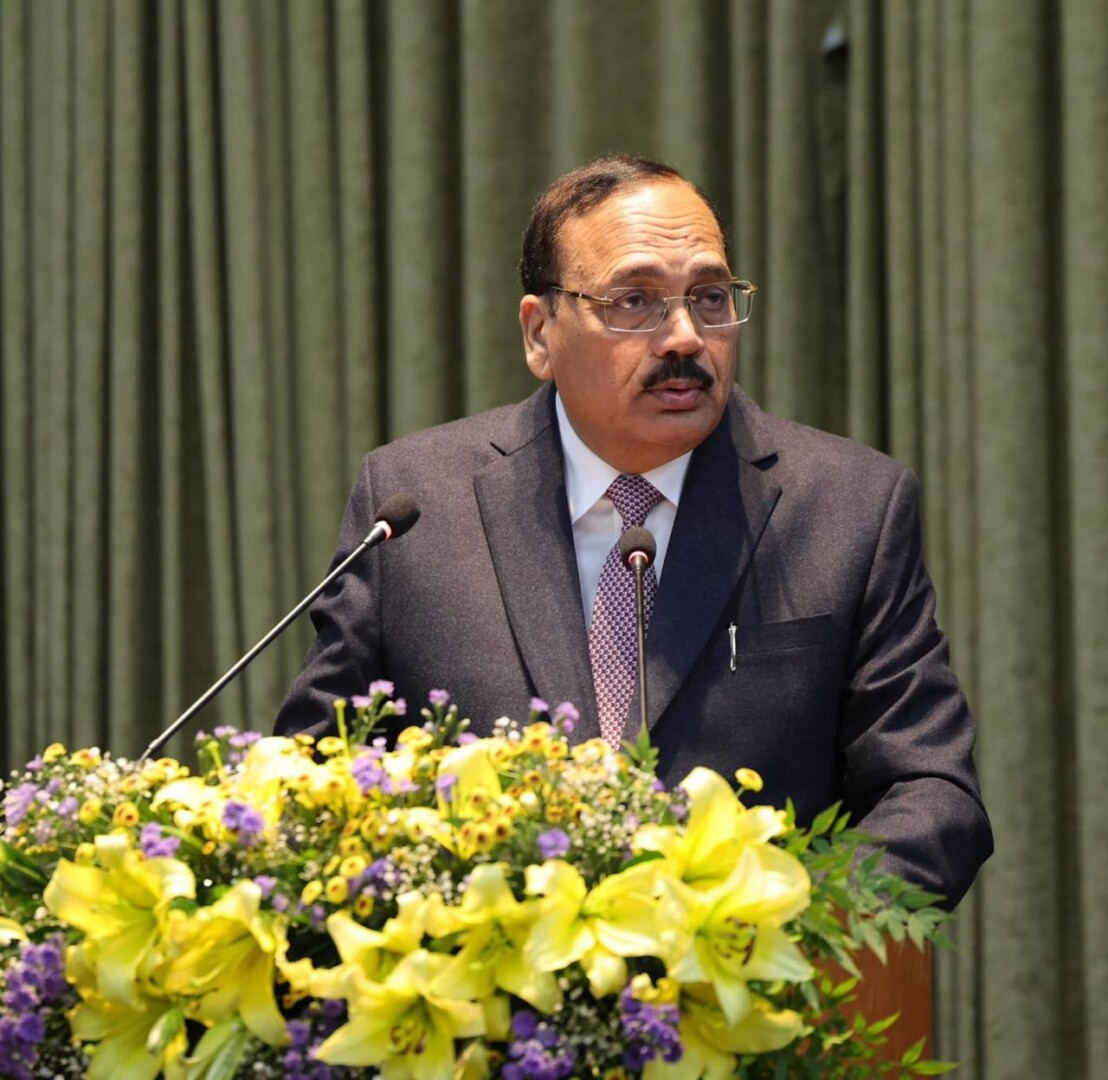
1 May 2026- In a landmark announcement poised to redefine the contours of judicial administration in India, CJI Justice Surya Kant on Friday declared Sikkim as the nation’s first fully paperless judiciary. The declaration was made during a high-profile conclave on “Technology and Judicial Education” held in Gangtok, marking what many observers describe as a transformative moment in the evolution of India’s legal system.
The ceremony was attended by Chief Justice of Sikkim High Court A. Mohammed Mustaque, alongside senior members of the judiciary and legal fraternity.
The initiative positions Sikkim at the forefront of digital judicial reform, where all legal processes from filing petitions to case tracking and hearings are conducted electronically, eliminating reliance on physical documentation.
A Judiciary Reimagined
In his keynote address, Justice Surya Kant delivered a compelling vision of the future, underscoring that judicial education must evolve in tandem with rapid technological advancements.
“The adoption of technology is not only about implementation, but also about a necessary shift in legal education. It is no longer sufficient to be well versed in the statutes of the past. The modern judge must also engage with the logic that underpins emerging technologies.”
He asserted that mere digital literacy is no longer sufficient; instead, judges must develop a nuanced understanding of algorithmic systems and their intersection with foundational legal principles such as natural justice.
With a tone that blended urgency and foresight, he called upon judicial academies to redesign their curricula. “The role of a judge today extends beyond interpreting statutes it includes critically engaging with technology, identifying biases embedded within artificial intelligence, and ensuring that justice remains untainted,” he emphasized.
Technology vs. Human Judgment
Striking a careful balance, the Chief Justice cautioned against the uncritical adoption of technology.
He reiterated that while digital tools can enhance efficiency and accessibility, they must remain subordinate to human judgment. “Technology must aid fairness, not replace the human conscience that underpins judicial decision-making,” he declared, reinforcing the primacy of constitutional values.
“At the heart of this educational shift lies the question of ethics. As we integrate automated tools into our daily work, the judge’s role as the guardian of the human element becomes even more significant. Education must strengthen our ability to identify bias within systems driven by Artificial Intelligence and to safeguard the integrity of the adjudicatory process against any unintended distortion.”
Breaking Geographical Barriers
The declaration of Sikkim as a paperless judiciary carries profound implications, particularly for a state historically challenged by difficult terrain.
Justice Surya Kant highlighted how litigants once faced arduous and uncertain journeys to access courts. Today, digital infrastructure has effectively dismantled these barriers, enabling virtual hearings and remote participation.
He noted that such reforms are not merely administrative conveniences but essential to sustaining the rule of law.
By bridging distances and reducing financial burdens, digital systems ensure that access to justice is no longer dictated by geography.
The Digital Backbone of Justice
The Chief Justice also pointed to the broader digital transformation underway within the Indian judiciary. Initiatives like the e-Courts project and the National Judicial Data Grid have revolutionized access to case information and judicial performance metrics.
These platforms, he observed, have made the “architecture of justice more open and dynamic.”
Litigants, even in remote regions, can now track proceedings in real time, consult legal counsel across jurisdictions, and participate in hearings via video conferencing.
This transparency, he argued, acts as a powerful check against delays and inefficiencies, fostering a system that is both predictable and accountable.
Challenges Ahead
Despite the progress, Justice Surya Kant acknowledged that the journey toward full digital justice (complete digital justice) is far from complete.
He stressed the urgent need for standardization in Case Information Systems across High Courts, noting that while trial courts have achieved significant digitization through the National Core Information System (NC-CIS), higher courts must adopt a more uniform approach.
He also drew attention to the critical role of Seva Kendras public facilitation centres within courts. With 48 centres in High Courts and over 2,200 units in district courts, he called for their expansion and technological strengthening to prevent the digital divide from becoming a new barrier to justice.
The Role of Artificial Intelligence
In a forward-looking segment of his address, the Chief Justice explored the potential of artificial intelligence within judicial processes.
He suggested that AI could be cautiously integrated at the trial court level, particularly in areas like recovery suits.
Tools capable of verifying assets, identifying encumbrances, and flagging conflicting claims could streamline preliminary stages of litigation.
Moreover, AI systems could analyse sentencing patterns and bail decisions across jurisdictions, promoting greater consistency and predictability in judicial outcomes an aspect often scrutinized in public discourse.
A Defining Moment
The declaration of Sikkim as India’s first paperless judiciary is more than a symbolic milestone it signals a decisive shift in how justice is conceived, delivered, and experienced.
As courts increasingly embrace digital frameworks, the challenge will lie in ensuring that technological progress strengthens, rather than compromises, the foundational ideals of fairness, accessibility, and human dignity.
In the words of the Chief Justice, the mission is clear to build a judiciary that is technologically empowered yet firmly anchored in constitutional morality.