
India at a Crossroads: Why Incremental Reforms May No Longer Be Enough
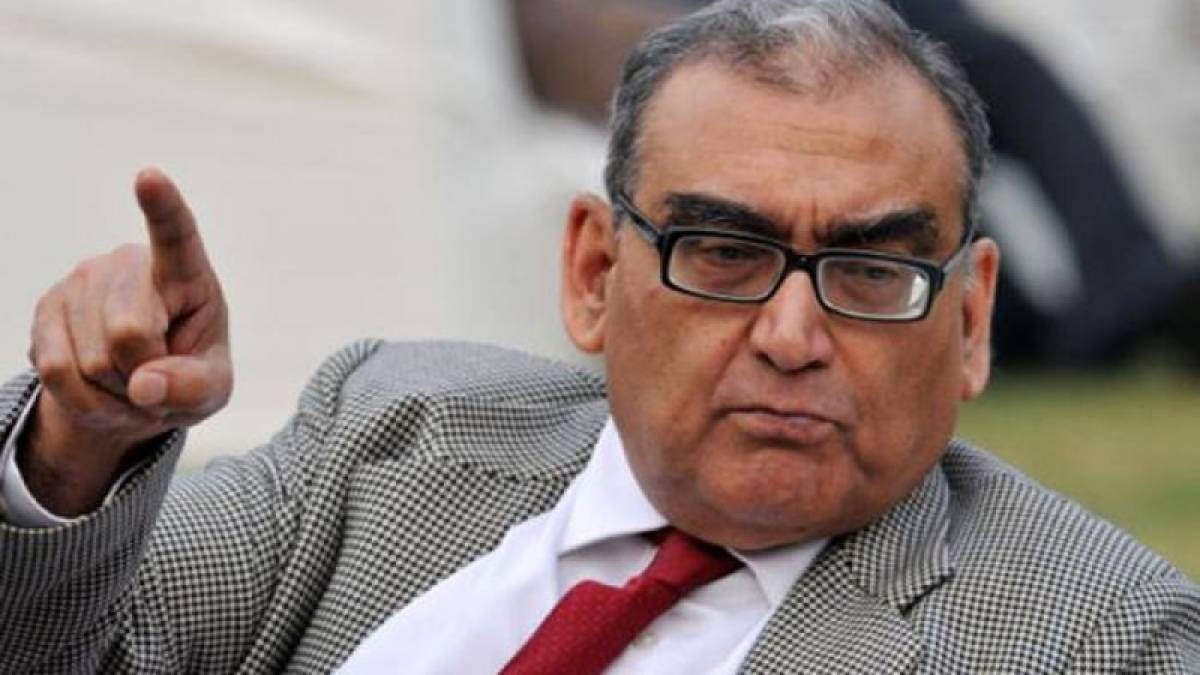
(By Justice Markandey Katju Retd Judge Supreme Court)
For decades, India has pursued gradual reforms with the hope that steady progress would eventually translate into prosperity for all. Economic liberalization, welfare schemes, infrastructure expansion, and technological advancement have undoubtedly transformed many aspects of the country.
Yet, from my perspective, these incremental changes have not adequately addressed some of India’s deepest structural challenges.
Millions of Indians continue to struggle with poverty and unemployment. Inflation has placed an increasing burden on households, with the prices of food and other essential commodities rising sharply.
Access to quality healthcare remains uneven, and millions of children still lack the educational opportunities needed to reach their full potential.
Child malnutrition also continues to be a serious concern, with international reports such as the Global Hunger Index highlighting troubling indicators, although the methodology and conclusions of that index are debated within India.
These persistent problems raise an important question: Are piecemeal reforms sufficient, or is the country in need of a far more fundamental transformation?
In my view, the time has come to rethink India’s political and constitutional framework.
The existing system, despite its democratic strengths, has struggled to consistently deliver rapid socio-economic progress for the vast majority of the population.
What is required, I believe, is not merely a change of governments or policies but a comprehensive restructuring of the institutions that shape governance and development.
Such a transformation, in my opinion, would need to be led by leaders who are selfless, patriotic, modern in outlook, and committed to placing national development above narrow political interests.
The objective would be to establish a new political and social order capable of accelerating industrialization, creating large-scale employment, modernizing agriculture, strengthening infrastructure, and ensuring universal access to quality healthcare and education.
History offers examples of countries that experienced dramatic economic transformation following profound political change.
China, following the establishment of a new government in 1949 and especially after later economic reforms, underwent rapid industrialization that lifted hundreds of millions of people out of poverty over subsequent decades.
While India’s democratic traditions, constitutional values, and social diversity make its path necessarily different, the broader lesson is that structural change can sometimes produce outcomes that incremental adjustments cannot.
Recently, during an interview, Kapil suggested that education alone could solve India’s problems.
Education is undoubtedly one of the most powerful tools for individual empowerment and national progress. However, I disagreed with his conclusion.
My response was that education, by itself, cannot overcome systemic barriers. Even the best-educated citizens require an economy capable of generating productive employment, institutions that function efficiently, affordable healthcare, and governance that prioritizes long-term national development.
Without these structural foundations, education alone cannot eliminate poverty, create jobs on the required scale, or transform living standards.
India undoubtedly possesses extraordinary human talent, entrepreneurial energy, and immense economic potential.
The question is not whether the country can achieve rapid and inclusive development, but whether its existing institutions are equipped to deliver it.
From my perspective, India has reached a historic crossroads. Continuing with gradual reforms may produce modest gains, but if the nation is to decisively overcome its longstanding socio-economic challenges, it may require bold, comprehensive, and structural changes that match the scale of the problems it seeks to solve. i.e revolution
The debate over how such change should occur will continue, but ignoring the magnitude of these challenges is no longer an option.


