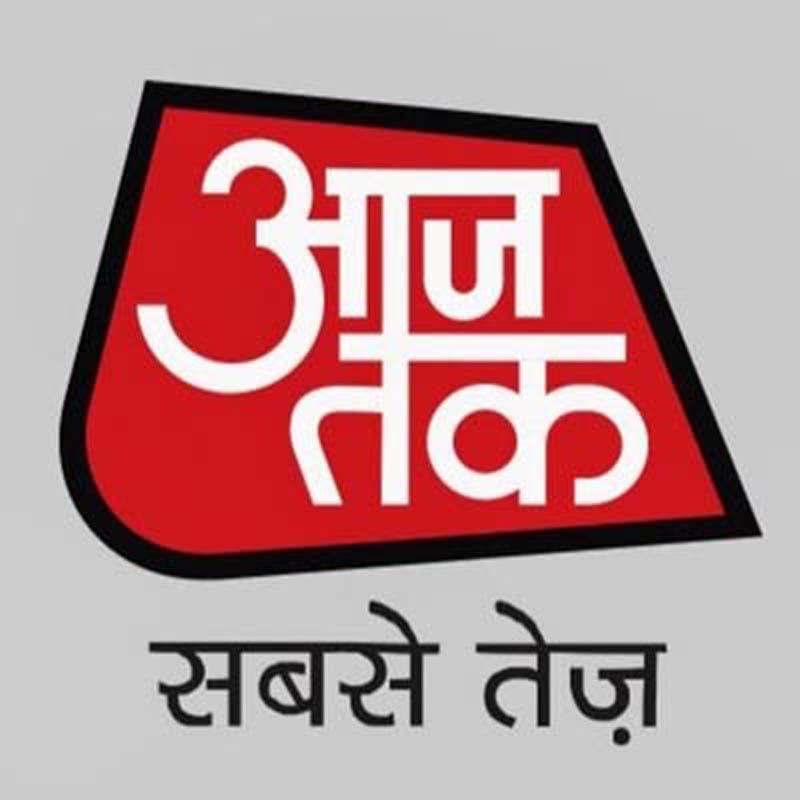
No More ‘Saurashtra Aaj Tak’: Delhi HC Guards the Distinctive Identity of Iconic News Brand
(Judicial Quest News Network)
Delhi,31, July,2026-In a significant ruling with far-reaching implications for trademark law and the protection of media brands, the Delhi High Court has restrained a Gujarati newspaper from continuing to use the name “Saurashtra Aaj Tak,” holding that the impugned mark was deceptively similar to the well-known news brand Aaj Tak and was likely to mislead the public into assuming an association between the two entities.
“The manner of the use of the words ‘Saurashtra Aaj Tak’, with more emphasis on the words ‘Aaj Tak’, leaves no doubt that the respondent/defendant is trying to pass off its newspaper on the goodwill and reputation of the appellant/plaintiff” The Court Added.
The judgment reinforces a settled principle in intellectual property jurisprudence that a brand, once it acquires distinctiveness and a secondary meaning in the public mind through prolonged and continuous use, is entitled to robust legal protection against imitation, even where the contested expression may be composed of ordinary dictionary words.
“
Court finds passing off
The dispute, which traces its origins to proceedings initiated in 2002, arose after TV Today Network, the parent company of Aaj Tak, objected to a newspaper operating from Rajkot under the name “Saurashtra Aaj Tak.” While the trial court had earlier permitted the newspaper to continue with the name subject to a disclaimer, the High Court has now reversed that approach and granted a permanent injunction, directing the respondent to cease use of the impugned mark. Delhi high court
Justice Mini Pushkarna, while dealing with the matter, observed that the words “Aaj Tak” had, over the years, acquired a secondary meaning so firmly associated with the plaintiff’s news services that their use by another publication could not be treated as innocuous or merely descriptive.
The Court noted that the manner in which the expression “Saurashtra Aaj Tak” was employed, with greater emphasis on the words “Aaj Tak,” left little doubt that the respondent was attempting to ride upon the goodwill and reputation built by the original brand.
Deceptive similarity decisive
The ruling is notable for its reiteration that a plaintiff in a passing off action is not required to prove actual confusion or direct evidence of deception.
It is sufficient if the Court finds a real likelihood that the ordinary reader or consumer may be misled into believing that the defendant’s publication is connected with, endorsed by, or otherwise affiliated to the established brand.
In the present case, the Court appears to have been persuaded that the addition of the prefix “Saurashtra” did not materially alter the dominant impression conveyed by the mark, particularly when the core and attention-grabbing element remained “Aaj Tak.” In trademark law, such cosmetic additions often fail to save an otherwise infringing mark where the essential identity of the reputed brand is copied.
Secondary meaning protected
The decision also serves as a reminder that even commonplace words may, through long and exclusive association, transcend their dictionary meaning and attain source-identifying significance.
In the present context, while “Aaj” and “Tak” may individually be words of general usage, their combination has, in the Court’s view, come to signify a particular news organization in the minds of the public.
That transformation from ordinary phrase to distinctive brand is precisely what the law of passing off seeks to protect.
The underlying rationale is straightforward a trader or publisher who has invested time, labour, reputation, and editorial identity into a mark should not be compelled to watch others capitalise on that reputation through imitation or superficial alteration.
Wider legal significance
The ruling carries substantial significance for the media industry, especially in an era where names, logos, colour combinations, and digital identities often function as the first and most enduring point of contact between a news outlet and its audience.
It underscores the judiciary’s growing recognition that brand identity in the media sector is not a peripheral commercial concern but an asset closely tied to credibility, public trust, and editorial recognition.
It also sends a clear signal that disclaimers, while sometimes relevant, may not cure the mischief where the overall mark is inherently confusing.
Courts are increasingly inclined to look at the net impression created on the mind of the average viewer or reader rather than at verbal technicalities or token differences. Delhi high court
Direction to adopt fresh identity
With the permanent injunction now in place, the newspaper has been directed to adopt a completely new name that bears no resemblance to the “Aaj Tak” mark. The order is intended to ensure that the integrity of the original brand remains intact and that the consuming public is not exposed to confusion in the marketplace of news and information.
TV Today was represented by Advocates Hrishikesh Baruah, Radhika Gupta, Nishita Sachan, Saket Verma, Utkarsh Dwivedi, Kumar Kishtij, Pragya Agarwal and Yashashwy Ghosh.
The respondents were represented by Advocate Arjun Mahjan, Sumit R Sharma, Raghvendra N Budholia, Sagar Agarwal, Piyush Gautam, Harshit Kapoor, Manav Singh Siddharth Bajaj, Aryan Verma and Bhavya Arora.
For the law of trademarks, the message from the Delhi High Court is unmistakable goodwill, once earned, is a protected legal interest and when a mark has acquired a distinctive identity in public perception, even a partially similar imitation may not survive judicial scrutiny.