
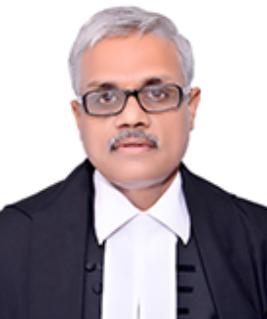
A Gavel Falls Silent: Punjab & Haryana High Court Mourns Justice Mahabir Singh Sindhu, a Voice of Compassion and Fearless Constitutionalism
(By Syed Ali Taher Abedi)
Chandigarh, June 28, 2026-The legal fraternity of Punjab and Haryana stands diminished today, as news arrived of the untimely passing of Justice Mahabir Singh Sindhu, a sitting Judge of the Punjab and Haryana High Court, who breathed his last on June 28, 2026.
His sudden departure leaves behind a void that the Bench, the Bar, and the countless litigants who found in him a fair and humane arbiter will feel for years to come.
A Judge Who Married Firmness with Compassion
Justice Sindhu was, by the consistent testimony of those who appeared before him and those who sat beside him, a judge of exceptional strength tempered by exceptional sensitivity. He was a jurist who understood that the rule of law and the dignity of the individual were not competing values to be balanced against one another in moments of inconvenience, but complementary commitments that a judge of conscience must hold together in every order he passed.
His judgments bore the unmistakable imprint of clarity, fairness, and an unwavering fidelity to constitutional first principles.
At the time of his passing, Justice Sindhu stood as the third senior-most judge of the High Court, with a tenure that was expected to continue until his scheduled retirement in April 2029.
That his service has been cut short by nearly three years is a loss the institution will carry with particular weight.
A Jurisprudence of Liberty: The ED Interrogation Ruling
Among the rulings for which Justice Sindhu will be most remembered is his intervention against the practice of marathon interrogations conducted by the Enforcement Directorate under the Prevention of Money Laundering Act.
Directing the agency to undertake remedial measures and to sensitise its officers to observe a reasonable time limit during questioning, he delivered an observation that has since become a touchstone for the constitutional treatment of persons summoned for interrogation that questioning extending up to fifteen hours “is not heroic… rather it is against the dignity of a human being.” In those words, lay the essence of his judicial philosophy that the pursuit of law enforcement objectives, however legitimate, can never be permitted to override the basic dignity that Article 21 of the Constitution guarantees to every individual, however serious the allegation against them.
Guarding Against the Misuse of Custodial Power
That same vigilance against institutional overreach found further expression in Balwant Singh v. Directorate of Enforcement, where Justice Sindhu cautioned judicial officers presiding over Special PMLA Courts against functioning as an extended arm of the Enforcement Directorate through the routine and mechanical grant of remand.
Setting aside an order that had granted custody without independent judicial scrutiny, he firmly deprecated the practice of passing remand orders as a matter of course rather than considered judicial determination a reminder that the judiciary’s role in the custodial process is supervisory and independent, never ministerial.
In the Ashok Kumar Sharma case, he declared an arrest under the NDPS Act illegal where no reasons had been recorded for the search and where the grounds of arrest had not been furnished as the law requires.
He held, with constitutional precision, that the failure to supply grounds of arrest violates not merely statutory provisions but the mandatory safeguards enshrined in Article 22 of the Constitution rendering the arrest itself unsustainable in the eyes of the law.
A Sentinel Against State Apathy and Arbitrariness
Justice Sindhu’s docket bore repeated testimony to his readiness to hold public institutions to account when they failed the citizens they were meant to serve.
He imposed exemplary costs of ₹10 lakh upon the Haryana Public Service Commission for what he termed the “disrespecting of a soldier” the unjust denial of a rightful reservation claim under the Dependent of Ex-serviceman category in a recruitment process for the post of Sub-Inspector.
He levied a further ₹3 lakh in costs against the Haryana Staff Selection Commission for unjustly denying appointment to a woman candidate for the post of Constable, observing pointedly that she had been dragged into avoidable litigation for six long years before receiving the justice that was hers by right.
He imposed costs of ₹1 lakh on the Punjab PWD Secretary for illegally depriving an employee of a rightful promotion, and took stern action against a District Judge who had adopted what he described as a “pick-and-choose policy” in denying benefits to a court clerk branding such arbitrary conduct as wholly unreasonable and liable to be struck down.
When authorities sought to deny parole to an NDPS convict during election season on the mere assumption that he might reoffend, Justice Sindhu firmly held that parole decisions must rest strictly on the material on record and in accordance with law not on speculative apprehension dressed up as administrative caution.
On the Misuse of Criminal Process
Justice Sindhu was equally unflinching when confronted with what he perceived as the misuse of the criminal process for purposes extraneous to genuine investigation.
He quashed two FIRs registered against former Punjab Minister Bharat Bhushan Ashu and others in a case concerning alleged irregularities in foodgrain tender and transportation finding that the proceedings appeared to have been initiated merely to harass the accused, and that this amounted to a misuse of power by the Vigilance Bureau.
The ruling stands as a reminder that the machinery of criminal investigation, however legitimate its institutional purpose, cannot be permitted to become an instrument of political or personal vendetta.
Yet his commitment to the rule of law was even-handed and uncompromising in the opposite direction as well. In 2018, he denied bail to a supporter of Dera Sacha Sauda chief Gurmeet Ram Rahim Singh, who stood accused of rioting and fomenting widespread unrest following his leader’s conviction.
Observing that such individuals demonstrated no respect for the Court of law, Justice Sindhu held that no leniency was warranted a ruling that affirmed, in the starkest terms, that the dignity he extended to the ordinary citizen against institutional overreach would never be extended to those who sought to subvert the authority of the courts themselves through mob violence and intimidation.
From a Modest Agricultural Background to the High Court Bench
Justice Sindhu’s personal journey to judicial office is itself a chronicle worthy of the legal fraternity’s reflection.
Born on April 4, 1967, he hailed from a modest agricultural background and was a first-generation lawyer
a man who built, brick by brick and case by case, a career that owed nothing to inherited privilege and everything to perseverance, discipline, and an evident command of the law.
He obtained his LL.B. degree in 1992 from Panjab University, Chandigarh, and was thereafter enrolled as an Advocate with the Bar Council of Punjab and Haryana.
Across the years of his practice before the Punjab and Haryana High Court, he built a diverse and substantial legal career spanning civil, criminal, constitutional, and service law matters, while also representing various institutions, municipal bodies, and government boards and corporations.
His professional distinction was formally recognised in 1999 with his appointment as Additional Central Government Standing Counsel, and he went on to serve as Additional Advocate General for the State of Punjab from September 2008.
He was elevated as an Additional Judge of the Punjab and Haryana High Court on July 10, 2017, and was confirmed as a permanent Judge on December 3, 2018 a judicial career that, while tragically curtailed, was marked throughout by the same qualities that defined the man who built it from nothing: integrity, diligence, and an unshakeable empathy for those who came before him seeking justice.
Beyond the courtroom, Justice Sindhu contributed to public life through his association with various institutional committees, including the State Executive Committee for Persons with Disabilities, Union Territory, Chandigarh a further reflection of a judicial temperament that extended naturally into a broader commitment to public service.
A Legacy That Will Endure
Justice Mahabir Singh Sindhu is survived by his family, his colleagues on the Bench, and a body of jurisprudence that will continue to guide and instruct long after the gavel has fallen silent.
His passing leaves a void that will be deeply and lastingly felt by every member of the Bench and Bar who had the privilege of appearing before him, and by every litigant whose dignity he protected when the power of the state, or the indifference of institutions, threatened to override it.
He came from the soil of Punjab and rose, through perseverance alone, to the highest reaches of the judiciary in his state. He leaves behind a jurisprudence that placed human dignity at the heart of every constitutional inquiry a legacy that the institution he served with such distinction will carry forward in his honour.
Justice Mahabir Singh Sindhu (April 4, 1967 – June 28, 2026) | Judge, Punjab and Haryana High Court | Elevated: July 10, 2017 (Additional Judge); December 3, 2018 (Permanent Judge)
May his soul rest in eternal peace.

