Equality, Not Privilege: CJI Surya Kant Tells St. Petersburg Forum That Law Without It Is Mere Force
(By Syed Ali Taher Abedi)
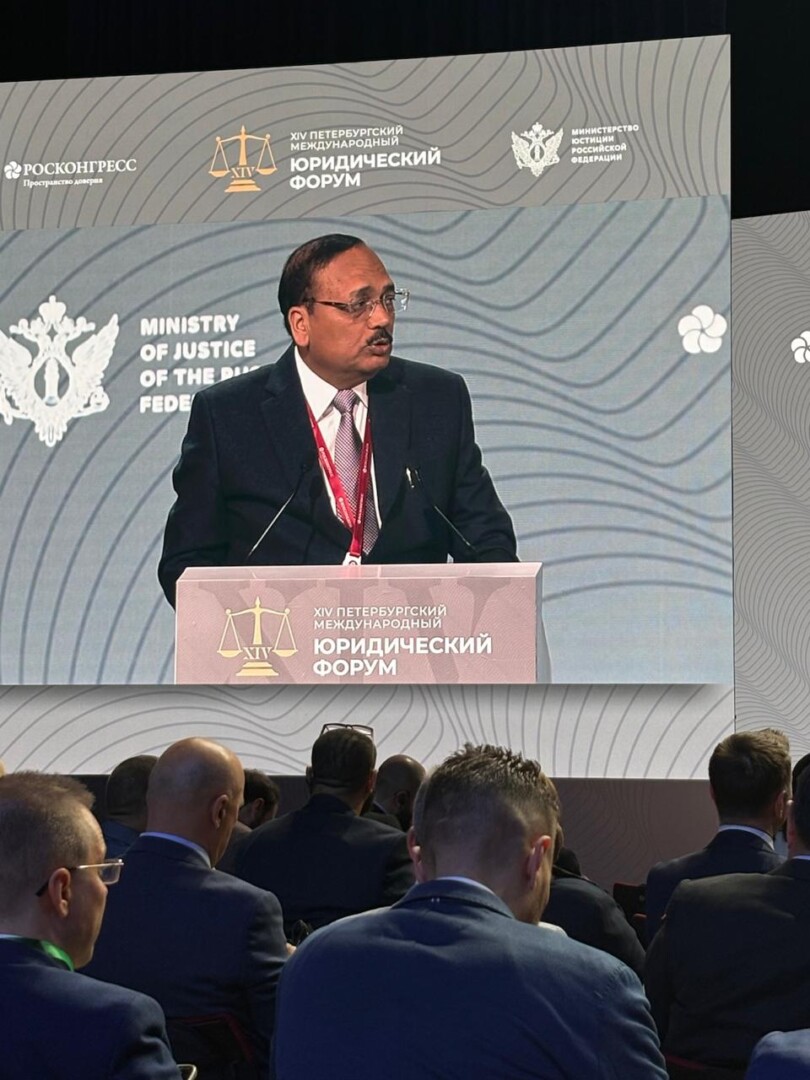
In a pronouncement carrying the weight of jurisprudential history, the Chief Justice of India, Justice Surya Kant, addressed the XIV St. Petersburg International Legal Forum this week and held forth on a proposition as old as law itself that equality is not an ornament appended to legal systems, but their very foundation.
Absent it, he observed, what remains is not law but the organised will of the stronger party.
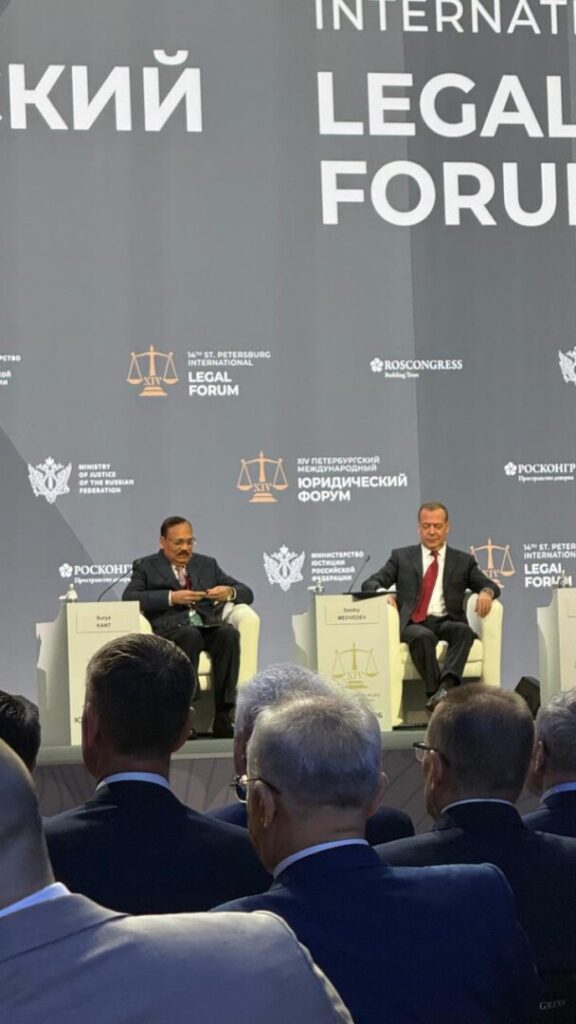
Speaking on the theme “Equal Justice, Equal Law: Access as the Measure of International Law’s Humanity,” the CJI opened his address with a Russian greeting and invoked Dostoevsky’s description of St. Petersburg as a city both fantastical and deliberate a fitting backdrop, he suggested, for a meditation on law’s own architecture.
Drawing on the city’s most recognisable landmark, the CJI likened the international legal order to Falconet’s Bronze Horseman, the equestrian statue of Peter the Great that has stood resolute for over two centuries upon the immense Thunder Stone beneath it.
“The principle of Equality found its most ambitious modern expression in the Charter of the United Nations, which proclaimed, in its very first Article, about the ‘Sovereign Equality of Nations Large and Small’.”
Just as the statue’s endurance owes everything to that unseen foundation, he reasoned, so too does the edifice of international law rest entirely upon the foundation of equality invisible in ordinary times, yet the sole reason the structure does not collapse under its own weight.
On the genesis of this principle, the CJI departed from the conventional wisdom that traces equality’s lineage to the Magna Carta of 1215.
He submitted, instead, that its truer origin lies in Kautilya’s Artha shastra, a treatise on statecraft authored in the fourth century, which held that a sovereign who places himself above dharma and law forfeits, in substance if not in name, the very crown he wears.
Nor, he noted, did this insight stand in isolation kindred articulations surface across civilisations, from Roman lex regia to the Islamic constraints of shari’a upon the ruler, to the communal ethic of Ubuntu in African jurisprudence.
Each tradition, by its own route, arrived at the same compact: that no power is above the law it claims to administer.
Turning to the present day, the CJI offered a pointed observation on the asymmetry of international scrutiny.
Nations of the Global South and East, he remarked, continue to labour under the burdens of colonial legacy and institution-building even as they answer to standards more exacting than those applied to wealthier nations.
That such an imbalance persists, he suggested, is itself a verdict on how far the promise of equal law remains from being honoured in practice.
He closed on a note that read less like rhetorical flourish and more like a finding of fact: that equal justice and equal law are not ceremonial phrases for declarations and preambles, but the very conditions without which a legal order forfeits its claim to be called law at all.