CJI Surya Kant Leads India-Russia Judicial Pact, MoU Inked in Moscow
(By Syed Ali Taher Abedi)
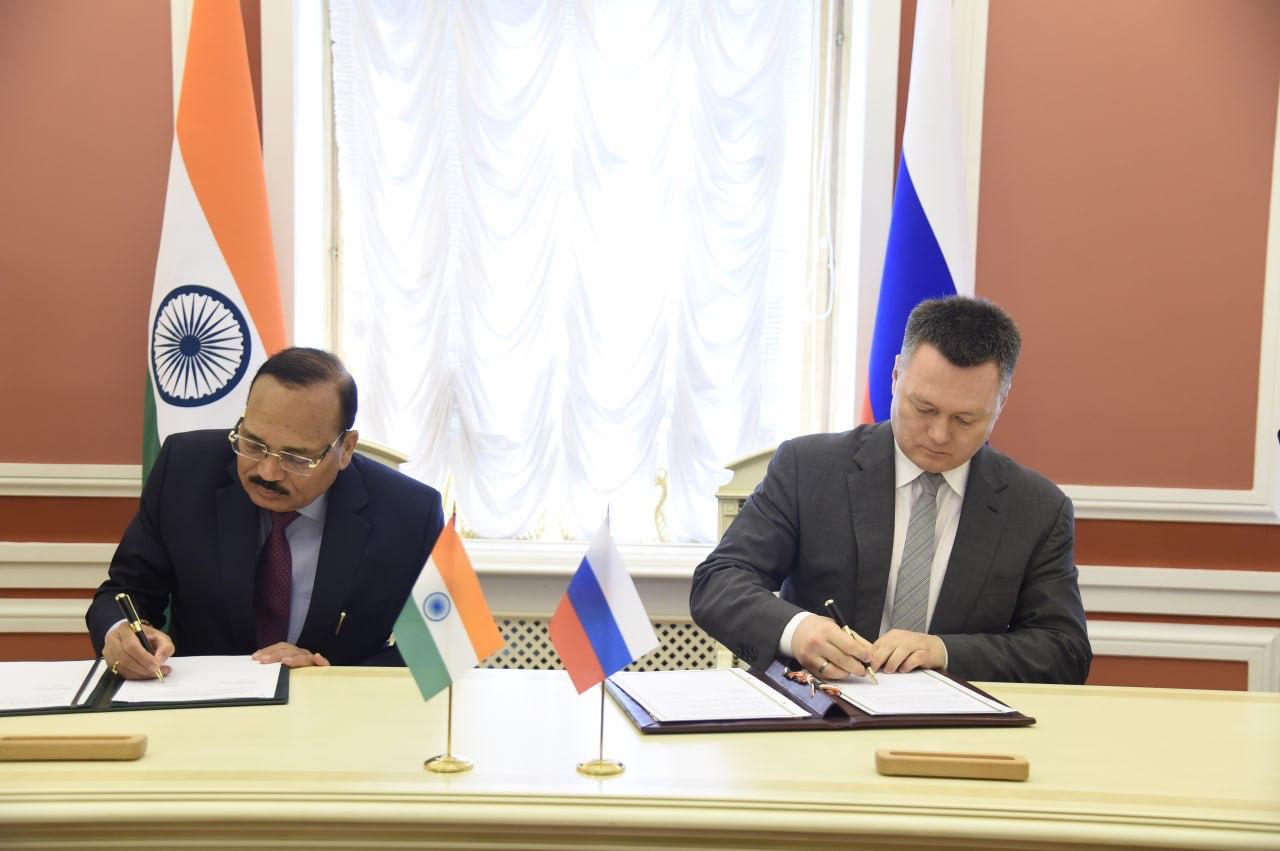
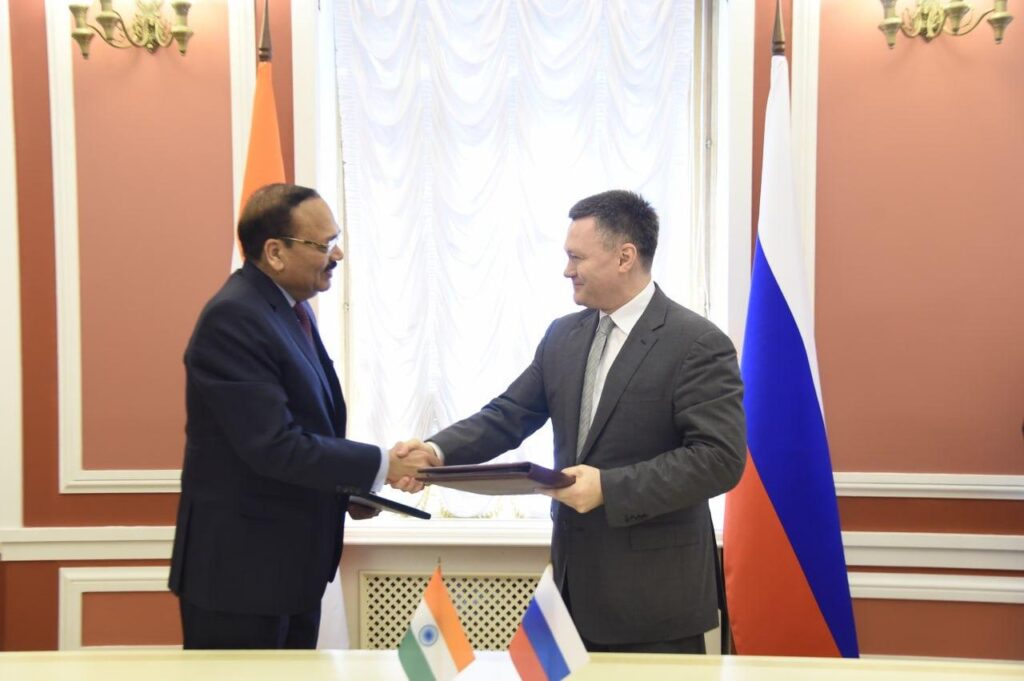
Moscow, June 23, 2026 — The Supreme Court of India and the Supreme Court of the Russian Federation signed a Memorandum of Understanding on judicial cooperation in Moscow on Tuesday, formalising an institutional framework for sustained dialogue between the two apex courts.
Chief Justice of India Surya Kant and Chief Justice of the Russian Federation Igor Krasnov signed the MoU in a ceremony attended by senior judicial and diplomatic officials.
Common institutional challenges across legal traditions
In remarks at the Russian Supreme Court, Chief Justice Surya Kant framed the agreement as a response to shared institutional challenges that transcend doctrinal differences between India’s common law system and Russia’s civil law tradition.
He observed that both apex courts must preserve public confidence in the administration of justice while adapting to rapid technological and social change.
“Despite differing legal traditions, our courts confront the same imperative: to remain legitimate and trustworthy custodians of justice as technology reshapes court functioning,” he said.
Technology as an instrument of access, not a substitute for adjudication
Chief Justice Surya Kant stressed that technology must augment access to justice without supplanting judicial decision-making.
He reiterated that the human role in adjudication including assessment of evidence, witness credibility and judicial discretion must remain inviolable.
The chief justice referenced India’s judicial digital initiatives as examples of technology serving access and efficiency: SUVAS (Supreme Court Vidhik Anuvaad Software), which translates judgments from English into 16 regional languages; the AI-powered chatbot “Su Sahay” that assists litigants and lawyers with procedure and case status; and the “One Case, One Data” project to create a standardised digital record for each case.
Regulatory guardrails for AI in courts Surya Kant highlighted recently published draft regulations on the use of artificial intelligence in the judiciary, asserting that responsible deployment must preserve judicial independence and human oversight.
He delineated permissible AI functions translation, transcription, information management and administrative support and contrasted these with core judicial functions that must remain human.
Scope for substantive cooperation
Looking beyond the signing, the chief justice urged practical institutional cooperation through exchanges between judicial academies, joint training programmes, research collaboration and sharing of best practices.
He characterised the MoU as the opening of a sustained bilateral engagement aimed at strengthening judicial institutions in both countries.
“The future of justice will depend on our ability to combine technological innovation with enduring human values,” he said.
The Path Forward: Academies, Training, and Research Collaboration
In his concluding remarks, the Chief Justice looked beyond the immediate ceremonial significance of the MoU toward the substantive institutional engagement that the agreement is designed to facilitate.
Concluding his address, Chief Justice Surya Kant said courts across jurisdictions are confronting similar challenges relating to technological innovation, public confidence and institutional preparedness.
He expressed hope for deeper cooperation between the Indian and Russian judiciaries through exchanges between judicial academies, joint training programmes, research collaborations and sharing of best practices.
The vision articulated judicial academy exchanges, joint training initiatives, and collaborative research points toward a sustained and substantive bilateral relationship extending well beyond the symbolic signature of a single Memorandum of Understanding, into the practical exchange of judicial expertise, comparative legal scholarship, and institutional best practice between two of the world’s most significant constitutional democracies.
“The future of justice will depend upon our ability to combine technological innovation with enduring human values,” he said, expressing confidence that continued engagement between the two apex courts would strengthen judicial institutions in both countries.
That closing proposition the synthesis of technological innovation with enduring human values stands as a fitting encapsulation of the institutional philosophy that the Chief Justice of India has now carried, with remarkable consistency, across the international judicial forums of London, Oxford, and now Moscow.
It is a philosophy that neither rejects the transformative potential of technology nor surrenders to it the irreducibly human function empathy, discernment, and judgment that lies, in the Chief Justice’s own words, at the soul of the law.