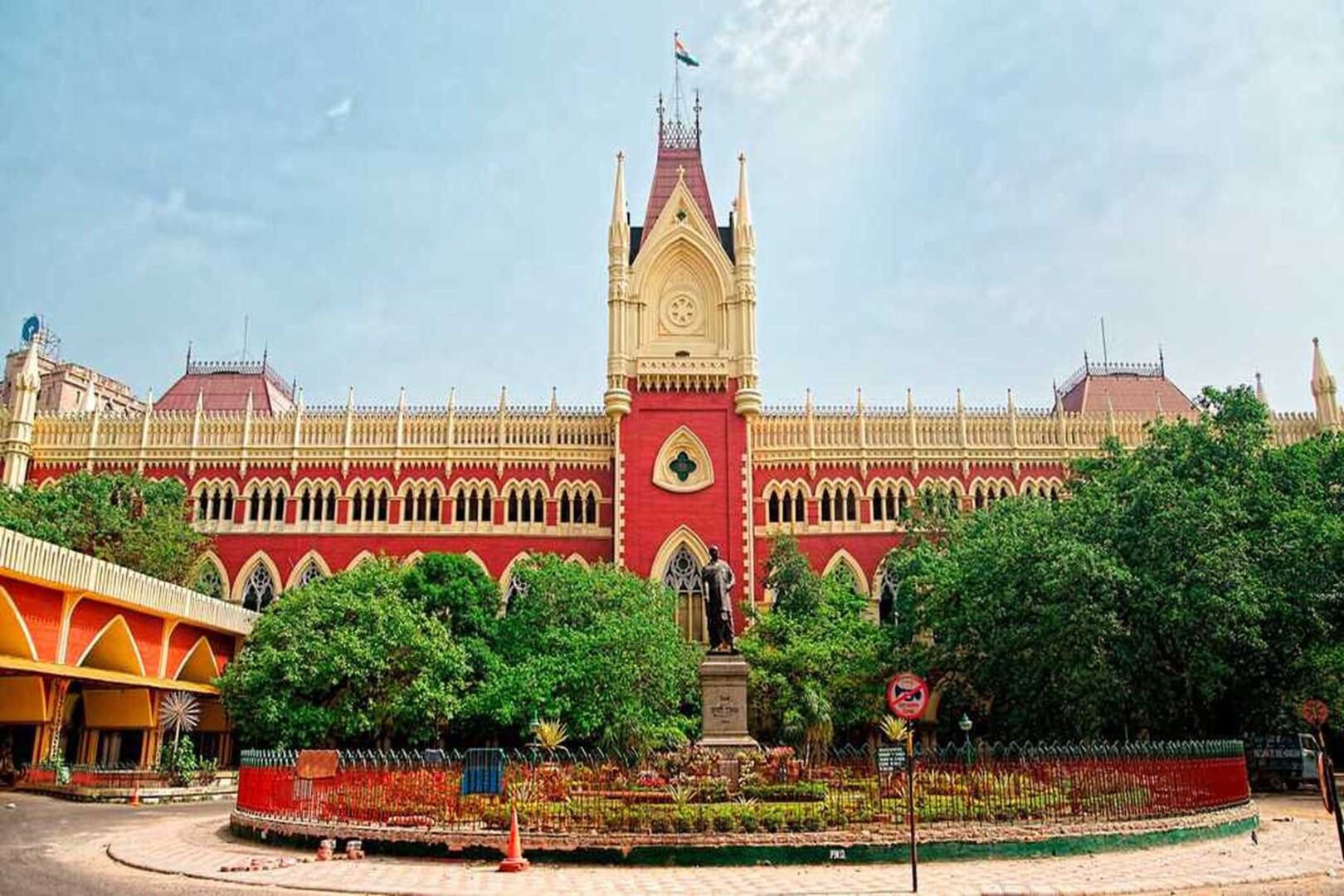
Supreme Court Collegium Clears Nine Advocates for Elevation to the Calcutta High Court Bench
(Judicial Quest News Network)
May 12, 2026 | New Delhi / Kolkata- In a significant exercise of its constitutional mandate over judicial appointments, the Supreme Court Collegium has recommended the elevation of nine practising advocates to the position of Judge at the Calcutta High Court.
The recommendations, arrived at following deliberations spread across two consecutive sittings of the Collegium on May 11 and 12, 2026, mark one of the more substantial infusions of fresh judicial talent into one of India’s oldest and most storied High Courts.
The Collegium and Its Role
The Supreme Court Collegium comprising the Chief Justice of India and the four most senior puisne judges of the apex court is the apex body constitutionally entrusted with the responsibility of recommending appointments and transfers within the higher judiciary.
Its resolutions, while requiring formal processing by the Union Government and the issuance of warrants of appointment by the President of India, carry the weight of constitutional precedent established through the landmark Second and Third Judges Cases.
The present batch of recommendations reflects the Collegium’s continuing assessment of the Calcutta High Court’s sanctioned strength and the imperative of bridging the gap between sanctioned and working judicial strength.
The Nine Recommended Advocates
The Collegium has cleared the following nine members of the Bar for appointment as Judges of the Calcutta High Court:
- Indranil Roy
- Aryak Dutt
- Atarup Banerjee
- Sandip Kumar De
- Partha Pratim Roy
- Sudip Deb
- Anuj Singh
- Arjun Ray Mukherjee
- Rishad Medora
Each of the recommended advocates is understood to have been subjected to the Collegium’s standard process of evaluation, which encompasses an assessment of professional standing, integrity, legal acumen, and suitability for judicial office inputs for which are typically sought from the concerned High Court’s Collegium, the State Government, and intelligence agencies.
Significance of the Appointments
The Calcutta High Court, established in 1862 and among the three original Charter High Courts of India, has historically grappled with a persistent backlog of cases and a deficit in its working judicial strength relative to its sanctioned capacity.
The elevation of nine advocates in a single resolution represents a meaningful step toward addressing this structural challenge, provided the Centre processes and acts upon the recommendations within a reasonable timeframe.
The inclusion of advocates from what appear to be diverse professional backgrounds and, notably, the recommendation of Rishad Medora whose name reflects a regional and possibly community diversity signals the Collegium’s awareness of the need for a bench that is representative of the varied litigant population that appears before the Calcutta High Court, which exercises jurisdiction over the States of West Bengal and the Andaman and Nicobar Islands.
What Follows Next
The constitutional process for giving effect to these recommendations requires the Union Ministry of Law and Justice to examine and process the Collegium’s resolution.
Once the Centre’s concurrence is obtained or, in the event of any return of the recommendation, a reiteration by the Collegium, which under settled constitutional law is binding the warrants of appointment are issued under the hand and seal of the President of India, followed by the swearing-in ceremony administered by the Chief Justice of the Calcutta High Court.
Until such time as the formal appointments are notified, the recommended advocates continue in their respective practices.
The legal community in Kolkata and across the country will await the timely processing of these recommendations, mindful that delays in the appointment pipeline remain a longstanding systemic concern within India’s judicial infrastructure.