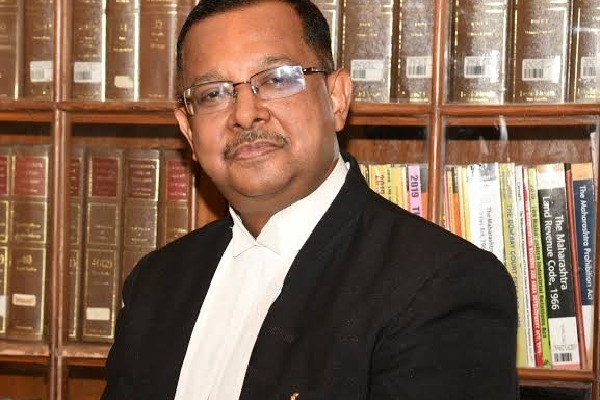
Protest Sends Students to Jail; Ganga Biryani Sinks Bail: Justice Ujjal Bhuyan Criticizes Shrinking Space for Dissent in India
(By Syed Ali Taher Abedi)
New Delhi,25, July,2026 – Supreme Court Justice Ujjal Bhuyan has voiced strong concerns over the diminishing space for dissent and free expression in India, highlighting instances where students are jailed for peaceful protests and denied bail under questionable circumstances.
His remarks underscore a growing apprehension about the state of fundamental freedoms in the country.
“For putting a post on Facebook commenting on the conduct of a minister who had called a serving Indian Army officer a daughter of a terrorist, an FIR is lodged and he has to seek anticipatory bail. Bail is granted what does the court do? Asking them to deposit your passport when he is not even on a flight risk. The it says don’t post anything on Facebook.”
Speaking at the 5th Justice G.P Singh Memorial lecture, Justice Bhuyan lamented that individuals, particularly students, are being arrested for merely exercising their right to protest.
He cited cases where bail was denied or granted with overly restrictive conditions, effectively stifling their liberty and right to express divergent views.
“Take the case of young student activist who had suffered long incarceration. While the court granted them bail, they were directed not only to surrender their passport, but also not to participate or address any public meetings whether physically or virtually. Imposing such restrictive conditions severely undermines their fundamental freedom and liberty. People would be justified in asking whether, by passing such orders or by imposing such conditions, is the court also sending a message that don’t participate in such public activities?
One striking example mentioned by Justice Bhuyan involved a group of young people denied bail for organizing an Iftar party on a boat in the Ganga.
He questioned the rationale behind such denials, stating, “I am sure consuming chicken biryani is not an offence. There is no law prohibiting consumption of chicken over the Ganga River; they were arrested for that very reason and they had to remain in jail for three months.
Can people be arrested and denied bail for 3 months for such an activity, I ask myself! Citizens are watching, people are watching.”
Justice Bhuyan also criticized courts for imposing bail conditions that compel self-censorship, such as prohibiting individuals from posting on social media or participating in public meetings.
He referenced the Gulfasha judgment in Delhi riots, where stringent bail conditions were imposed on student activists, raising questions about whether such orders inadvertently discourage public participation and dissent.
Furthermore, Justice Bhuyan expressed amusement and concern over the Bombay High Court’s decision to dismiss a petition by the Communist Party of India (Marxist) seeking to protest in solidarity with Palestine. “Our country has several issues to deal with we don’t want anything like this. I am sorry to say you are all short-sighted you are looking at Gaza and palatine why don’t you do something for our own country be patriots speaking for Gaza and palatine is not patriotism, speak up for the causes in our country practice what you preach. Found it very amusing that when in Bombay Shivaji Park when a group of people wanted to demonstrate in solidarity with the people of Gaza the permission was not granted by the government so they moved a writ petition in the Bombay High Court the learned Judge said don’t you have any issues in India why do you have to go that far to agitate?
The High Court had suggested that protestors should focus on domestic issues, a stance Justice Bhuyan found problematic given India’s traditional recognition of Palestine.
Beyond the issue of dissent, Justice Bhuyan also touched upon the importance of the separation of powers, criticizing former judges who join politics after retirement.
He further said that India has traditionally recognized Palestine and has a Palestinian Embassy. But Despite that Incidents where people were denied permission to protest etc happened,
“India has recognized palatine we have a Palestinian embassy in India. Traditionally India has always recognised Palestine. The recent incident in Gaza, it is south Africa that moved the International Court of Justice against what is happening there, saying that make a declaration that is Genocide. Justice Muralidhar former judge of the Odissa High Court, UN appointed him to go into the violence in Gaza. He has published a report which is accepted by the UN and now in the public domain about the violence meted out by the State on such children women and elderly Justice Bhuyan told the audience.
He likened it to a three-legged stool with two legs in one place, destined to fall apart.
He also critiqued the former Vice-President’s questioning of the jurisprudential legitimacy of the Kesavan Anda Bharati judgment, a landmark Supreme Court ruling that established the basic structure doctrine of the Indian Constitution.
Justice Bhuyan emphasized that universities should be environments that foster critical thinking and research, rather than places where students face punitive actions for their engagement with societal issues.
His comments serve as a powerful reminder of the delicate balance between state authority and individual freedoms in a democratic society.