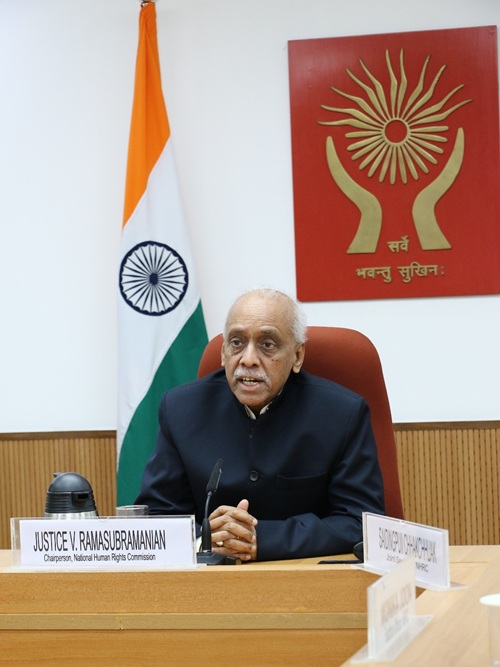
India Braces for Extreme Heat: NHRC Tells 21 States, Delhi to Act Now
(By Syed Ali Taher Abedi)
New Delhi: 28, April, 2026- The National Human Rights Commission of India has directed 21 states and the National Capital Territory of Delhi to take advance measures to protect vulnerable populations from the impact of heat waves, as temperatures are expected to rise sharply in the coming months.
In its advisory, the Commission highlighted the heightened risks faced by economically weaker sections, outdoor workers, the elderly, children, and newborns.
It expressed particular concern for the homeless, who remain exposed to extreme weather conditions due to inadequate shelter and limited access to essential resources.
Emphasising the need for timely intervention, the NHRC has called upon the states and authorities in Delhi to strictly implement preventive measures in line with existing Standard Operating Procedures (SOPs) and the guidelines issued by the National Disaster Management Authority.
The Commission has also sought detailed Action Taken Reports (ATRs) from the concerned authorities, outlining the steps initiated to mitigate the effects of heat waves and prevent loss of life.
The states identified by the Commission include Andhra Pradesh, Assam, Bihar, Chhattisgarh, Gujarat, Haryana, Himachal Pradesh, Jharkhand, Karnataka, Kerala, Madhya Pradesh, Maharashtra, Odisha, Punjab, Rajasthan, Sikkim, Tamil Nadu, Telangana, Tripura, Uttar Pradesh and West Bengal.
In its communication, the NHRC underscored the growing severity of heat waves, noting a marked increase in their frequency, duration and intensity in recent years.
It observed that these extreme weather conditions disproportionately impact marginalised and economically weaker sections, particularly outdoor workers and the homeless, who often lack access to adequate shelter, drinking water and healthcare facilities.
The Commission also flagged heightened health risks for the elderly, children, infants and newborns, who are especially vulnerable to heat-related illnesses.
Beyond health concerns, the NHRC pointed out that prolonged heat waves can disrupt livelihoods, especially in informal sectors, and may also heighten the risk of fire-related incidents.
Emphasising the urgency of the situation, the Commission, in a letter addressed to the Chief Secretaries of the concerned states and Delhi, called for the adoption of integrated, inclusive and well-coordinated mitigation strategies.
Citing data from the National Crime Records Bureau, which recorded 3,712 deaths due to heatstroke and sunstroke between 2019 and 2023, the NHRC stressed the need for timely intervention to prevent avoidable casualties.
The Commission urged authorities to ensure strict and seamless implementation of relief and preparedness measures in accordance with existing Standard Operating Procedures (SOPs) and the guidelines issued by the National Disaster Management Authority.
Additionally, the NHRC has sought consolidated Action Taken Reports (ATRs) from districts through the respective state and Union
Territory administrations, detailing the steps undertaken to mitigate the impact of heat waves and protect at-risk populations.