
Delhi Court Directs FIR Against Karishma Aziz Over ‘Offensive’ Social Media Posts
(By Syed Ali Taher Abedi)
New Delhi, September 17, 2026-A Delhi court has directed the Cyber Police Station, New Delhi, to register a First Information Report against social media user Karishma Aziz, holding that a series of posts and videos published between February and April 2025 alleging derogatory remarks against Hindu religious beliefs, historical and cultural figures, and a comparison of the Prime Minister of India to a dog discloses the commission of cognisable offences that require formal investigation by law enforcement.
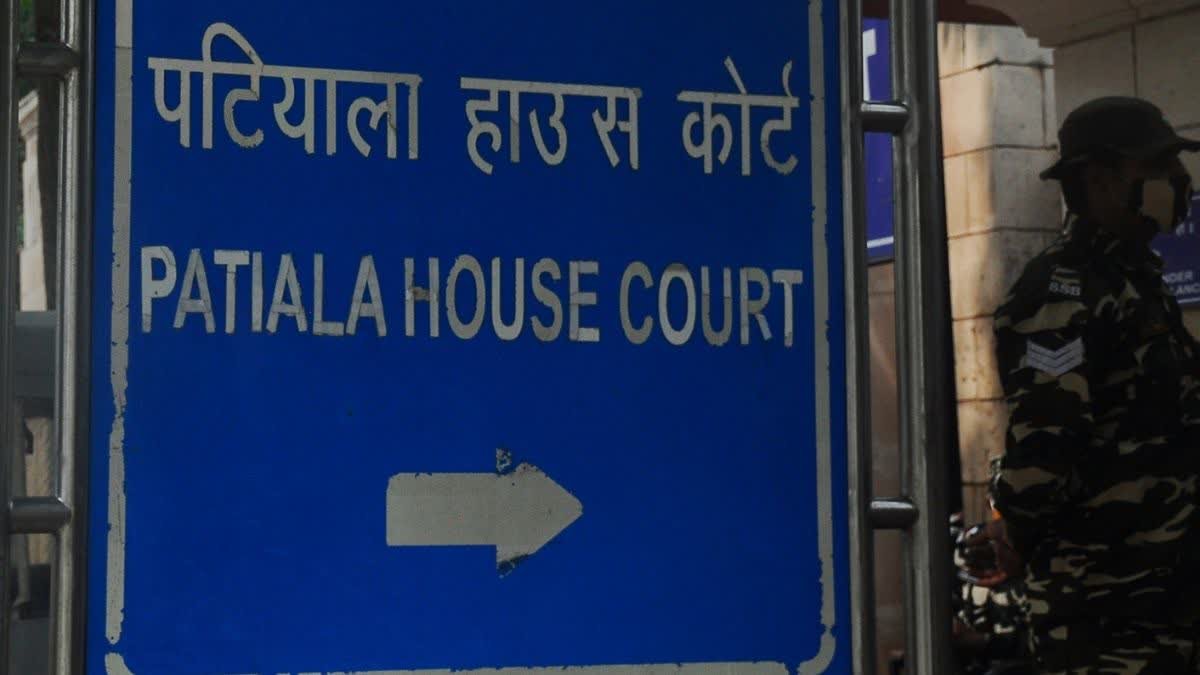
Chief Judicial Magistrate Mridul Gupta of the Patiala House Court passed the direction on Thursday while allowing a complaint petition filed by Advocate Amita Sachdeva, exercising the court’s power under Section 175(3) of the Bharatiya Nagarik Suraksha Sanhita the provision that grants a Magistrate the authority to direct a police officer to register an FIR and conduct investigation into a cognisable offence where the police have failed to do so on a complaint made to them.
The Order: A Magistrate’s Direction, not a Judicial Finding
Before examining the substance of the complaint and its legal implications, a point of threshold constitutional importance must be clearly stated one that the Chief Judicial Magistrate himself was careful to record in his order.
Judge Gupta observed that at the stage of considering an application under Section 175(3) BNSS, the court is not required to conclusively determine the truthfulness of the allegations or the criminal liability of the person against whom the direction is sought.
He added explicitly that he had expressed no opinion on the merits of the allegations.
The direction to register an FIR is, in the most precise legal sense, a direction to investigate not a finding of guilt, not a determination that the impugned posts constitute criminal offences, and not a prejudgment of the outcome of any criminal proceeding that may follow.
It is the first step in the criminal process the creation of a formal record of the complaint and the commencement of an investigation whose conclusions will be drawn from the evidence gathered and assessed under the supervision of the competent court.
Karishma Aziz is presumed innocent until proven guilty. Every allegation in the complaint remains to be established through the criminal process.
The Complaint: Posts, Videos, and a Pattern of Alleged Provocation
The complaint was filed by Advocate Amita Sachdeva, who told the court that she had come across several posts and videos published by Karishma Aziz across social media platforms between February and April 2025.
The content complained of, as described in the complaint, encompasses several categories of allegedly objectionable material.
The complaint alleged that certain posts mocked a Hindu saint’s spiritual views and disability a characterisation that, if accurate, engages both provisions against promoting enmity on grounds of religion and the dignity of persons with disabilities.
It alleged that at least one post compared the Prime Minister of India to a dog a specific comparison directed at the head of India’s elected government and one whose legal character will turn, in the investigation, on whether it constitutes defamation, promotion of enmity, or falls within the broader protection of political commentary and satire that the constitutional guarantee of free speech under Article 19(1)(a) extends.
The complaint further alleged that posts mocked Hindu warriors and historical figures while portraying the Mughal emperor Aurangzeb favourably and demeaning Hindu icons content whose legal classification as permissible historical opinion or impermissible promotion of religious enmity is one of the most contested boundaries in India’s speech law landscape.
It additionally alleged that Aziz described Veer Savarkar the nationalist leader and ideological icon of the Hindu right as a traitor, and made other remarks targeting Hinduism and what the complainant characterised as patriotic sentiments.
The complaint placed before the court screenshots, transcripts, and links concerning the series of posts published over the period in question a documentary record that the Magistrate found sufficient to satisfy the threshold requirement for directing investigation under Section 175(3) BNSS.
Delhi Police’s Earlier Assessment: Political Commentary, Not Criminal Incitement
The course of events that led to the complaint being brought before the Magistrate under Section 175(3) is itself instructive about the contested character of the legal and factual questions the posts raise.
Delhi Police had earlier received and conducted an enquiry into the complaint.
In its response, the police stated that while the posts contained obscenity and targeted Hinduism, they are in the nature of political or historical commentary, criticism, and satire.
The police said that its enquiry had not found evidence of a deliberate attempt to incite communal disharmony.
This assessment that the posts constitute political commentary, criticism, and satire rather than criminal incitement is the conventional framework through which investigative authorities in a liberal constitutional democracy evaluate political and religious speech on social media platforms.
The distinction between protected political commentary and actionable criminal conduct is the most contested boundary in the law of free expression in the digital age and the police’s conclusion that the impugned posts fell on the protected side of that boundary is not an implausible institutional assessment.
The complainant, dissatisfied with the police’s failure to register an FIR, approached the Magistrate under Section 175(3) BNSS the statutory mechanism through which a complainant who is refused an FIR by the police may seek a court’s direction compelling registration.
The Magistrate’s Reasoning: Investigation Required, Merits Reserved
Chief Judicial Magistrate Mridul Gupta’s order directing registration of the FIR rests on a careful and constitutionally modest legal proposition one that navigates between endorsing the complainant’s characterisation of the content and accepting the police’s assessment that it constitutes protected commentary.
The court held that whether the posts amounted to protected political commentary, satire, criticism, or historical opinion, or crossed the threshold of criminality, was a matter requiring investigation.
This formulation is precise in its institutional humility.
The Magistrate has not held that the posts are criminal. He has held that the question of whether they are criminal is one that the investigative process armed with the full panoply of forensic tools, witness examination, and expert assessment available to the police is better placed to answer than a preliminary judicial review of documentary screenshots and transcripts.
The Magistrate observed that the complainant had placed before the court screenshots, transcripts, and links concerning a series of posts published over a period of time a body of documentary material whose sheer volume and continuity satisfied the court that the allegations were not frivolous or vexatious, and that the cognisance of cognisable offences was prima facie disclosed.
The Legal Provisions: What FIR Might Be Registered Under
The specific penal provisions under which the FIR may be registered will be determined by the Cyber Police Station’s assessment of the content following its investigation. Based on the nature of the allegations, the relevant statutory framework is likely to include several provisions of the Bharatiya Nyaya Sanhita, 2023.
Section 196 BNS the provision addressing the promotion of enmity between different groups on grounds of religion, race, place of birth, residence, language, caste, or community is among the most directly applicable to allegations of content that targets a specific religious community’s beliefs, icons, and historical figures in a manner calculated to promote religious antagonism.
Section 299 BNS deliberate and malicious acts intended to outrage religious feelings is applicable to content that is directed at the religious sensibilities of a community with a deliberate intention to cause hurt to those sentiments, as opposed to content that merely offends in the course of legitimate commentary on religious or historical subjects.
Section 353 BNS statements conducing to public mischief and relevant provisions of the Information Technology Act, 2000, governing the publication of content that is grossly offensive, menacing, or false with the intent to cause annoyance, insult, or criminal intimidation, are also potentially applicable depending on the precise character of the individual posts under investigation.
The comparison of the Prime Minister to a dog may additionally engage Section 356 BNS governing criminal defamation the provision that protects individuals, including public figures, from the publication of false statements of fact calculated to damage their reputation though the application of defamation law to political satire of public officials is a question on which Indian courts have historically proceeded with considerable caution.
The Constitutional Tension: Free Speech, Satire, and Religious Sentiment
The case of Karishma Aziz places before the criminal justice system one of the most constitutionally fraught questions of the digital age the boundary between the constitutionally protected right to free speech and expression under Article 19(1)(a), including the right to engage in political satire and historical commentary, and the criminal law’s protection of religious sentiments and communal harmony.
The Supreme Court of India has, across a series of judgments, recognised that political satire even satire that is sharp, offensive, and deeply disagreeable to those it targets is a legitimate exercise of the right to free expression that a democratic polity must accommodate.
In S. Rangarajan v. P. Jagjivan Ram, the Supreme Court held that freedom of expression cannot be suppressed on the sole ground that it may arouse feelings of resentment in a section of the population. In Shreya Singhal v. Union of India, the court struck down Section 66A of the Information Technology Act on the ground that it criminalised speech that was merely annoying or offensive to others a category that encompassed the overwhelming majority of legitimate political commentary and satire on digital platforms.
At the same time, the court has equally affirmed that the freedom of expression is not absolute that it is subject to the reasonable restrictions enumerated in Article 19(2), which include restrictions imposed in the interests of public order, decency, morality, and the sovereignty and integrity of India.
Content that crosses the line from robust political commentary into deliberate incitement of communal enmity, or from historical critique into wilful malice against the religious sentiments of a community, falls within the constitutional space that Parliament has validly occupied through the criminal law provisions now applicable to the impugned posts.
The investigation now directed by the Magistrate will have to determine, on the basis of the evidence gathered, which side of that constitutional line the impugned content falls on.
That is not a determination that the FIR which marks only the commencement of the investigative process makes or implies.
It is the determination that the investigation must reach, and which the courts will ultimately review.
What Comes Next: Investigation, Report, and Potential Proceedings
The Cyber Police Station, New Delhi, is now directed to register the FIR and undertake investigation in accordance with law.
The investigation will involve the collection and forensic analysis of the digital content, the recording of statements from the complainant and any other material witnesses, and the preparation of a report for the competent court.
Following the investigation, the police will submit a report under Section 173 BNSS either recommending prosecution, where the evidence gathered supports the filing of a charge sheet, or seeking closure of the proceedings, where the investigation determines that no cognisable offence is made out.
If a charge sheet is filed, the court will take cognisance of the offences alleged, and Karishma Aziz will have the full opportunity to contest the allegations through the criminal trial process including the right to challenge the FIR’s validity before the High Court under Section 482 BNSS, to seek bail, to cross-examine witnesses, and to present her defence in accordance with the constitutional safeguards guaranteed by Articles 20, 21, and 22.
The Delhi court has directed an investigation. The law will now take its course.


