
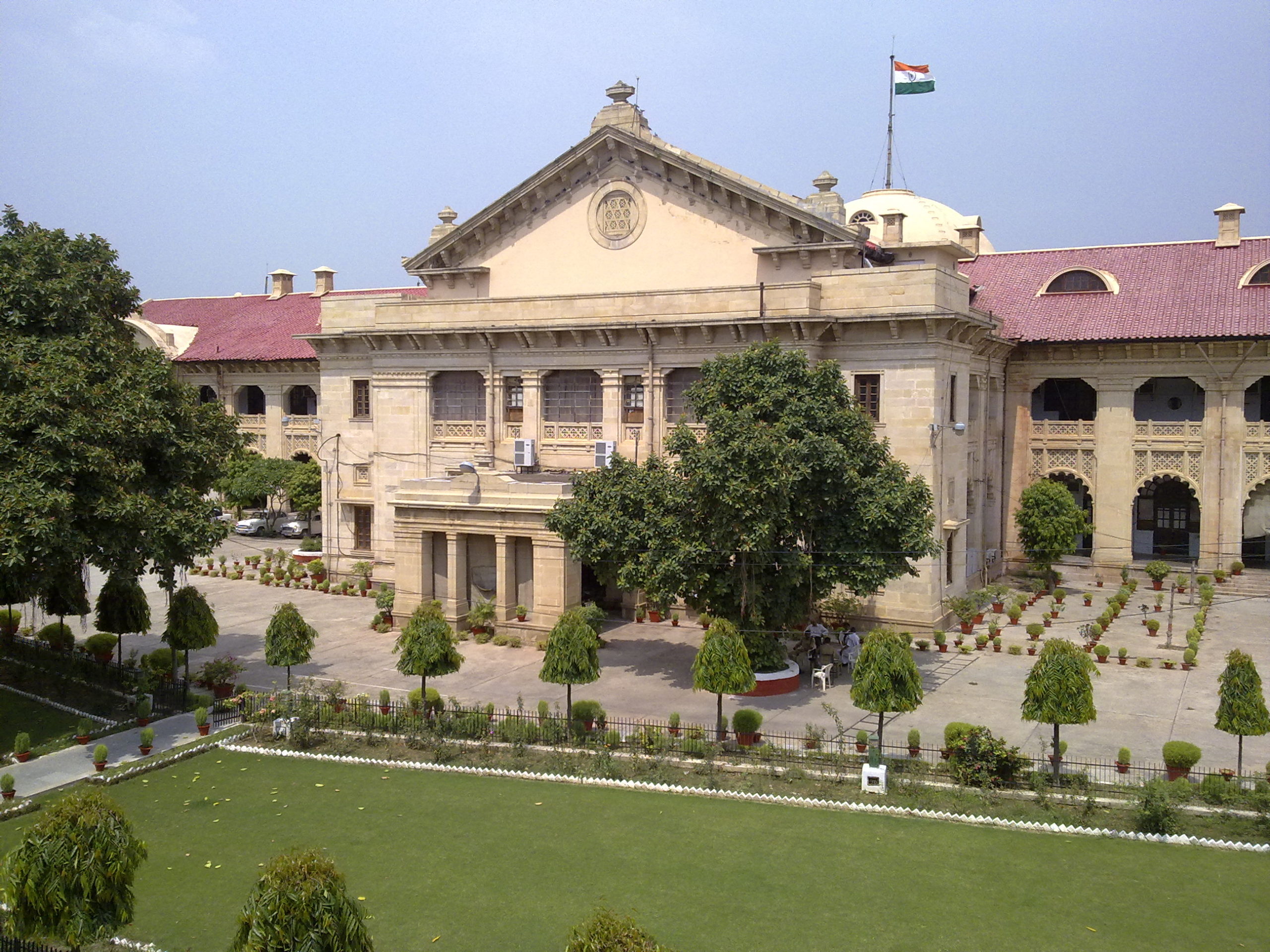
Allahabad High Court’s Strong Rebuke: Police Must Serve the Constitution, Not Political Interests
(By Syed Ali Taher Abedi)
6, May,2026-In a stinging judicial pronouncement that lays bare a crisis of credibility within the state’s law enforcement machinery, the Allahabad High Court has delivered a scathing indictment of the Uttar Pradesh Police.
In a judgement highly critical of the functioning of UP police, Justice Vinod Diwakar said thatUttar Pradesh’s “feudal mindset of politicians and bureaucrats “has long reduced constitutional governance to an instrument of personal dominion rather than public service
“The vertical loyalty of officers runs not toward the Constitution but toward the ruling dispensation. Field officers, acutely conscious of the transfer-posting economy, calibrate their conduct to satisfy political superiors. Encounter killings, selective crackdowns, and targeted use of the Gangsters Act against inconvenient individuals have periodically attracted judicial notice” the court added.
The Court observed with grave concern that the loyalty of police officers appears to have shifted away from the Constitution the paramount document of the land and toward their political superiors.
The Bench minced no words in characterizing this shift as a fundamental betrayal of the police’s role in a democracy.
“a considerable section of the officer cadre treats the rule of law not as a constitutional obligation but as an operational inconvenience. Arrests are affected without due process, many times FIRs are registered or suppressed with ulterior motives, and preventive detention provisions are invoked arbitrarily, at the whims of officers. The procedural safeguards under the Code of Criminal Procedure, and now the Bharatiya Nagarik Suraksha Sanhita, are routinely bypassed. Judicial orders are complied with in form but defeated in substance.”
The Court noted that rather than acting as impartial sentinels of the rule of law, officers routinely prioritize the satisfaction of the political executive over their sworn duty to uphold justice.
“Certain officers who rose to the post of Home Secretary have, in practice, served as conduits for self-serving interests. Recommendations on postings, approvals of departmental proceedings, and responses to court proceedings have, in such instances, reflected considerations driven by personal or extrinsic calculations rather than dispassionate and constitutionally informed administrative judgment. This fundamentally compromises the institutional integrity that the position demands”
This allegiance to political masters, the Bench opined, is a direct affront to the principles enshrined in the Constitution, which mandate that the police function as an independent instrument of the state, answerable only to the law and not to the whims of those in power.
Delving deeper into the root cause of this malaise, the High Court identified the primary driver of such misconduct the self-serving career interests of police officers.
The Bench highlighted that personnel are often more concerned with securing favourable postings, avoiding punitive transfers, and advancing their own professional trajectories than with performing their duties impartially.
The Court stated that this willingness to succumb to political pressure, motivated by personal gain and service interests, represents a dereliction of duty of the highest order.
“This Court finds it difficult to reconcile such a disproportionately lenient outcome with the gravity of the supervisory failure involved, and it is precisely this culture of institutional impunity that emboldens those in authority to remain unaccountable, perpetuating the feudal and politically patronised administrative ecosystem that this Court has adverted to hereinabove”
The remarks underscore a critical constitutional imperative: that the rule of law is supreme and cannot be held hostage to the diktats of the ruling class.
The judgment serves as a powerful admonition to the law enforcement establishment, reminding them that their ultimate master is the Constitution, not the political executive.
The Court’s intervention is a clarion call for the restoration of police independence, emphasizing that the legitimacy of law enforcement rests entirely on its ability to function without fear or favour.
Advocate Ronak Chaturvedi appeared for petitioners.
Additional Advocate General Anoop Trivedi with additional Advocate General Paritosh Kumar Malviya appeared for the State.

