Apex Court Declines to Fast-Track Plea Over Remarks Against Prophet Muhammad, Directs Petitioner to Trust Due Process of Law
(By Syed Ali Taher Abedi)
New Delhi, July 6 — In a pointed reaffirmation of institutional hierarchy and procedural discipline, the Supreme Court today declined to accord urgent listing to a public interest litigation seeking judicial intervention against allegedly derogatory remarks made about Prophet Muhammad, instead directing the petitioner to first exhaust the ordinary remedies available before the police and subordinate authorities.
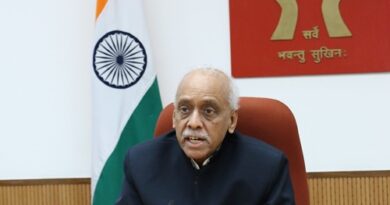
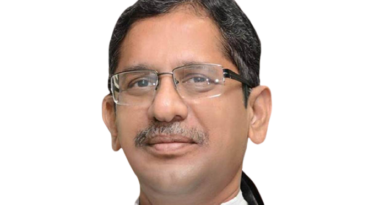
The matter came up for mentioning before a Bench comprising Justice Ahsan Uddin Amanullah and Justice Sheel Nagu, sitting on a partial working-day roster, when Advocate Rajat Kumar sought an expedited hearing on behalf of the petitioner, Advocate-on-Record Ansar Ahmad Chaudhary.
Counsel urged that the remarks in question carried the potential to inflame communal passions and disturb public tranquillity, thereby warranting the Court’s immediate attention.
The Genesis of the Grievance
The controversy traces its origins to a podcast aired in June, during which social-media influencer Nazia Elahi Khan is alleged to have made objectionable statements concerning Prophet Muhammad and members of his family.
Clips of the broadcast thereafter proliferated across digital platforms, triggering public outcry and culminating in the registration of multiple First Information Reports against the influencer across jurisdictions.
The Bench Speaks: A Judicial Reminder on the Sanctity of Process
Declining to entertain the plea on an urgent footing, Justice Amanullah in remarks that carried the unmistakable weight of judicial admonition questioned the increasing tendency of litigants to leapfrog established institutional channels in favour of direct recourse to the Apex Court. Observed the Judge:
“Have you filed a case? The police is there. Have faith in our system. We are only the Apex; we are here to monitor. It is also an eye-opener for us whether our lower functionaries are working or not? If everything is short-circuited here, they will also raise hands that okay…that is what is happening…all institutions are going haywire because everything comes from the top.”
The observation, delivered with evident candour, appeared to reflect a broader judicial concern that the constant bypassing of grievance redressal mechanisms at the grassroots level risks hollowing out the very institutions designed to dispense first-instance justice, while simultaneously overburdening the apex forum with matters that ought properly to travel through the ordinary hierarchy.
Continuing in the same vein, and while acknowledging the gravity of the underlying issue, the Judge cautioned against the sensationalising of sensitive religious matters, stating:
“It’s a grave thing, I agree with you…speaking for myself, I am very sensitive to it…but then there is a procedure. If that doesn’t work, come to us. In sensitive matters, you are also a citizen of India first, you must understand the implications. You are a counsel…You know the law. You understand the consequences. Don’t sensationalize these things. If one person has made a mistake, pin him down with the full force of the law.”
The remarks, read together, strike a careful balance recognising the sensitivity of matters touching upon religious sentiment, while simultaneously insisting that the machinery of the State, and not the corridors of the Supreme Court, be the first port of call for redressal.
The Reliefs Sought
The petition, arraying as respondents the Union of India’s Department of Home Affairs, the Ministry of Electronics and Information Technology (MeitY), along with YouTube, Facebook and X (formerly Twitter), and the influencer herself, seeks a triad of directions:
- Framing and enforcement of appropriate regulatory guidelines to curb the publication and circulation of content deliberately derogatory to revered religious figures, including Prophet Muhammad and Bhagwan Shri Ram;
- Institution of adequate safeguards to prevent the misuse of digital platforms for outraging religious sentiment and fomenting communal disharmony; and
- Immediate identification, takedown and deletion of the offending videos and all similar or identical content across social media platforms, so as to forestall any untoward escalation arising from their continued circulation.
The Road Ahead
With urgent listing declined, the petitioner has effectively been relegated to the ordinary course approaching the police and local authorities in the first instance, with the door to the Supreme Court left ajar only should the established process prove unresponsive.
The Bench’s remarks, in this sense, function less as a rejection of the underlying grievance and more as a reaffirmation of the constitutional design, wherein the Apex Court positions itself as a court of last resort rather than first instance, reserving its extraordinary jurisdiction for occasions where the ordinary machinery of justice has genuinely failed.Case Title:Md Anas Chaudhary v. Union of India, Department of Home, Principal Secretary — WP(Crl) Diary No. 39051/2026