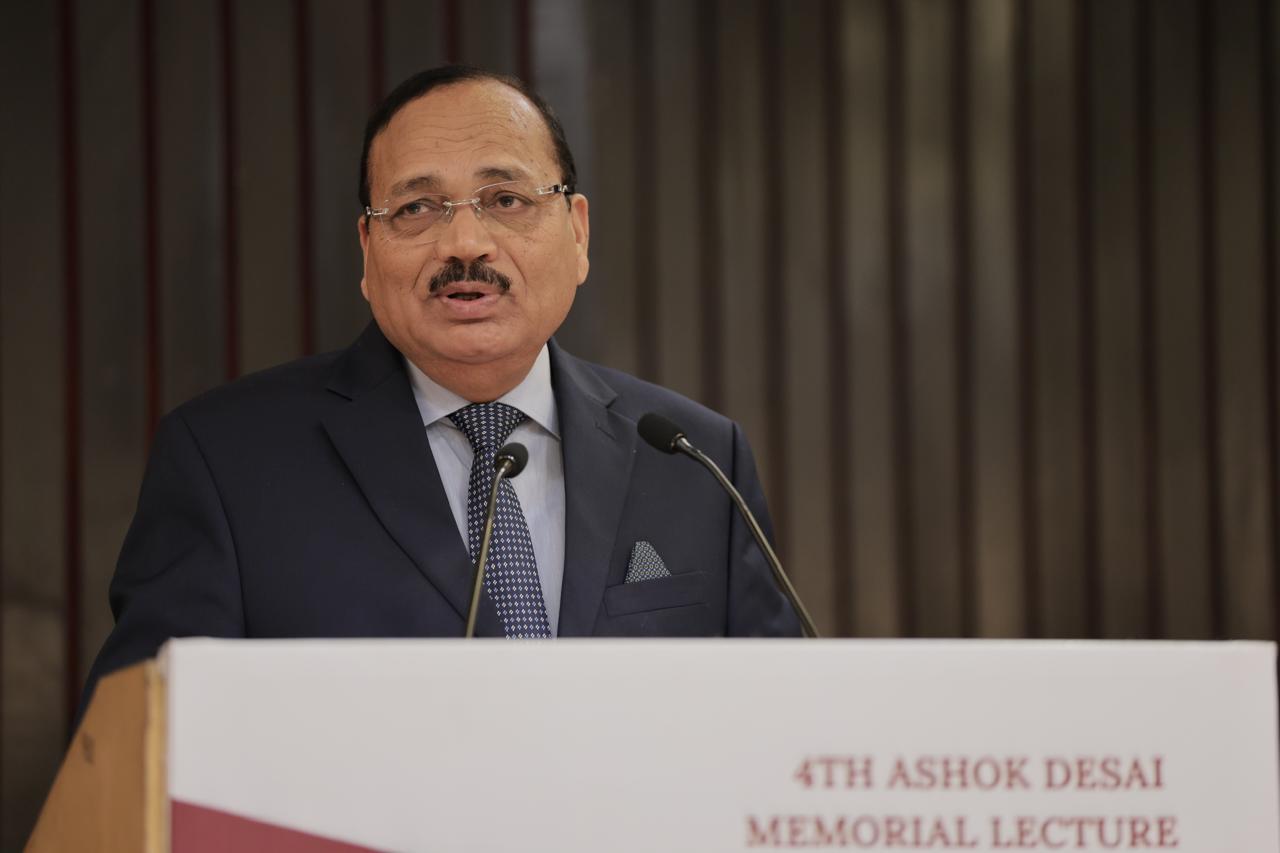
CJI Surya Kant Flags Constitutional Limits, Pushes for Virtual Hearings Nationwide
(By Syed Ali Taher Abedi)
New Delhi,21, May,2026-The Supreme Court on Thursday declined to entertain an urgent plea seeking directions to make virtual hearings mandatory across all Delhi courts as a fuel‑conservation measure, signalling reluctance to convert an administrative policy into a judicial mandate.
The petition was brought to the bench by way of an oral mention, counsel urging immediate listing on grounds of national interest.
The petitioner argued that mandating video hearings would do more than serve litigant convenience it would support the Government of India’s fuel‑conservation drive instituted in response to the geopolitical crisis in West Asia, lessen large‑scale travel by litigants, counsel and witnesses, and thereby reduce pressure on the country’s fuel supply chain.
The bench acknowledged the force of the submissions. Courts at all levels, from the Supreme Court to district courts, generate substantial daily travel as parties and lawyers appear in person for matters that could frequently be heard by video link.
In the present context where the Centre has formally adopted fuel‑saving measures the case for wider use of virtual hearings was described as one deserving serious institutional consideration.
A constitutional line, however, shaped the Court’s response. Chief Justice of India Surya Kant told counsel that the matter was not suited to being resolved “on the judicial side,” and disclosed that he had already written to the Chief Justices of the High Courts urging them to permit virtual hearings.
“It may not be appropriate to issue directions on the judicial side,” he said, adding that most High Courts had already implemented the practice and that adoption must remain a voluntary exercise for both the Bar and the Bench.
The bench did not grant the urgent listing sought, leaving the matter to administrative channels and the discretion of individual High Courts and legal practitioners.
The Supreme Court of India exercises appellate jurisdiction over the High Courts under Articles 132, 133, 134, and 136 of the Constitution. It exercises extraordinary original jurisdiction under Article 32 for the enforcement of fundamental rights.
It exercises supervisory jurisdiction, in a limited sense, over all courts and tribunals in India under Article 142, which empowers it to pass such orders as are necessary to do complete justice in any cause or matter pending before it.
Hearing before the Supreme Court of India, May 21, 2026 | Bench: Chief Justice of India Surya Kant | Matter: Oral mention seeking urgent listing of petition for virtual hearings in Delhi Courts | Context: Supreme Court fuel conservation measures implemented pursuant to Government of India advisory in light of West Asia crisis