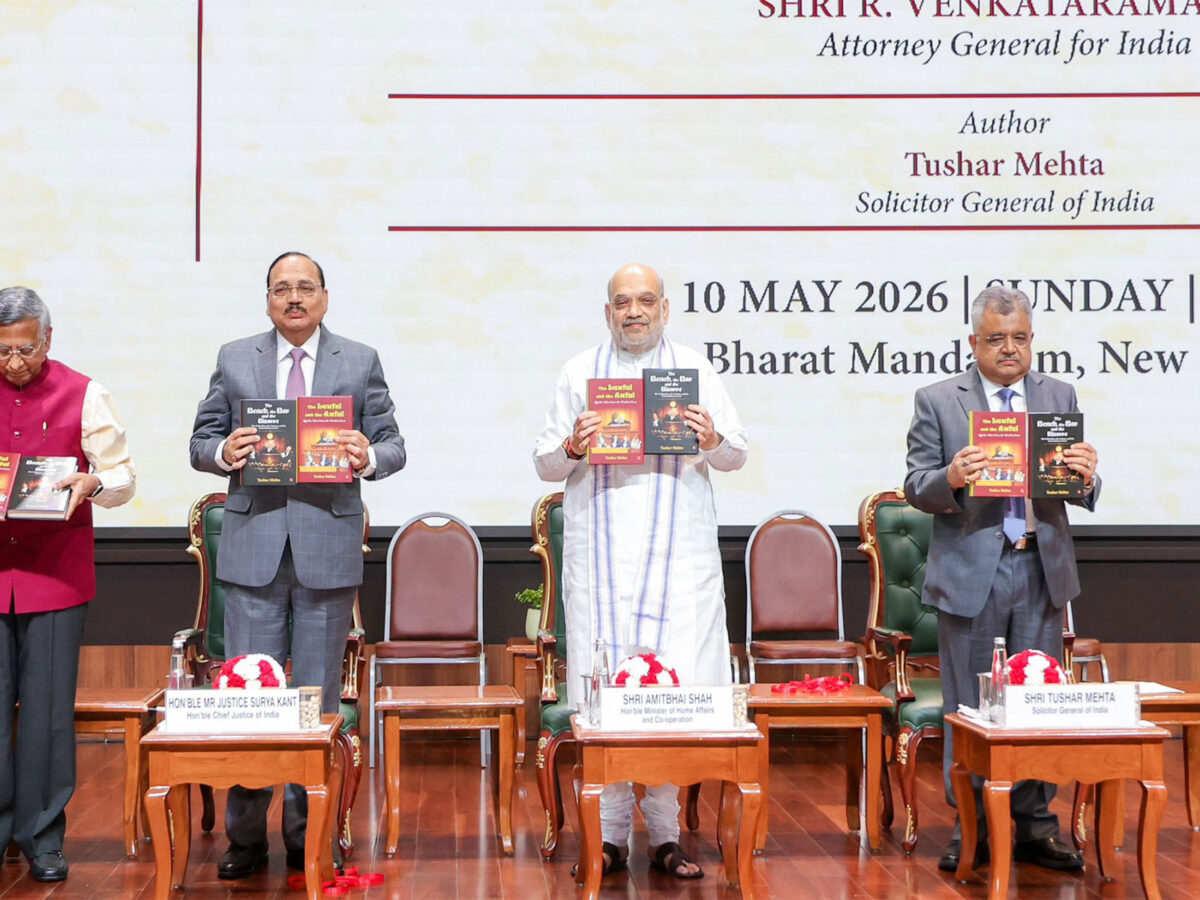
Tushar Mehta Unveils Dual Masterpieces: Legal prose and persuasive eloquence shine at Bharat Mandapam
(By Syed Ali Taher Abedi)
New Delhi, 10, May,2026-In a rare confluence of legal eminence and literary celebration, the hallowed precincts of Bharat Mandapam in New Delhi bore witness on Sunday to the formal unveiling of two works that promise to recast the way India’s legal fraternity and the reading public at large understands the theatre of the courtroom.
Solicitor General of India Tushar Mehta launched two books The Bench, the Bar and the Bizarre and The Lawful and the Awful at a specially convened event at Bharat Mandapam in New Delhi, in the distinguished presence of Chief Justice of India Justice Surya Kant and Union Home Minister Amit Shah.
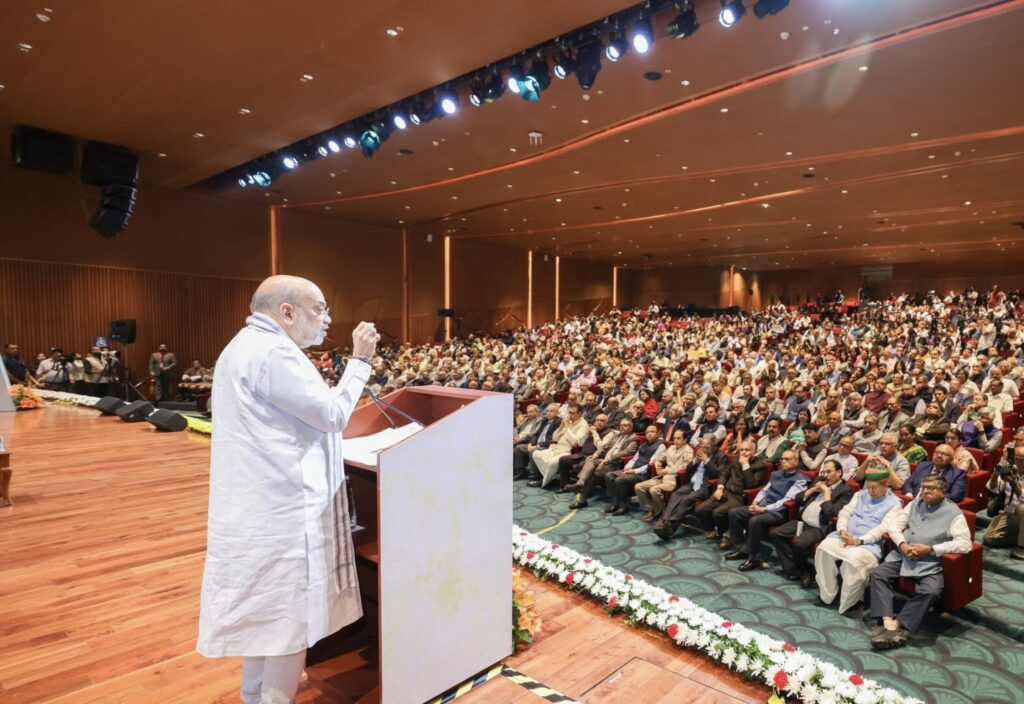
The occasion was no ordinary book launch.
It was, in essence, a formal acknowledgement by the highest echelons of India’s legal and executive establishment that the law so often perceived as the exclusive dominion of solemn argument and austere precedent carries within its folds a richly human dimension, one that Mehta has now committed to paper with evident wit, candour, and craft.
The Chief Justice Speaks: Law as Human Drama
Presiding over the event, Chief Justice Surya Kant offered an illuminating assessment of the two volumes, observing that reading them back-to-back felt like immersing oneself in a courtroom drama that had, quite unexpectedly, wandered into the territory of a stand-up comedy special.
“So, I tried to solve this mystery! I have two running theories. Either Tushar Bhai has successfully petitioned the Almighty for a 25th hour in the day and kept that order strictly for himself, or he has discovered that the best time for comedic writing is while Court No. 1 is taking too long to read a file”
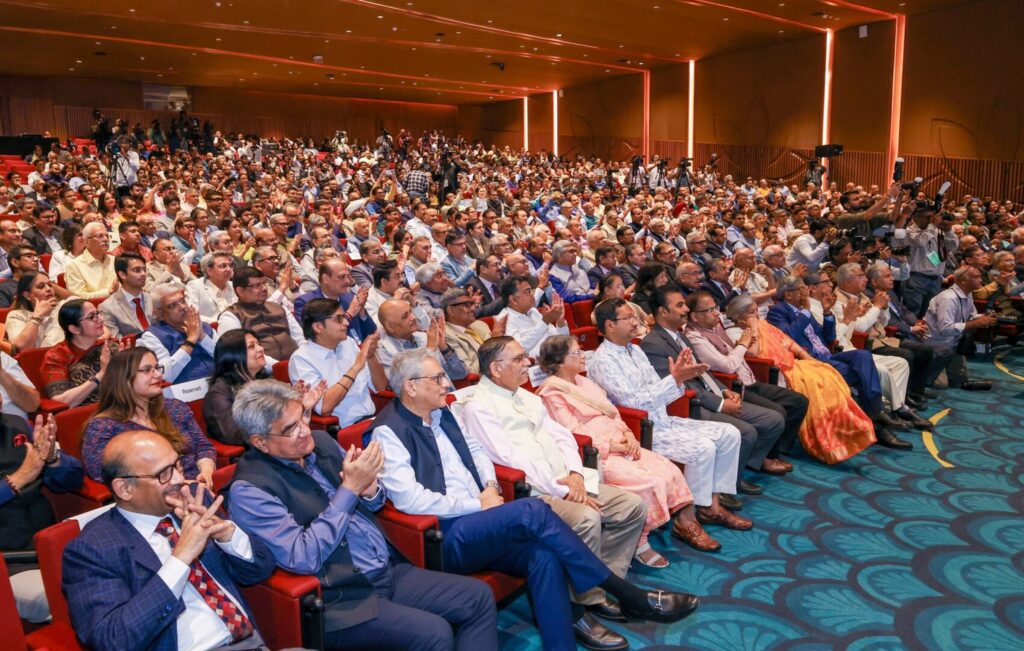
It was a characterisation at once playful and profound for it captured precisely what distinguishes Mehta’s literary endeavour from conventional legal writing.
Where most jurisprudential literature concerns itself with the architecture of reasoning, the hierarchy of norms, and the anatomy of judicial pronouncements, these two books appear to locate meaning in the margins: in the unscripted moments, the unlikely turns, and the irreducibly human texture of legal practice.
The Chief Justice remarked that the writing demonstrates how law is shaped not merely by judgments handed down from the Bench, but equally by human drama and wit the intangible forces that animate every courtroom but rarely find their way into law reports or academic commentary.
“In a particularly evocative turn of phrase, Justice Surya Kant mused upon how dusty case files, legal jargon, and solemn judicial proceedings had been transformed into material for genuine hilarity as though, he suggested, a Supreme Court ruling had been authored by Mark Twain.”
The simile was apt for it is precisely the Twain-Esque eye sceptical, affectionate, and undeceived by pretension that the finest legal storytelling demands.
Home Minister Shah: Law in the Age of Artificial Intelligence
Union Home Minister Amit Shah, addressing the gathering, turned his attention particularly to The Bench, the Bar, and the Bizarre, offering an observation that bridged the literary and the constitutional.
Shah noted that from a literary standpoint, the book offers an escape from the unrelentingly serious atmosphere of the courtroom, and that within its pages, Mehta has endeavoured to explain through concrete examples the nature of challenges that artificial intelligence and modern technology are poised to bring before the judiciary in the years ahead.
It was a timely observation. As the Indian legal system confronts questions of digital evidence, algorithmic decision-making, and the jurisprudence of emerging technologies, a work that approaches these themes through accessible narrative rather than doctrinal abstraction performs a genuine service not merely to the legal profession, but to an informed citizenry.
The Attorney General’s Tribute: Chronicles of Justice and Human Nature
Attorney General for India R. Venkataramani, who was also in attendance, paid tribute to the intellectual courage and diligence with which Mehta had approached the enterprise, observing that the Solicitor General had plunged into dimensions deeply relevant to understanding how justice is actually done carefully selecting stories of law and justice that illuminate human nature in both its most exalted and its most absurd manifestations.
The Attorney General’s remarks carried the weight of professional intimacy. For those who have spent decades in the bar, the distance between the law as it appears in textbooks and the law as it is lived in practice is vast and often unbridgeable by conventional scholarship. What Mehta appears to have achieved if the assembled luminaries are to be believed is precisely that bridge.
A Literary Contribution of Institutional Significance
According to the publisher, the two books together offer sharp insights, fascinating anecdotes, and an engaging examination of the many shades of the legal world.
Taken together, The Bench, the Bar and the Bizarre and The Lawful and the Awful represent something more than the memoir of a distinguished legal officer.
They represent an argument made through story rather than submission that the law is not merely a system of rules but a living, breathing, occasionally absurd, and persistently human institution. In giving voice to that argument, Tushar Mehta has rendered a service to legal literature that few practitioners at the height of their professional careers have the leisure, the perspective, or the literary instinct to undertake.
That the Chief Justice of India, the Attorney General, and the union home minister all chose to grace the occasion is itself a measure of the esteem in which the work has already been received by those who know the law best.