SCAORA Gets New Leadership After Landmark Supreme Court-Supervised Elections
(Judicial Quest News Network)
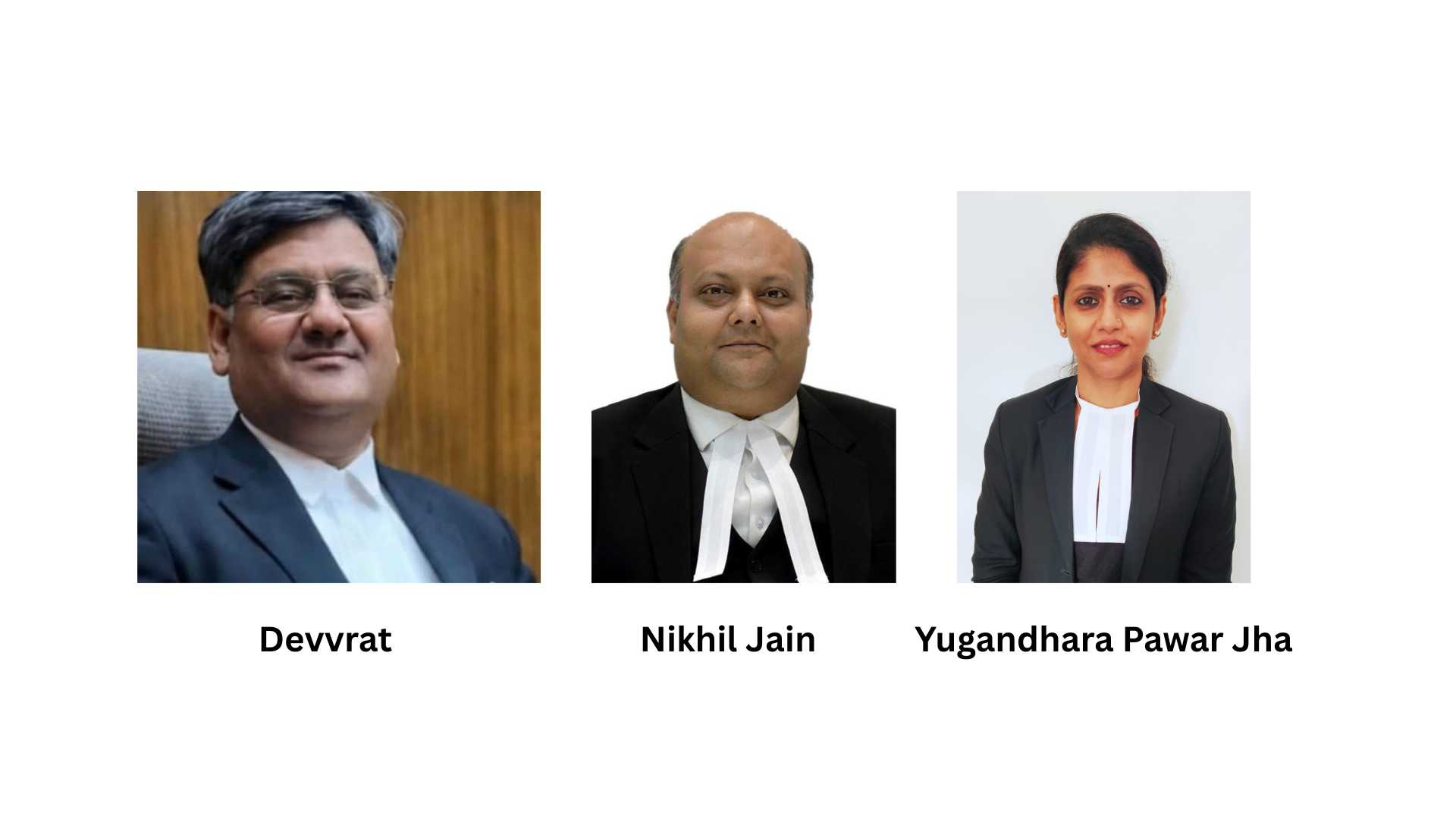
23, May,2026-In a closely watched and institutionally significant election, the Supreme Court Advocates-on-Record Association (SCAORA) has elected Advocate Devvrat as its new President following the executive committee polls conducted on Thursday, May 21, 2026.
Devvrat emerged victorious in a direct presidential contest against Advocate Shivaji M. Jadhav, securing a decisive mandate from the Advocates-on-Record community.
The elections, which witnessed participation from 58 candidates contesting various positions within the association, assume extraordinary importance not merely because of the change in leadership, but because the entire electoral process unfolded under the shadow of unprecedented intervention by the Supreme Court itself.
The apex court had stepped in on two separate occasions to ensure that the polls were conducted in a manner that upheld democratic inclusivity, fairness, and gender representation within the association.
A Defining Presidential Contest
The contest for the presidency was a straight two-cornered battle between Advocate Devvrat and Advocate Shivaji M. Jadhav. In many ways, the election represented more than a routine organisational exercise it became a referendum on competing visions for the future direction of one of the most influential legal bodies connected with the Supreme Court of India.
A direct electoral contest of this nature, where the electorate is called upon to make a clear binary choice between two candidates, is often regarded as the purest form of democratic expression within institutional politics.
Devvrat’s victory therefore carries both symbolic and practical significance, reflecting the confidence reposed in his leadership by the Advocates-on-Record fraternity.
His election comes at a particularly consequential moment for SCAORA, whose institutional relevance has been underscored by the very judicial scrutiny that shaped the election process.
The new President assumes office at a time when issues relating to representation, participation, and governance within the association have acquired heightened constitutional and professional importance.
Supreme Court’s Intervention Shapes Electoral Process
The elections were conducted after the Supreme Court intervened twice in matters relating to the fairness and inclusiveness of the polling process.
In a significant move aimed at strengthening gender representation, the Court directed that certain posts within the association be reserved for women candidates.
In another important order, the Court permitted nearly 205 newly enrolled Advocates-on-Record to cast their votes provisionally, thereby expanding participation and ensuring that recently inducted members of the fraternity were not excluded from the democratic exercise.
These interventions transformed the SCAORA elections into more than an internal association matter.
They became an important institutional moment reflecting the judiciary’s emphasis on participatory governance and equitable representation within professional legal bodies.
Vice President and Secretary Elections Reflect Broad Democratic Participation
While the presidential race remained a direct contest, elections to other key posts reflected a wider and more competitive democratic engagement within the AOR community.
when Parliament enacted constitutional amendments to establish the National Judicial Appointments Commission (NJAC), the legislation was challenged by SCAORA in what became one of the most consequential constitutional battles in recent judicial history.
The challenge culminated in the landmark 2015 judgment of the Supreme Court, which struck down the NJAC Act and restored the Collegium system for judicial appointments, reaffirming the primacy of judicial independence within India’s constitutional framework.
SCAORA’s institutional engagement with issues affecting the legal profession and the administration of justice has continued with equal vigour in recent years.
Most notably, under the secretaryship of Mr. Nikhil Jan, who served as secretary in earlier term and now has been elected as Vice-President of the association played a pivotal role in prompting judicial scrutiny over the summoning of senior advocates by investigative agencies solely on account of legal advice rendered to clients.
The issue assumed constitutional significance when the Supreme Court took Suo motu cognisance of the matter and proceeded to pass important protective directions safeguarding the independence of the legal profession and the sanctity of lawyer-client engagement.
Nikhil Jain is elected by a margin of 560 Votes.
Advocate Nikhil Jain was elected Vice President after prevailing in a four-cornered contest, demonstrating strong support across different sections of the association’s membership.
Equally significant was the election of Advocate Yugandhara Pawar Jha as Secretary. Her victory carries special institutional importance because the post had been reserved for women candidates pursuant to the Supreme Court’s directions.
Her election is therefore being viewed not merely as an individual achievement, but as the first tangible manifestation of the gender equity framework introduced into SCAORA’s governance structure under the Court’s extraordinary constitutional powers under Article 142.
An Influential Body at the Heart of the Supreme Court
SCAORA occupies a uniquely powerful and influential position within India’s legal system. The association represents Advocates-on-Record a specialised class of legal practitioners who alone possess the statutory authority to file and conduct matters before the Supreme Court of India on behalf of litigants.
Comprising nearly 3,000 qualified professionals, the AOR community functions as the exclusive institutional gateway to the country’s highest constitutional court. Consequently, the leadership of SCAORA plays a crucial role not only in matters affecting the professional interests of Advocates-on-Record, but also in broader issues concerning the functioning of the Supreme Court Bar and the administration of justice itself.
With the election of its new executive leadership, SCAORA now enters a fresh chapter one shaped by heightened judicial scrutiny, democratic participation, and a renewed conversation around representation and institutional reform within India’s most powerful legal fraternity.