Plea in Supreme Court Seeks Verification of Law Degrees After BCI Chair’s “Fake Advocate” Remarks
(Judicial Quest News Network)
New Delhi, May 25, 2026: In a development carrying far-reaching implications for the integrity of India’s justice delivery system, a writ petition has been filed before the Supreme Court seeking urgent, court-monitored verification of advocates across the country after the Chairman of the Bar Council of India reportedly stated that nearly 35 to 40 per cent of practising lawyers may possess fake, forged, or fabricated law degrees.
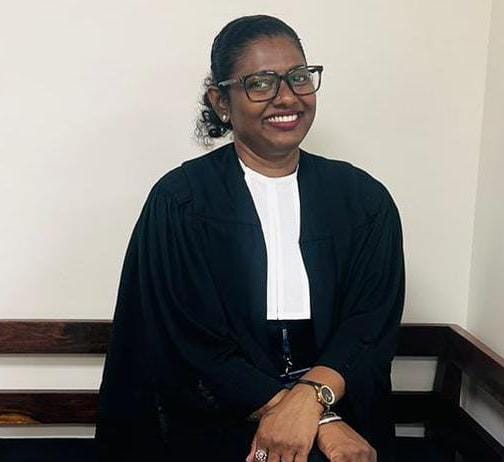
The petition, filed under Article 32 of the Constitution by practising advocate Ms. Yogamaya MG, describes the issue not merely as professional misconduct but as a matter striking at the very foundation of constitutional governance, public faith in the judiciary, and the fundamental right of citizens to fair legal representation.
“The issue assumes grave constitutional significance in light of public recent statements reportedly made by the leadership of the Bar Council of India, indicating that a considerable percentage of persons enrolled or practicing as advocates may possess fake, forged, or unverifiable educational credentials, and that a substantial number have not completed the prescribed verification processes.”
Filed through Advocate-on-Record Deepak Prakash, the plea seeks directions to the Union of India, the Bar Council of India, all State Bar Councils, and the University Grants Commission to establish a transparent, uniform, and technologically verifiable mechanism for scrutiny of educational qualifications, enrolment records, and practice status of advocates nationwide.
“It is submitted till date, the information regarding verification status as available on the BCD, R-4 website discloses that the verification of the Law Degrees of 2 candidates viz Ballot No. 195 and Ballot No. 220, are still pending. These instances raise serious concerns regarding the scrutiny of the nomination forms that were to be done by the Respondent No. 4 BCD before finalizing the list of candidates”
The petition asserts that if individuals possessing forged or unverifiable credentials continue to practise before constitutional courts and subordinate judiciary alike, the consequences transcend regulatory irregularity and enter the realm of systemic constitutional fraud affecting litigants, judicial institutions, and the rule of law itself.
Invoking Article 21 and the constitutional guarantee of access to justice, the plea argues that a litigant who entrusts liberty, property, or legal rights to an unqualified practitioner is effectively denied meaningful legal representation.
It contends that the presence of fake advocates before courts amount to a structural assault on public confidence in the administration of justice.
The petition further refers to instances where fake advocates were allegedly removed from enrolment rolls in multiple states, arguing that such discoveries reveal not isolated aberrations but a widespread institutional failure requiring coordinated national intervention.
The petitioner states that those advocates who were enrolled with the Bar Council of Delhi in the last two years and even earlier, were included in the final voters list but their verification status remains pending
“For e.g. status available on the Bar Council of Delhi website of Enrollment no. D/18453/2025, at serial No. 98300 of the BCD final voters list 2026, is showing a blank. In other words, there is no confirmation that she has been verified. Similar is the case of Enrollment No. D/11281/2024 whose name appears at serial no. 98293 of the BCD final voters list, 2026. It is submitted that a lot of these voters, whose verification is pending till date, if they are found to have invalid degrees or their verification is rejected for any reason, then the problem faced is as to how the votes given by them, which would be invalid, can be identified. Accordingly, there will be several candidates who will be beneficiaries of these invalid votes. This itself is a good ground for countermanding the entire election process.”
A significant aspect of the plea concerns alleged irregularities in Bar Council elections. Referring to the Supreme Court’s earlier directions in M. Vardhan v. Union of India, the petitioner states that individuals whose law degrees remained pending verification were allegedly permitted to contest and vote in State Bar Council elections, including in Delhi, despite judicial directives that persons with unverified or fake credentials should not participate in the electoral process.
According to the petition, if advocates later found to possess invalid or fraudulent degrees were permitted to vote in such elections, the legitimacy of the electoral process governing statutory regulatory bodies of the legal profession itself may stand compromised.
The plea also relies upon earlier judicial observations in Ajay Shankar Srivastava v. Bar Council of India and subsequent proceedings concerning verification of advocates, contending that despite repeated judicial concern and directions, implementation by regulatory authorities has remained inadequate and opaque.
The petitioner has sought establishment of a nationwide verification framework involving cross-verification of degrees with university and UGC records, along with privacy-compliant transparency mechanisms to restore institutional accountability and public trust in the legal profession.
The matter assumes heightened significance in light of recent observations reportedly made by the Chief Justice of India expressing concern over the genuineness of thousands of law degrees held by practising advocates and indicating the possibility of a wider investigative exercise.
Legal observers note that the convergence of concern expressed by the Supreme Court and the Bar Council of India on the prevalence of fake advocates may compel judicial scrutiny of unprecedented scale into the credentialing and regulatory architecture governing the Indian Bar.
The petition ultimately raises a question that goes to the heart of the justice system itself whether the constitutional courts can preserve public faith in the rule of law if those appearing before them as officers of the court are themselves alleged to be functioning on forged or unverifiable qualifications.
Case: Yogamaya MG v. Union of India & Others
Court: Supreme Court of India
Filed Under: Article 32 of the Constitution of India
Respondents: Union of India, Bar Council of India, State Bar Councils, University Grants Commission
Filed Through: Deepak Prakash, Advocate-on-Record
Related Matters: M. Vardhan v. Union of India; Ajay Shankar Srivastava v. Bar Council of India