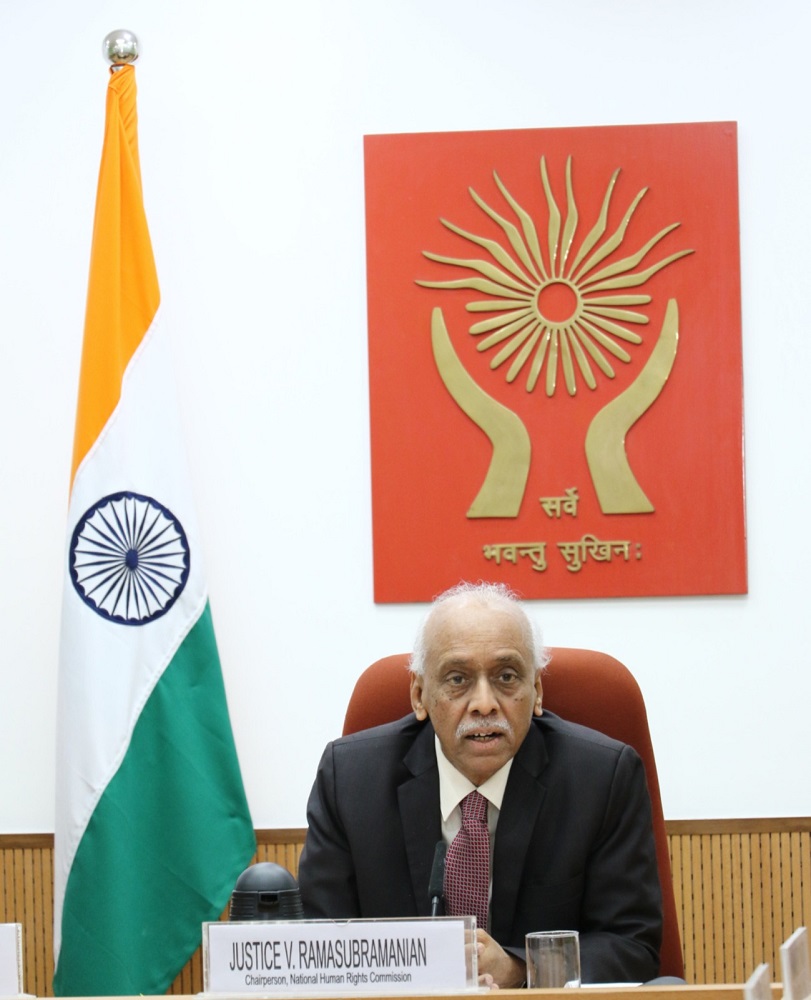
No Child Should Pay for a Parent’s Sentence: NHRC Urges Urgent Action on Women Prisoners & Their Children
Human Rights Commission calls for gender-responsive prison administration, maternal and child healthcare, legal aid, family contact and effective rehabilitation Ten-point action framework addressed to nine Union Ministries, Chief Secretaries, UT Administrators and DGPs across States and Union Territories
(By Syed Ali Taher Abedi)
New Delhi, October 28, 2026: Underscoring the imperative of safeguarding human dignity and fundamental rights within the prison system, the National Human Rights Commission (NHRC), India, has issued an Advisory on the Protection of Human Rights of Female Inmates and their Children, calling for focused institutional attention to the specific vulnerabilities, needs and rights of women prisoners and children living with them or separated from them.
The Advisory has been addressed to nine Union Ministries, the Chief Secretaries and Administrators of States and Union Territories, and the Directors General of Police (DGPs) across all States and Union Territories.
The Commission has urged the concerned authorities to take action on its recommendations and submit reports on the progress of implementation within two months.
The initiative places the treatment of women prisoners and their children within a broader human rights framework, emphasising that incarceration must not result in the erosion of human dignity, denial of essential healthcare, disruption of family relationships or the neglect of children’s welfare.
Gender-responsive prison administration under NHRC scrutiny
Recognising women prisoners and their children as a particularly vulnerable group within the custodial system, the NHRC has stressed the need for a sensitive, gender-responsive and rights-based approach to prison administration.
The Commission’s emphasis extends beyond conventional custodial safeguards to encompass humane living conditions, adequate maternal and child healthcare, access to justice, preservation of family ties, protection of children’s best interests and the creation of meaningful opportunities for rehabilitation and social reintegration.
The Advisory signals the importance of addressing the distinct circumstances of women in custody, whose requirements may include reproductive and maternal healthcare, menstrual hygiene, mental health support, safe accommodation and appropriate welfare facilities. Children who remain with their mothers in prison, as well as those separated from incarcerated mothers, require particular attention to ensure that their developmental, emotional, healthcare and protection needs are not overlooked.
The underlying human rights concern is that imprisonment of a mother should not, by itself, expose her child to avoidable deprivation or compromise the child’s welfare. Prison authorities and other responsible agencies must, therefore, remain attentive to the consequences of incarceration for both women and their dependent children.
Ten key areas identified for coordinated action
The NHRC Advisory identifies ten broad areas requiring attention and coordinated action by the concerned authorities:
1. Pre-admission, arrest and entry into the prison system
The first area concerns the treatment of women from the stage of arrest and entry into custody. Appropriate safeguards and sensitivity to the circumstances of women entering the criminal justice system are essential to ensure that their rights and specific needs are recognised from the outset.
2. Admission records, child database and documentation
Proper documentation of women prisoners and their children is a significant component of effective custodial administration. Accurate records can help authorities identify children accompanying their mothers, monitor their welfare requirements and facilitate appropriate coordination among the agencies responsible for their care.
3. Health, medical care and mental health services
The Advisory highlights healthcare as a central component of the protection of women prisoners’ rights. Access to appropriate medical services, maternal healthcare and mental health support is essential to addressing the physical and psychological needs of women in custody and safeguarding the well-being of children dependent on them.
4. Living conditions, hygiene, welfare and sensitisation of women inmates
Prison living conditions must respond to the specific needs of women prisoners. Hygiene, welfare measures, suitable facilities and sensitisation of prison personnel are among the areas requiring focused attention to ensure that custodial arrangements remain consistent with human dignity and the protection of rights.
5. Children living with or separated from prisoners
The welfare of children affected by maternal incarceration forms a crucial component of the Advisory.
Authorities are required to give due consideration to the circumstances of children living with their mothers in prison and those separated from them, with particular regard to their best interests, healthcare, development and protection.
6. Communication, mulakat and family contact
Maintaining family relationships can be important to the emotional well-being of women prisoners and their children.
The Advisory identifies communication, mulakat (visits) and family contact as key areas for action, recognising the relevance of continued familial bonds during incarceration.
7. Prison administration, legal aid and access to justice
The Commission has also identified prison administration and access to justice as essential areas of intervention.
Legal aid and appropriate access to legal processes are important safeguards for ensuring that women prisoners can pursue their legal remedies and understand and exercise their rights.
8. Gender-responsive facilities and welfare measures during court production
The Advisory calls attention to the specific facilities and welfare measures required when women prisoners are produced before courts. Such arrangements must take account of women’s needs and ensure that the process of court production is handled with appropriate sensitivity and dignity.
9. Rehabilitation, post-release support and social reintegration
The human rights concerns associated with incarceration do not end upon release.
Rehabilitation and social reintegration are necessary to help women returning to society rebuild their lives, restore family relationships and access appropriate support. The Advisory accordingly identifies post-release measures as a distinct area requiring attention.
10. Foreign national inmates
The final area concerns women prisoners who are foreign nationals. Their circumstances may involve additional administrative, legal and communication-related challenges, making appropriate attention to their rights and specific needs an important aspect of a comprehensive custodial framework.
Two-month reporting deadline places implementation in focus
A significant feature of the Advisory is the NHRC’s request that the concerned authorities submit reports within two months on the progress made in implementing its recommendations.
The reporting requirement places the emphasis not merely on the issuance of recommendations but also on the administrative response and the progress achieved on the ground.
The involvement of Union Ministries, State and Union Territory administrations, and police leadership reflects the need for coordination across institutions responsible for arrest, custody, prison management, healthcare, legal assistance and child welfare.
Effective implementation will require the relevant authorities to examine existing arrangements, identify gaps and take appropriate steps within their respective jurisdictions.
The reporting process will also provide the Commission with an account of the progress made in addressing the ten identified areas.
Human dignity must remain central to incarceration
The NHRC’s Advisory brings into focus a fundamental human rights principle the deprivation of liberty must not be treated as a justification for neglecting the dignity and welfare of those in custody.
Women prisoners may face vulnerabilities arising from their health requirements, family responsibilities and social circumstances, while their children may experience consequences of incarceration despite bearing no responsibility for the alleged or established conduct of their parents.
These realities call for prison policies and administrative practices that are attentive to individual circumstances and the best interests of children.
By addressing conditions before prison admission, healthcare, living arrangements, family contact, legal aid, court production, rehabilitation and the circumstances of foreign national inmates, the Advisory presents a broad framework for coordinated institutional action.
The two-month reporting timeline now places the onus on the concerned authorities to demonstrate the progress made towards implementing the NHRC’s recommendations.
The effectiveness of the initiative will ultimately depend on the extent to which its human rights objectives are translated into appropriate administrative measures and meaningful improvements in the lives of women prisoners and their children.
For the NHRC, the protection of human rights in custody necessarily encompasses not only the lawful treatment of prisoners but also the dignity, welfare and best interests of children whose lives are affected by their mothers’ incarceration.
The detailed Advisory may be accessed at View