Indian Judiciary On Alert: SCAORA Raises Red Flags on Supreme Court’s AI Regulations
(By Syed Ali Taher Abedi)
New Delhi,18, July 2026 – The Supreme Court Advocates-on-Record Association (SCAORA) has issued a significant warning regarding the Supreme Court’s proposed Draft Regulations for the Use of Artificial Intelligence (AI) in Courts, 2026.
In a comprehensive report submitted to Justice Pamidighantam Sri Narasimha, Chairman of the Supreme Court’s Artificial Intelligence Committee, SCAORA has urged for a cautious and phased approach to AI deployment within the judicial system, highlighting several critical concerns.
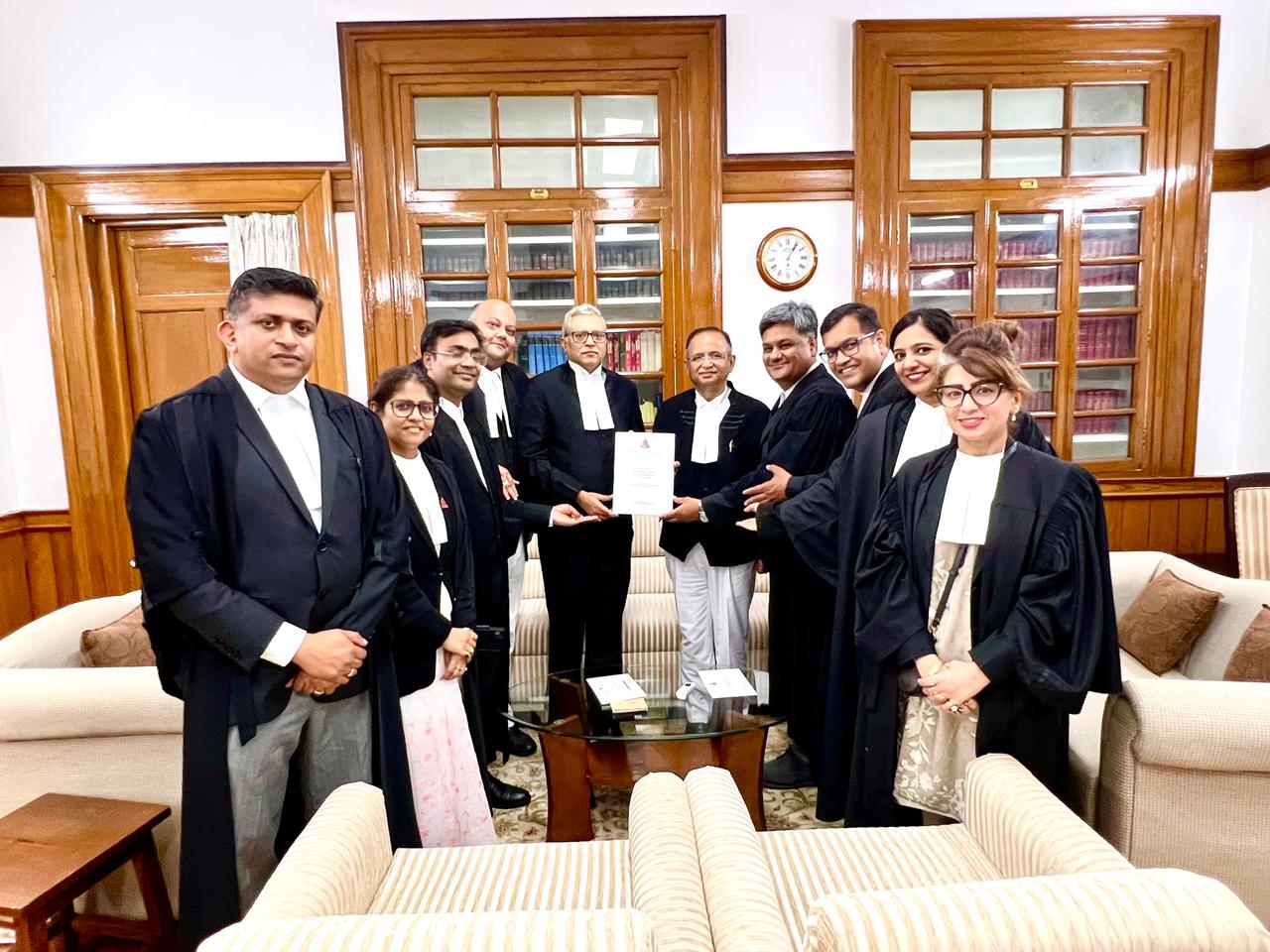
The report, titled “Comments and Recommendations on the Draft Regulations for the Use of Artificial Intelligence (AI) in Courts, 2026,” was presented by SCAORA’s Executive Committee to Justice P.S. Narasimha and Justice Alok Aradhe. Justice Narasimha acknowledged SCAORA’s diligent efforts and assured that the recommendations would be thoroughly deliberated in the coming weeks.
Key Concerns and Recommendations from SCAORA:
1. Safeguarding Litigants: No AI Deployment Without Adequate Protections
SCAORA’s central recommendation is a staunch opposition to deploying AI systems in functions directly impacting litigants until robust safeguards are firmly established.
The Association argues that current AI systems lack the ability to genuinely explain their outputs, making them unsuitable for high-risk judicial tasks.
2. The ‘Black Box’ Paradox: A Call for Transparency
The report critically examines the Draft Regulations’ requirement for “explainability” while simultaneously permitting the use of opaque AI systems under heightened scrutiny. SCAORA contends that this creates an inherent contradiction, as modern generative AI operates through complex neural networks whose internal reasoning is often untraceable. Consequently, SCAORA recommends an outright prohibition on the deployment of opaque or “black box” AI systems in high-risk applications.
3. Accountability in the Age of AI
SCAORA highlights a significant “black box paradox,” noting that while the Draft Regulations place ultimate accountability on judges and court officers utilizing AI, they fail to address how such accountability can be realistically enforced when the AI’s decision-making process remains incomprehensible.
This raises fundamental questions about judicial oversight and responsibility.
4. Combating AI Hallucinations: Mandatory Human Oversight
Drawing attention to the Supreme Court’s recent judgment in Pooja Ramesh Singh v. Jammu & Kashmir Bank Ltd., which adopted a “zero-tolerance” approach to fake or hallucinated AI-generated precedents, SCAORA strongly recommends mandatory “human-in-the-loop” and “human-on-the-loop” safeguards for all AI-generated outputs used in court processes.
This emphasizes the need for human verification and intervention to prevent erroneous outcomes.
5. Addressing Automation Bias: Protecting Litigants’ Rights
SCAORA cautions against automation bias, where judges and court staff, under heavy workloads, might increasingly defer to machine-generated outputs.
The Association points out that even AI-assisted administrative decisions, such as listing urgent matters or identifying filing defects, can significantly affect litigants’ rights.
Therefore, SCAORA recommends restricting AI deployment even in administrative functions that could materially influence case outcomes.
6. Data Sovereignty: Protecting Judicial Data
Concerns were raised regarding judicial data being processed through AI infrastructure controlled by foreign technology companies.
SCAORA advocates for court data to remain within sovereign infrastructure and calls for immediate audits of existing AI systems deployed by the Supreme Court, including SUPACE, SUVAS, real-time transcription services, AI-assisted e-filing, and SuSahayak.
7. Constitutional Basis and Regulatory Authority
SCAORA questions the constitutional basis of the Draft Regulations, noting the ambiguity regarding their authority (Article 145 or Article 142).
The Association argues that while Article 145 empowers the Supreme Court to frame rules for its own practice, it does not extend to imposing binding regulations on High Courts, which possess independent rule-making powers.
8. Representation and Governance: A Call for Inclusivity
The report also flags concerns about inadequate representation of the Bar in AI governance bodies, overlapping institutional responsibilities, and excessive bureaucratic structures.
SCAORA recommends greater participation of Advocates-on-Record in the governance, training, and institutional oversight of AI deployment to ensure a more balanced and informed approach.
SCAORA’s Overarching Vision:
In essence, SCAORA advocates for a regulatory framework that prioritizes judicial independence and the protection of litigants’ rights over the rapid adoption of technology. Their principal recommendations include:
•A precautionary and phased rollout of AI in courts.
•Prohibition of black-box AI systems in high-risk judicial functions.
•Mandatory human oversight of AI-generated outputs.
•Stronger data sovereignty safeguards.
•Transparent access to AI tools for the entire Bar.
•A regulatory framework that upholds judicial independence and protects litigants’ rights.
This comprehensive report underscores the critical need for careful consideration and robust safeguards as the Indian judicial system navigates the integration of artificial intelligence.
The deliberations on these recommendations will undoubtedly shape the future of AI in Indian courts.