Beyond Entry to Equal Standing: Justice Nagarathna Calls for One-Third Representation of Women Lawyers on Government Panels
Supreme Court Judge Justice B.V. Nagarathna has urged that women lawyers be assured at least one-third representation on government legal panels, including panels for public sector undertakings and legal-aid work, saying equality in the legal profession must extend from access to meaningful advancement and participation in public authority.
(Judicial Quest News Network)
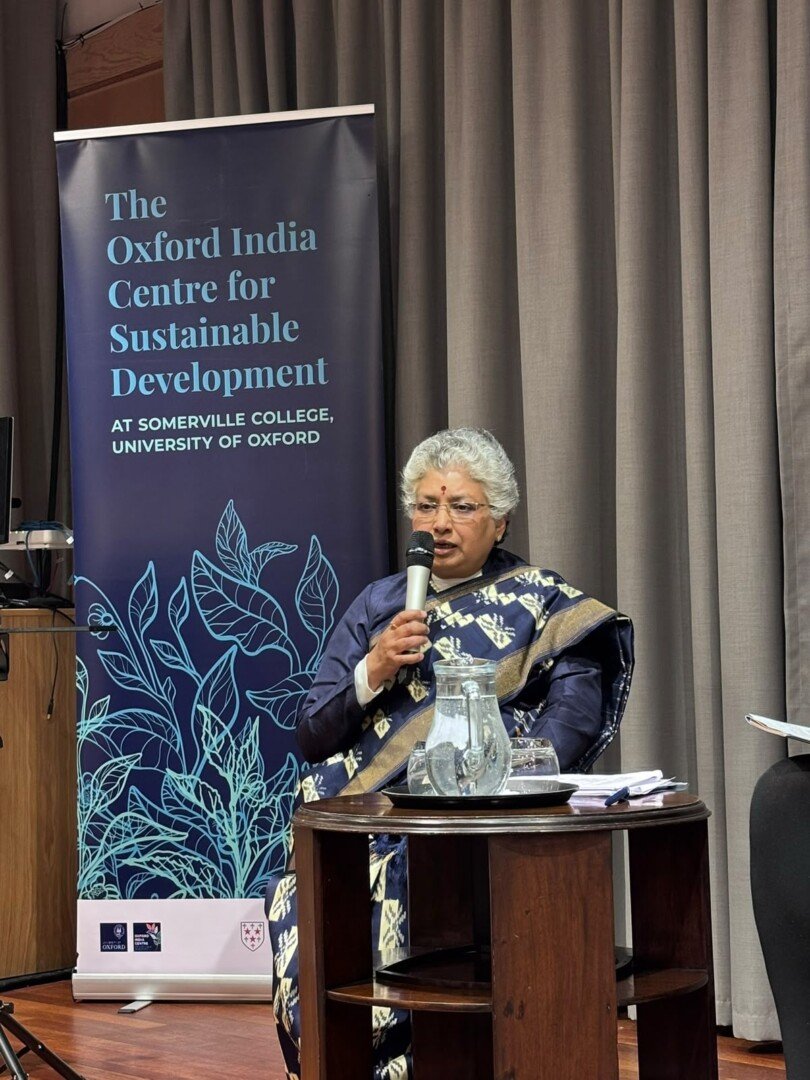
21, November,2026-Delivering the inaugural Cornelia Sorabji Memorial Lecture at Somerville College, University of Oxford, on November 18, Justice Nagarathna placed the proposal within a wider constitutional discussion on gender equality.
Her address, titled “The Doors She Opened: Cornelia Sorabji and the Progress of Women’s Rights in India,” traced the movement from formal guarantees of equality towards the harder task of removing institutional and social barriers that can prevent women from exercising those rights in practice.
“The existence of women in high public office does not establish that equality has been achieved throughout society. A woman may hold a senior position while other women remain excluded from education, employment, property, or effective legal remedies.” The Judge Said.
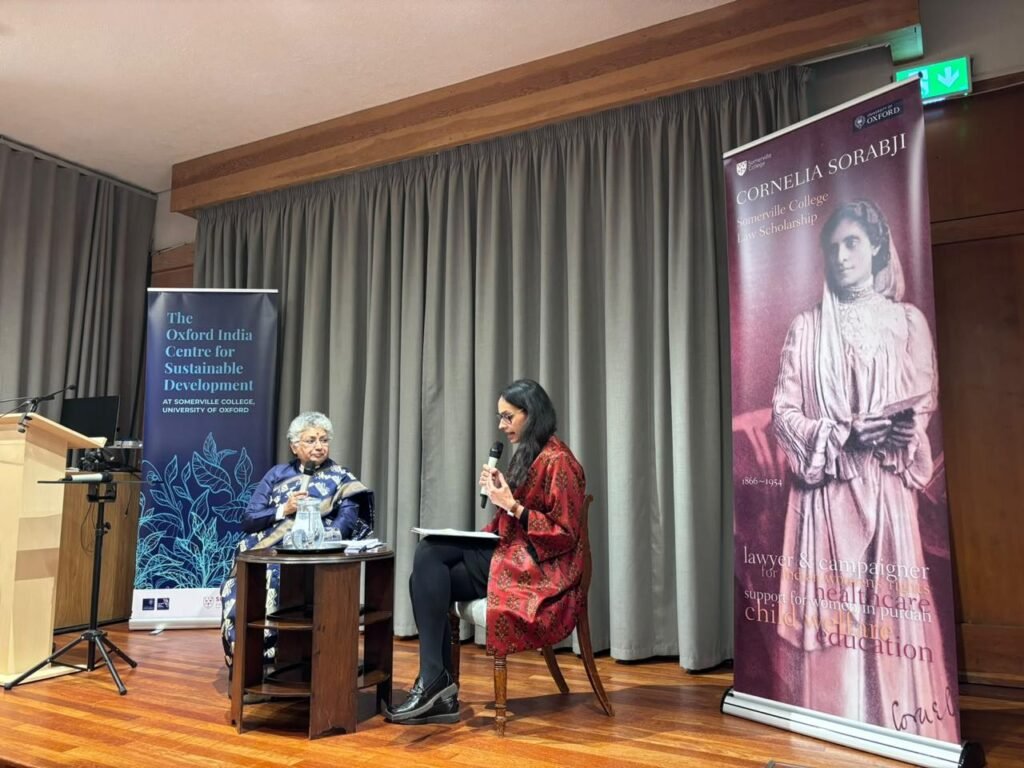
Justice Nagarathna’s call focused on representation beyond admission to the profession. Women lawyers, she said, must also have opportunities to represent the State, advise public institutions and take part in the exercise of legal authority. Government panels, including those handling public-sector and legal-aid matters, are among the institutional spaces where such professional opportunities arise.
The judge drew on the history of Cornelia Sorabji to illustrate the distance between ability and recognition.
Sorabji became the first woman to study law at Oxford, yet, despite passing her examinations in 1892, she could not receive her degree until the university began conferring degrees on women decades later.
In India, women also faced legal barriers to entering the profession; those restrictions were eventually removed through legislative change.
Justice Nagarathna used Sorabji’s experience to underscore that opening a door is not enough if professional recognition and advancement remain out of reach.
“I have consistently advocated for one-third reservation for women lawyers on government panels, including those representing public sector undertakings and in the sphere of legal aid. If women are to participate equally in the administration of justice, their representation must extend beyond the right to enter the profession. It must encompass opportunities to represent the State, advise public institutions, and participate in the exercise of legal authority. The door of the legal profession must, after all, remain open not only to entry, but to professional advancement and institutional leadership.” She said.
Addressing the constitutional dimension, Justice Nagarathna distinguished formal equality from substantive equality.
A legal guarantee may establish equal status on paper, she observed, while entrenched practices and institutional structures continue to limit women’s ability to pursue education, employment, property rights or effective legal remedies.
The presence of individual women in senior public office, she cautioned, cannot by itself establish that equality has been achieved across society.
Her address also situated the government-panel proposal alongside constitutional measures aimed at improving women’s representation in elected local institutions.
The underlying principle, as presented in the lecture, was that where historical exclusion has shaped institutional participation, formal equality alone may not secure meaningful inclusion.
Justice Nagarathna said that the same consideration should inform the legal profession and its pathways to leadership.
The lecture surveyed decisions that have shaped the Supreme Court’s approach to gender equality, including C.B. Muthamma v. Union of India, Vishaka v. State of Rajasthan, Anuj Garg v. Hotel Association of India and Secretary, Ministry of Defence v. Babita Puniya.
These cases addressed discrimination in employment and service conditions, protections against workplace sexual harassment, restrictions imposed in the name of protecting women, and women’s access to career progression within the armed forces.
“Indian society, particularly the male society needs to introspect on this critical aspect, if the 33 cherished goals of our Constitution are to be achieved by the women of India.” She said.
Together, they illustrate that exclusion may persist not only through express prohibitions but also through rules and practices that constrain advancement.
Justice Nagarathna’s remarks were made as part of a public lecture and constitute an appeal for institutional action, not a judicial direction issued in a pending case.
The central proposition was nevertheless clear: equality in law must be matched by fair access to professional opportunity, public representation and leadership.
In that context, her support for one-third representation on government legal panels forms part of a broader call to ensure that women’s entry into the legal profession is accompanied by a genuine route to influence and advancement.
Concluding her address, the judge highlighted the persistent challenges faced by women in India, observing that despite possessing the requisite qualifications and professional competence, many continue to encounter social and systemic barriers in pursuing higher education and building their careers.