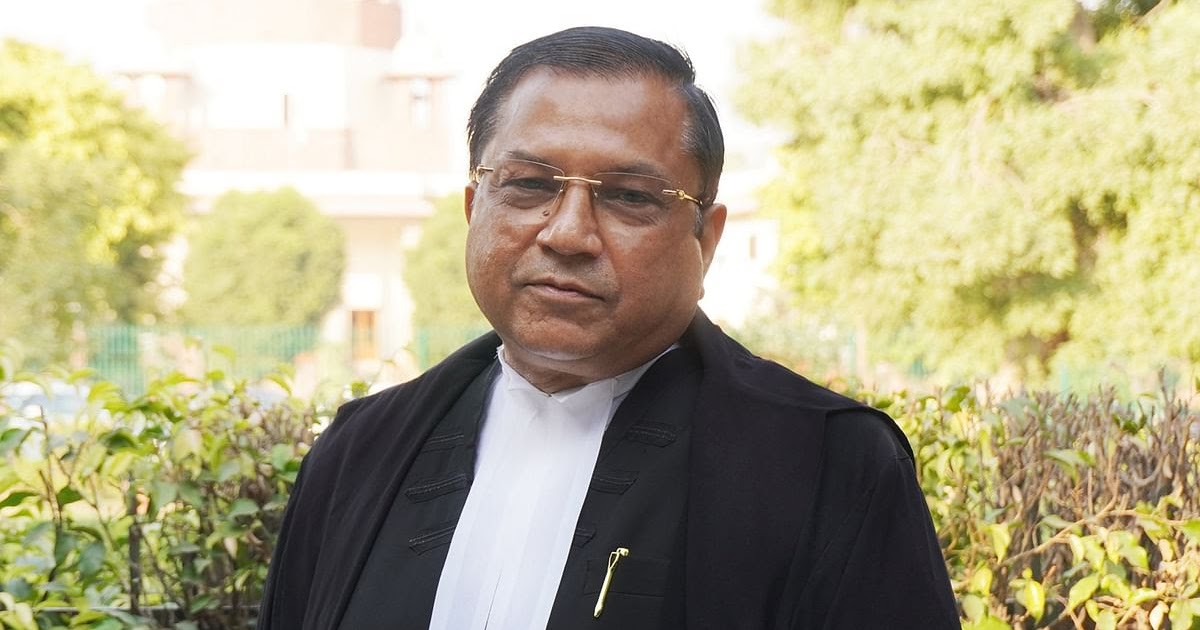
AIBA President: Electoral Roll Disputes Must Follow Judicial Process, Not Political Memos
(By Syed Ali Taher Abedi)
New Delhi, July 1: In a development underscoring the constitutional demarcation between judicial adjudication and political advocacy, All India Bar Association (AIBA) President and Senior Advocate Adish C. Aggarwala has addressed a detailed representation to Chief Justice of India Justice Surya Kant, urging that a joint memorandum submitted by 23 opposition political parties and an Independent Rajya Sabha Member concerning the Election Commission’s Special Intensive Revision (SIR) of electoral rolls should not be entertained.
The communication comes in the wake of a memorandum jointly submitted by leaders of 23 opposition parties including the Congress, Trinamool Congress (TMC), Aam Aadmi Party (AAP), Dravida Munnetra Kazhagam (DMK), and several others along with Independent Rajya Sabha MP Kapil Sibal, raising concerns over the Election Commission’s ongoing Special Intensive Revision of electoral rolls, its functioning, and broader electoral issues.
The opposition’s initiative was acknowledged publicly by Congress General Secretary Jairam Ramesh, who stated on social media platform X that the parties were united under the banner of “SURE” (Solidarity, Unity and Resistance).
‘Constitutional Remedies Must Prevail Over Political Representations’
In his letter, Aggarwala asserted that attempts to involve the office of the Chief Justice of India in what he described as a political controversy relating to the revision of electoral rolls are “constitutionally inappropriate and institutionally improper.”
Emphasising the constitutional framework governing judicial review, the senior advocate stated that the office of the Chief Justice cannot be approached through political memoranda in matters where established legal remedies exist.
“The Hon’ble Chief Justice of India is not the administrative head of the Election Commission of India.
If any political party or individual is genuinely aggrieved by any action of the Election Commission, the appropriate constitutional remedy is to approach the competent court through properly instituted judicial proceedings,” the representation states.
Aggarwala stressed that constitutional courts adjudicate disputes exclusively on the basis of pleadings, documentary evidence, statutory provisions, and legal arguments presented before them, and not on political representations or memoranda.
Questions Opposition’s Choice of Forum
The AIBA President also questioned why the opposition parties had chosen to submit a memorandum directly to the Chief Justice instead of invoking the writ jurisdiction of the Supreme Court or other competent constitutional forums.
According to the letter, the decision to bypass conventional judicial remedies raises legitimate questions regarding the legal sustainability of the allegations sought to be advanced through a political memorandum rather than through a judicial challenge.
He maintained that if genuine constitutional or legal grievances existed against the Election Commission, the proper course would have been to institute appropriate proceedings before the courts instead of seeking administrative intervention from the office of the Chief Justice.
Warning Against Institutional Precedent
Aggarwala further cautioned that entertaining such memoranda could create an undesirable constitutional precedent, enabling political actors to circumvent established legal procedures by directly appealing to constitutional authorities outside the judicial process.
He observed that constitutional offices must not become forums for political messaging or partisan contestation, warning that such practices risk blurring the constitutionally mandated distinction between judicial adjudication and political advocacy.
The letter urged that the memorandum should not form the basis of either administrative or judicial action, asserting that any departure from established legal procedures could undermine institutional discipline and constitutional propriety.
Appeal to Preserve the Dignity of the Chief Justice’s Office
Concluding his representation, Aggarwala appealed for preserving the neutrality, dignity and institutional sanctity of the office of the Chief Justice of India by discouraging attempts to draw it into matters involving political controversy outside the recognised judicial process.
The communication reiterates that constitutional governance demands adherence to prescribed legal remedies and cautions against any practice that may erode the separation between judicial functions and political engagement.
The development assumes significance as debate over the Election Commission’s Special Intensive Revision of electoral rolls continues to generate political and legal discourse, with constitutional experts closely watching whether future challenges to the exercise are pursued through formal judicial proceedings before the Supreme Court or other competent constitutional courts.