Justice P.S. Narasimha Earns Place in Supreme Court’s Highest Decision-Making Body
(By Syed Ali Taher Abedi)
New Delhi, June 28, 2026–The architecture of judicial appointments in India underwent a quiet but consequential reshuffling this week, as Justice P.S. Narasimha ascended to membership of the Supreme Court Collegium the small and powerful conclave of senior judges that has, since 1993, held in its hands the authority to recommend who shall sit upon the Bench of the nation’s highest court and its twenty-five High Courts.
His elevation to this inner circle of judicial governance comes as a direct consequence of the retirement of Justice J.K. Maheshwari, who demitted office on Sunday after a tenure of nearly five years marked by quiet diligence and a substantial body of jurisprudential work.
The Mechanics of Succession: Seniority as Constitutional Currency
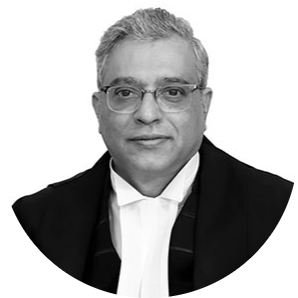
Being the fifth senior-most judge of the Supreme Court, Justice Narasimha will officially become part of the Collegium and will remain a member until his own retirement on May 2, 2028.
The principle that governs entry into this exclusive judicial fraternity is neither appointment by the executive nor election by the Bench at large, but the inexorable arithmetic of seniority a principle that has, since the Supreme Court’s own jurisprudential evolution through the Second and Third Judges Cases, become the bedrock convention determining who among the sitting judges shall participate in the recommendation of future judicial appointments.
As one judge’s tenure on the apex court draws to its constitutional close, the judge standing next in line of seniority steps seamlessly into the vacated chair within the Collegium a mechanism designed to ensure continuity, institutional memory, and a measure of insulation from the vagaries of any single Chief Justice’s individual preference.
With this transition, the Collegium will now comprise Chief Justice of India Surya Kant, Justice Vikram Nath, Justice B.V. Nagarathna, Justice M.M. Sundresh, and Justice P.S. Narasimha.
The Collegium System: A Constitutional Mechanism Born of Judicial Self-Governance
The Collegium system, which came into existence in 1993 following a landmark Supreme Court judgment, vests in the five senior-most judges of the apex court the authority to recommend the appointment, transfer, and elevation of judges to the Supreme Court and to the twenty-five High Courts of the country.
The system represents one of the most distinctive and most contested features of India’s constitutional architecture for judicial appointments, one that has no precise parallel in any other major common law jurisdiction.
It emerged from the Supreme Court’s own interpretation of the constitutional consultation process under Article 124(2), through a sequence of judgments beginning with the First Judges Case and culminating in the Second and Third Judges Cases, which collectively transferred the primacy of judicial appointment from the executive to a body of sitting judges a transfer of constitutional authority whose wisdom continues to be debated in legal and political circles to this day.
Under this constitutional convention, while the Government retains the formal authority to return a Collegium recommendation for reconsideration, settled practice dictates that it must accept the recommendation if the Collegium reiterates it though there have, on occasion, been instances in which the Government has either returned the file repeatedly or withheld a response to the recommendation altogether, generating the periodic friction between the judiciary and the executive that has characterised the Collegium’s history.
The Judge Who Has Departed: Justice J.K. Maheshwari’s Tenure in Review
Justice J.K. Maheshwari retired on Sunday, June 28, 2026, demitting office after a tenure spanning nearly five years on the Supreme Court.
Elevated to the Supreme Court on August 31, 2021, as part of a cohort of six judges appointed on the same day a cohort that included Justice Vikram Nath and Justice B.V. Nagarathna Justice Maheshwari’s tenure of 4.8 years places him marginally below the average judicial tenure of five years, and renders his the shortest tenure among the five judges of his appointment cohort, the remaining members of which are expected to serve between 5.9 and 6.7 years.
Prior to his elevation to the apex court, Justice Maheshwari’s judicial career traced a path through three High Courts a journey that speaks to the breadth of institutional experience he brought to the Supreme Court Bench.
He served as a judge of the Madhya Pradesh High Court before his elevation as Chief Justice of the Andhra Pradesh High Court, and was thereafter transferred to serve as Chief Justice of the Sikkim High Court.
He had the distinction of being the first Chief Justice of the newly established Andhra Pradesh High Court an institution-building role of considerable historical significance, given the bifurcation of the erstwhile combined state and the consequent creation of a wholly new judicial institution.
Justice Maheshwari was born on June 29, 1961, in the small town of Joura in the Morena District of Madhya Pradesh a modest provincial origin from which he rose, through the practice of law in Gwalior, to the highest judicial office in the land. He graduated in arts in 1982, passed his LL.B. in 1985, and completed his LL.M. in 1991, enrolling as an advocate with the Bar Council of Madhya Pradesh on November 22, 1985.
He practised across civil, criminal, constitutional, service, and tax matters, and served as an elected member of the Madhya Pradesh State Bar Council before his elevation to the High Court Bench.
His tenure at the apex court, by the measure of judicial productivity, was a substantial one. Justice Maheshwari authored 171 judgments during his Supreme Court tenure, averaging 43 judgments a year a body of work spread predominantly across service matters, which accounted for 51 of his judgments, followed by criminal matters with 30, civil matters with 24, and motor vehicle cases with 18.
He also authored a notable number of judgments concerning contempt of court, with 15 such rulings, and direct taxation matters, with 12.
His retirement comes less than two weeks after Justice Pankaj Mithal demitted office a near-simultaneous departure of two senior judges that has compounded the institutional challenge of vacancy management at a Supreme Court that, only weeks earlier, had welcomed five new judges to its Bench in a bid to move toward its expanded sanctioned strength of 38.
The Judge Who Has Ascended: Justice P.S. Narasimha’s Distinguished Path to the Bench
The judge stepping into the Collegium’s fifth chair brings with him a professional trajectory of unusual distinction one defined not by the conventional route of High Court judgeship, but by direct elevation from a career at the Bar of exceptional constitutional and public law accomplishment.
Born on May 3, 1963, in Hyderabad, Justice Narasimha graduated with triple majors in economics, political science, and public administration from Nizam College, Hyderabad, before pursuing his legal education at the Campus Law Centre, Delhi University, completing his studies in 1988.
He was enrolled as an advocate the same year, practising initially in the High Court, civil courts, and tribunals of Hyderabad, before shifting his counsel practice to the Supreme Court of India.
He appeared in a substantial number of cases before the Supreme Court, including matters before its Constitution Benches, and during this period was appointed Commission Counsel for the Justice Chinnappa Reddy Commission.
He also served as a member of the Supreme Court Legal Aid Committee institutional roles that reflect a career grounded as much in public service as in private practice.
In recognition of his standing at the Bar, Justice Narasimha was designated a Senior Advocate by the Full Court of the Supreme Court in 2008 a designation that is itself among the most coveted professional honours available to a practising lawyer in India, conferred only upon a vote of the assembled judges of the court before which the advocate practises.
As a Senior Advocate, he appeared in numerous public law cases touching upon constitutional, administrative, and environmental questions, before being appointed Additional Solicitor General of India in 2014 a position in which he assisted the Court as a law officer in several landmark matters, including the celebrated challenge to the National Judicial Appointments Commission before a Constitution Bench.
The irony of that particular engagement will not escape close observers of India’s judicial history the very lawyer who, as Additional Solicitor General, assisted the Court in adjudicating the constitutionality of the NJAC the executive-backed alternative to the Collegium system now sits as a member of the Collegium whose primacy that litigation ultimately preserved.
Justice Narasimha was also part of a Supreme Court delegation to the Canadian Supreme Court, where he presented a paper on extradition and the environment a reflection of the comparative and international dimension that has characterised aspects of his professional engagement.
Justice Narasimha was elevated as a judge of the Supreme Court of India directly from the Bar on August 31, 2021 coincidentally, the very same date on which Justice Maheshwari, whose Collegium seat he now occupies, was himself elevated to the apex court.
Since that elevation, Justice Narasimha has authored 218 judgments at an annual average of 55 a rate of judicial productivity exceeded only by Justice Nagarathna among the judges of his appointment cohort.
The Institutional Context: A Court Still Short of Its Full Strength
The timing of this Collegium reconstitution arrives at a moment of continuing institutional flux for the Supreme Court.
Earlier this month, on June 2, Chief Justice Surya Kant administered the oath of office to five new judges Justice Sheel Nagu, Justice Shree Chandrashekhar, Justice Sanjeev Sachdeva, Justice Arun Palli, and Senior Advocate V. Mohana bringing the Court’s working strength to 37 against its sanctioned strength of 38.
However, the retirements of Justice Maheshwari and Justice Pankaj Mithal, on June 28 and June 16 respectively, have together increased the number of vacancies in the Supreme Court to three.
With two further retirements scheduled later this year Justice Sanjay Karol on August 22 and Justice Satish Chandra Sharma on November 29 the Collegium, now led by Chief Justice Surya Kant and freshly reconstituted with Justice Narasimha’s inclusion, is expected to recommend names to fill both the existing and the anticipated vacancies in the months ahead.
The reconstituted Collegium therefore inherits its responsibility at a moment of considerable institutional consequence tasked not merely with the routine business of judicial appointment, but with the strategic management of a Supreme Court Bench whose composition will shift substantially across the remainder of 2026, as further retirements create the vacancies that this very body, with its newest member now seated at its table, must move to fill.
A System in Continuous Renewal
The quiet transition from Justice Maheshwari to Justice Narasimha within the Collegium is, in one sense, the most ordinary of institutional events the operation of a seniority principle that has governed Collegium composition without interruption for over three decades.
But in another sense, it is a moment that deserves recognition for what it represents the continuous, self-renewing character of an institution that holds within its hands one of the most consequential powers in India’s constitutional democracy the power to determine who shall wear the robes of judicial office, and through them, shape the law of the land for the litigants, however humble or however powerful, who come before it.
Justice Maheshwari departs after a tenure marked by diligence across the wide range of subjects that come before a generalist apex court judge from service jurisprudence to constitutional law, from contempt proceedings to questions of taxation.
Justice Narasimha arrives at the Collegium table with the accumulated wisdom of a career that traversed the Bar’s highest honours before reaching the Bench itself.
Between the two transitions lies the unbroken continuity of an institution that, whatever the controversies that have attended its design, has functioned without interruption since 1993 and continues to function today.