NHRC Flags Risks of Digital Overexposure, Urges Safeguards for Children
(By Syed Ali Taher Abedi)
The National Human Rights Commission convened a high-level Open House Discussion on “Access to Social Media by Children” in hybrid mode at its New Delhi headquarters, bringing together key policymakers, legal experts and stakeholders to deliberate on safeguarding children in the digital age.
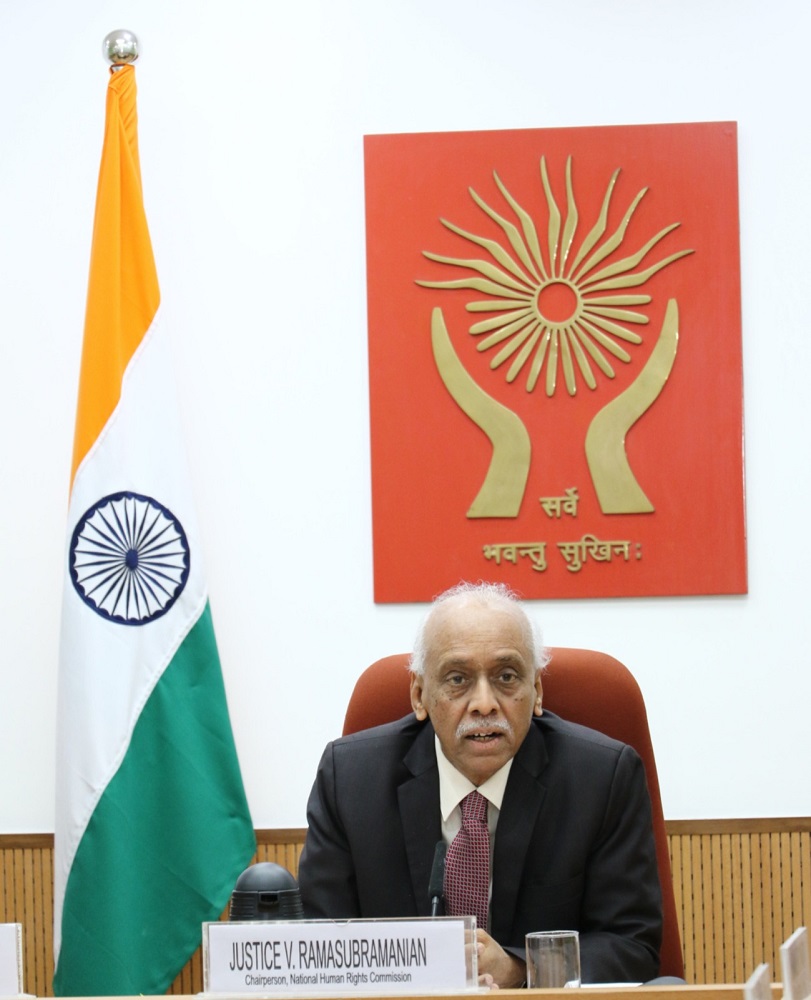
Chaired by Justice V. Ramasubramanian, the meeting saw participation from Justice (Dr.) Bidyut Ranjan Sarangi, Bharat Lal and S. Krishnan, along with senior officials, academicians, domain experts, UN representatives and civil society members.
Held against the backdrop of mounting concerns over children’s excessive social media use and the lack of robust safeguards against harmful online content, the discussion sought to address a pressing global dilemma whether age-based restrictions, as seen in recent regulatory developments in Australia, can effectively protect children without denying them the benefits of digital engagement.
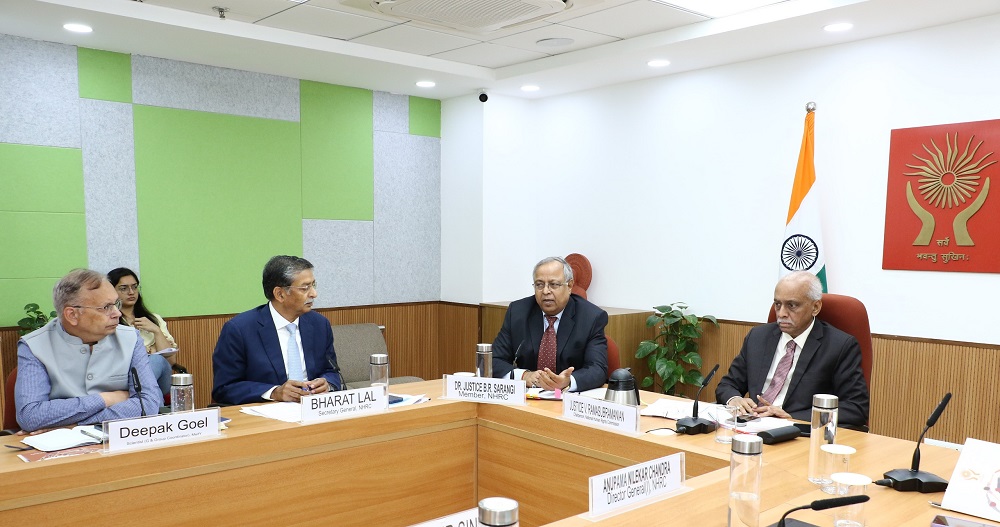
NHRC India Chairperson posed three key questions to participants:
(1) Should children’s social media access be banned or regulated by age? (2) Should state legislatures or Parliament handle it?
(3) What threshold justifies curtailing access?
He noted India’s world-leading laws but poor implementation, urging enforceable, practical, uniform nationwide solutions. Highlighting gaps in “digital discipline” amid talks of devotion, hygiene, and addiction, he called for expert enforcement strategies.
NHRC Member Justice (Dr.) Bidyut Ranjan Sarangi advocated regulation over bans, stressing that in a tech-driven world, children shouldn’t lose technology’s benefits.
He pushed for a uniform central law to ensure equal digital opportunities and protections across geographies and socio-economics.
In his opening remarks, NHRC Secretary General Shri Bharat Lal outlined three key discussion themes: the impact of social media on children, India’s regulatory framework, and age-based restrictions. Citing the Annual Status of Education Report 2024, he noted that 76% of children aged 14–16 use smartphones for social media, while 57% use them for education.
Highlighting risks such as cyberbullying, privacy breaches, sexual abuse, and fraud, he urged a balanced approach to children’s access to social media, with attention to privacy and mental health.
He also referenced the NHRC’s 2023 advisory on combating Child Sexual Abuse Material (CSAM), which has been well received by governments and emphasizes stronger legal, institutional, technological, and victim-support mechanisms.
S. Krishnan outlined the Centre’s efforts to regulate the digital space, highlighting recent measures mandating labelling of synthetic content and curbing unlawful social media posts, while stressing the need for a balanced approach and recognising digital access as public infrastructure.
Aishwarya Dongre flagged the growing circulation of inappropriate animated content and underscored proactive efforts to combat child sexual abuse material, advocating digital responsibility among children. Muktesh Chander suggested regulating internet gateways for enhanced oversight.
Meanwhile, Sanjeev Sharma emphasised the need for awareness alongside legislation, while Sneha noted that Karnataka is framing guidelines on children’s social media access.
Representatives from Goa and Delhi also indicated that their governments are examining regulatory measures in this domain.
Experts and stakeholders broadly favoured a balanced, evidence-based approach to children’s access to social media, cautioning against outright bans while recognising the need for safeguards.
Laxmi Vijay Kumar suggested a temporary ban to allow time for protective frameworks, while UNICEF representatives supported calibrated restrictions developed through stakeholder consultation, including children.
Several experts highlighted behavioural and psychological concerns, advocating awareness, digital discipline and preparedness over prohibition.
Others stressed that responsibility must rest on internet service providers and platforms through stricter regulation and real-time monitoring.
At the same time, speakers underscored that social media can act as an equaliser, making it imperative to protect children’s rights while regulating access.
The discussion emphasised the need for a clear definition of social media, central policy with local adaptability, accountability of tech companies, digital literacy, and stronger safety mechanisms by default, alongside enhanced parental awareness and transparent data-sharing by platforms.
The Commission will further examine these inputs before finalising its recommendations.