
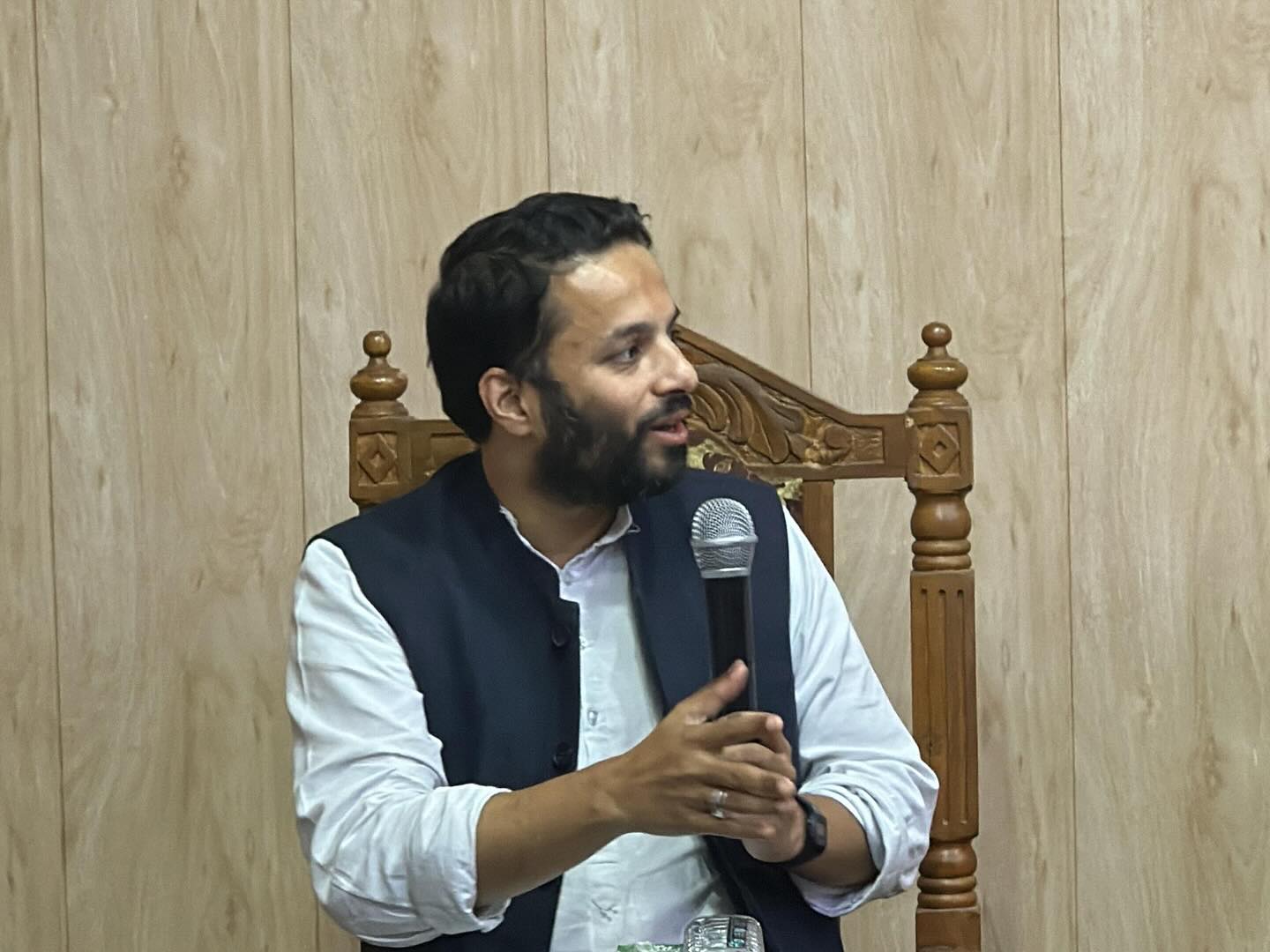
Supreme Court Queries Haryana on Possibility of Terminating Proceedings Against Prof Ali Khan Mahmudabad.
(By Syed Ali Taher Abedi)
Delhi,6, January,2026- The Supreme Court, while hearing petitions filed by Professor Ali Khan Mahmudabad challenging his arrest and seeking quashing of two FIRs, suggested that the State of Haryana adopt a lenient approach by not granting sanction for his prosecution. The FIRs stem from his social media posts on “Operation Sindoor”, India’s military response to Pakistan following the Pahalgam terror attack of April 22, 2025.
Bench Composition
The matter was heard by a Bench comprising Chief Justice of India Surya Kant and Justice Joymalya Bagchi. The Court observed that the State’s decision to withhold sanction could be treated as an exceptional, one-time measure of magnanimity, while cautioning that Professor Mahmudabad must conduct himself responsibly in the future.
Proceedings and State’s Stand
- Additional Solicitor General S.V. Raju, appearing for Haryana, informed the Court that the sanction for prosecution is still pending.
- Justice Bagchi pressed the State on the delay, asking: “For how long is it pending? When did you file the chargesheet?”
- The ASG replied that the chargesheet was filed on August 22, 2025, but sanction has not yet been accorded.
Court’s Interim Directions
- The Supreme Court has extended its order restraining the trial court from taking cognisance of the chargesheet filed by the Haryana SIT.
- The Court also relaxed earlier bail conditions, allowing Professor Mahmudabad to express opinions and write articles, except on matters directly sub judice.
Senior Advocate Kapil Sibal represented Mahmudabad maintained that there was nothing to prosecute his client for.
Context of the Case
Professor Mahmudabad was arrested in May 2025 in Sonipat, Haryana, after his posts on Operation Sindoor were deemed contentious. He has consistently argued that the FIRs violate his constitutional right to free speech and amount to an unwarranted criminalisation of academic expression
The Controversial Post
The controversy centres around Mahmudabad’s Facebook post reacting to Operation Sindoor. In the post, he stated that India had sent a clear message to Pakistan — that if Islamabad fails to deal with terrorism, India would be compelled to act unilaterally. While acknowledging the strategic message behind the operation, he also criticized jingoistic calls for war, highlighting the devastating human cost of conflict.
He wrote, “There are those who mindlessly advocate for war, but they’ve never lived in or even seen a conflict zone. Civilian deaths — on both sides — are tragic and must be the primary reason to avoid war at all costs.”
Mahmudabad further urged right-wing commentators, who were hailing IAF personnel like Wing Commander Qureshi, to also speak out against internal issues such as mob lynchings and extrajudicial demolitions. He warned that symbolic gestures of inclusion, such as highlighting women soldiers, must lead to real systemic change and not remain “mere optics.”
In one pointed observation, Mahmudabad wrote about the hypocrisy of communal narratives. Referring to a Muslim Pakistani politician who shouted “Pakistan Murdabad” and was criticized in Pakistan, he remarked that Indian right-wing voices defended him as a “good mullah.” He argued that such incidents highlight how deeply communalism has infected political discourse in India.
Fallout and Legal Action
His remarks drew the ire of the Haryana State Commission for Women, particularly its chairperson Renu Bhatia. Bhatia accused Mahmudabad of undermining the role of women officers in the Indian Armed Forces, suggesting his comments were dismissive of their professional contributions. This led to the filing of a First Information Report (FIR) against him, ultimately resulting in his arrest.
In his defence, Mahmudabad issued a public statement clarifying that there was “nothing remotely misogynistic” in his comments. He reiterated that his intention was to promote peace and prevent the human toll of war, while also appreciating the Indian military’s calibrated and proportional response to cross-border threats.
“I have always condemned the use of terrorism by Pakistan’s military establishment to destabilize the region. My criticism lies with warmongering and rhetorical extremism, not with the professional conduct of the armed forces or individual soldiers,” he stated.
In addition to the FIR filed by the Women’s Commission, a second complaint has been registered against him by Yogesh Jatheri, general secretary of the Bharatiya Janata Yuva Morcha (BJYM) and the sarpanch of Judiciary village.
Broader Implications
The arrest has intensified an ongoing national debate about the boundaries of free speech, the role of dissent in a democracy, and the targeting of academics and intellectuals who critique state actions. Many legal experts and human rights advocates have condemned the arrest as an overreach and a violation of constitutional rights.


