Supreme Court Exercises Supervisory Jurisdiction, Stays Bail Order in Unnao Rape Case
(By Syed Ali Taher Abedi)
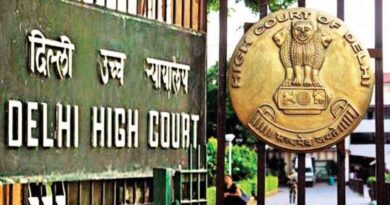
New Delhi: 29, December,2025- The Supreme Court on Monday stayed the operation of a Delhi High Court order that had suspended the sentence of former Uttar Pradesh MLA Kuldeep Singh Sengar and granted him bail during the pendency of his appeal against conviction in the Unnao rape case. The apex court directed that Sengar shall not be released from custody pursuant to the High Court’s order, citing the peculiar facts of the case.
A Bench comprising Chief Justice of India Surya Kant, Justice J.K. Maheshwari and Justice A.G. Masih passed the interim order while issuing notice on two petitions challenging the Delhi High Court’s decision—one filed by the Central Bureau of Investigation (CBI) and another by advocates Anjale Patel and Pooja Shilpkar.
“High Court gravely erred in allowing the bail application of Respondent No. 2 without properly appreciating the settled principles of criminal jurisprudence, the gravity of the offence, and the well-recognized legal propositions governing grant of bail in heinous crimes. The Hon’ble High Court failed to consider the nature and seriousness of the allegations, the severity of punishment prescribed, and the long criminal antecedents of the accused, which clearly disentitle him from indulgence of bail.” Petition states.
Ordinarily, the Court observed, when a convict or undertrial has been released on bail pursuant to an order of a trial court or High Court, such an order is not stayed by the Supreme Court without hearing the person concerned. However, the Bench noted that Sengar stands convicted and sentenced in another case under Section 304 Part II of the Indian Penal Code and is presently in custody in that matter. In view of these circumstances, the Court stayed the operation of the impugned order and directed that Sengar shall continue to remain in custody.
“The reasoning assigned by the Hon’ble High Court is not only contrary to the express legislative mandate but is also perverse, self-contradictory
, and incapable of being understood on any sound principles of criminal jurisprudence. Such erroneous interpretation strikes at the root of the administration of criminal justice and undermines the statutory objective of curbing corruption and criminal misconduct by persons holding public office.”
The Bench further clarified that the victim has a statutory right to file a separate Special Leave Petition (SLP) against the High Court’s order and does not require liberty from the Supreme Court to do so. It added that if the victim seeks free legal aid, the Supreme Court Legal Services Committee shall provide the same, and she may pursue her appeal through counsel.
During the hearing, Solicitor General Tushar Mehta, appearing for the CBI, assailed the High Court’s reasoning, particularly its conclusion that the aggravated offence provisions under the Protection of Children from Sexual Offences (POCSO) Act were not attracted as Sengar could not be treated as a “public servant.” Mehta argued that the POCSO Act structures offences around penetrative sexual assault and aggravated penetrative sexual assault, with aggravation arising when the offender is in a position of dominance over the child victim.
Pointing out that the term “public servant” is not expressly defined under the POCSO Act, Mehta submitted that it must be understood contextually. For the purposes of POCSO, he contended, a public servant would mean a person occupying a dominant position vis-à-vis the child, and misuse of such position would attract aggravated offence provisions. Given that Sengar was the sitting MLA of the area at the relevant time, Mehta argued that he clearly exercised such dominance.
Senior Advocates Siddharth Dave and N. Hariharan, appearing for Sengar, opposed the CBI’s submissions, contending that an MLA cannot be treated as a public servant for the purpose of invoking aggravated offences under the POCSO Act.
The Bench, however, expressed concern over an interpretation that would exclude elected representatives from the ambit of “public servant.” The Chief Justice remarked that if such an interpretation were accepted, “a constable or a patwari will be a public servant, but an MP or MLA will not be—and would thus get exempted.” Justice Maheshwari also noted that the High Court had not examined the applicability of Section 376(2)(i) of the IPC, which was in force on the date of the offence and specifically deals with rape of a minor.
The Supreme Court has now issued notice on the petitions and will examine the substantial questions of law raised in the matter. Until further orders, the stay on the Delhi High Court’s bail order will continue.