Lights, Camera, Rights: NHRC Awards Honour Cinematic Advocacy for Justice
(By Syed Ali Taher Abedi)
New Delhi, April 7, 2026: The National Human Rights Commission of India on Tuesday felicitated the winners of its Human Rights Short Film Competition 2025 at a ceremony held at its headquarters in the national capital, celebrating the growing role of cinema in advancing human rights awareness across the country.
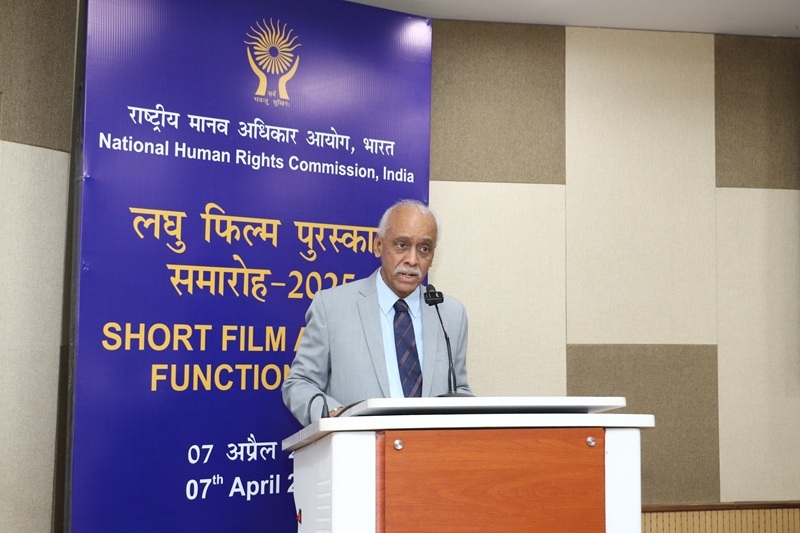
Addressing the gathering, NHRC Chairperson Justice V. Ramasubramanian congratulated the seven award-winning filmmakers and commended their passion and commitment to socially relevant storytelling.
Earlier, Secretary General, Bharat Lal provided an overview of the competition’s growth.
He said that while 303 entries were received in 2024, the number rose to 526 in 2025, of which 438 qualified for jury evaluation through a rigorous three-stage selection process.
He said that the competition has evolved as a major outreach initiative for promoting human rights.
He underscored the transformative power of audio-visual media, describing it as a compelling medium that connects deeply with the subconscious mind.
Highlighting the diversity of participation, he noted that entries were received in 24 Indian languages, reflecting both the pluralistic ethos of the nation and the Commission’s expansive outreach.
The Chairperson also observed that since the competition’s inception in 2015, participation has steadily increased, indicating a rising public engagement with human rights issues.
He expressed optimism that the platform would continue to inspire individuals to use creative mediums to spotlight social concerns.
NHRC Member Justice (Dr.) Bidyut Ranjan Sarangi emphasised that each of the seven winning films conveyed a unique and powerful message, reinforcing cinema’s vital role in the promotion and protection of human rights.
He particularly praised the documentary “The Dusk of Life” and the short film “Rani” for their nuanced and empathetic portrayal of marginalised communities.
Echoing similar sentiments, NHRC Member Vijaya Bharathi Sayani described filmmaking as a potent tool for advocacy that can challenge stereotypes, dismantle social barriers and inspire collective action.
She remarked that young filmmakers possess the potential to emerge as torchbearers of human rights awareness in the years ahead.
Earlier, NHRC Secretary General Bharat Lal presented an overview of the competition’s evolution, noting a significant rise in participation from 303 entries in 2024 to 526 in 2025, of which 438 films qualified for jury evaluation through a rigorous three-stage selection process.
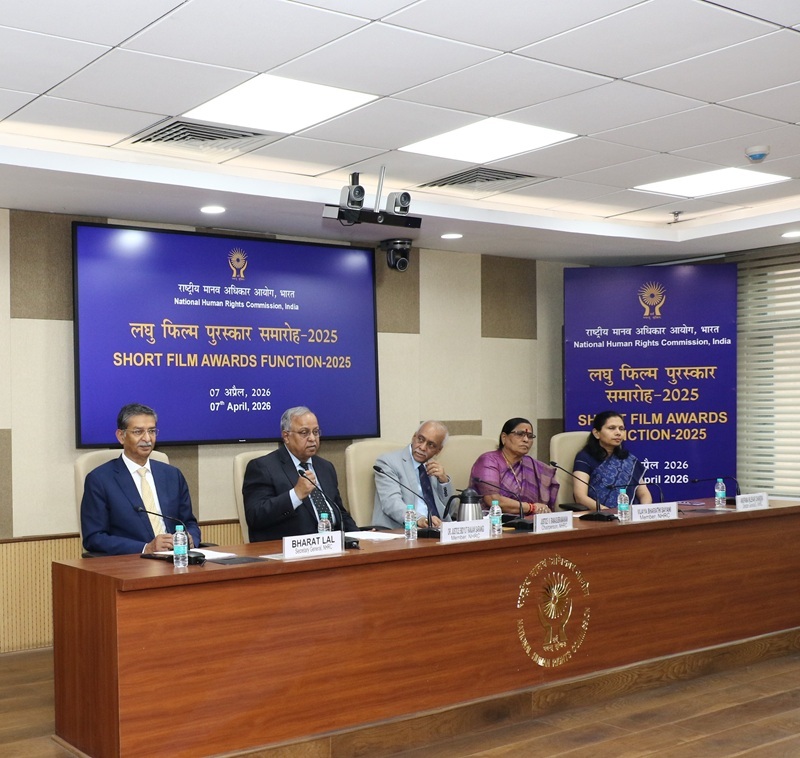
He highlighted that the competition has matured into a major outreach initiative of the Commission.
The winners were formally announced by Joint Secretary Saidingpuii Chhakchhuak. The first prize, comprising ₹2 lakh, a trophy and a certificate, was awarded to “Rani” by Ms. Sarika Jain. The Hindi film, subtitled in English, poignantly explores class divides and the struggles faced by women domestic workers.
The second prize of ₹1.5 lakh went to “Meanwhile She..” by Shri Amal S., a Malayalam film that delves into the disproportionate burdens borne by working women amid entrenched gender stereotypes and domestic violence.
The third prize of ₹1 lakh was conferred on “The Delivery” by Sai Shashank Tati from Tamil Nadu. The Tamil-language film sheds light on the precarious realities of gig workers, including job insecurity and the absence of social protection.
In addition, four films received Special Mentions, each carrying a cash award of ₹50,000: “Malati” by Falguni Bhakta, “Second Chance” by Ravi Karnwal, “Dusk of Life” by Damodar D. Pawar and “Bhagyashree” by Manoj Appaso Janwekar.
These films addressed a wide spectrum of themes, including tribal education, prison reforms, resilience among the elderly and the rights of widows in rural India.
The ceremony also featured interactions with the award-winning filmmakers, who shared insights into their creative journeys and the social motivations behind their work.
The Commission announced that all the awarded films will be made available on its official platform and may be utilised by government agencies, educational institutions and civil society organisations to further human rights education and advocacy.
Senior officials, including Director General (Investigation) Smt. Anupama Nilekar Chandra, were also present at the event, underscoring the Commission’s continued commitment to fostering awareness and dialogue on human rights through innovative outreach initiatives.