Judicial Earthquake in Washington: US Supreme Court Declares Trump’s Global Tariffs Illegal
(By Syed Ali Taher Abedi)
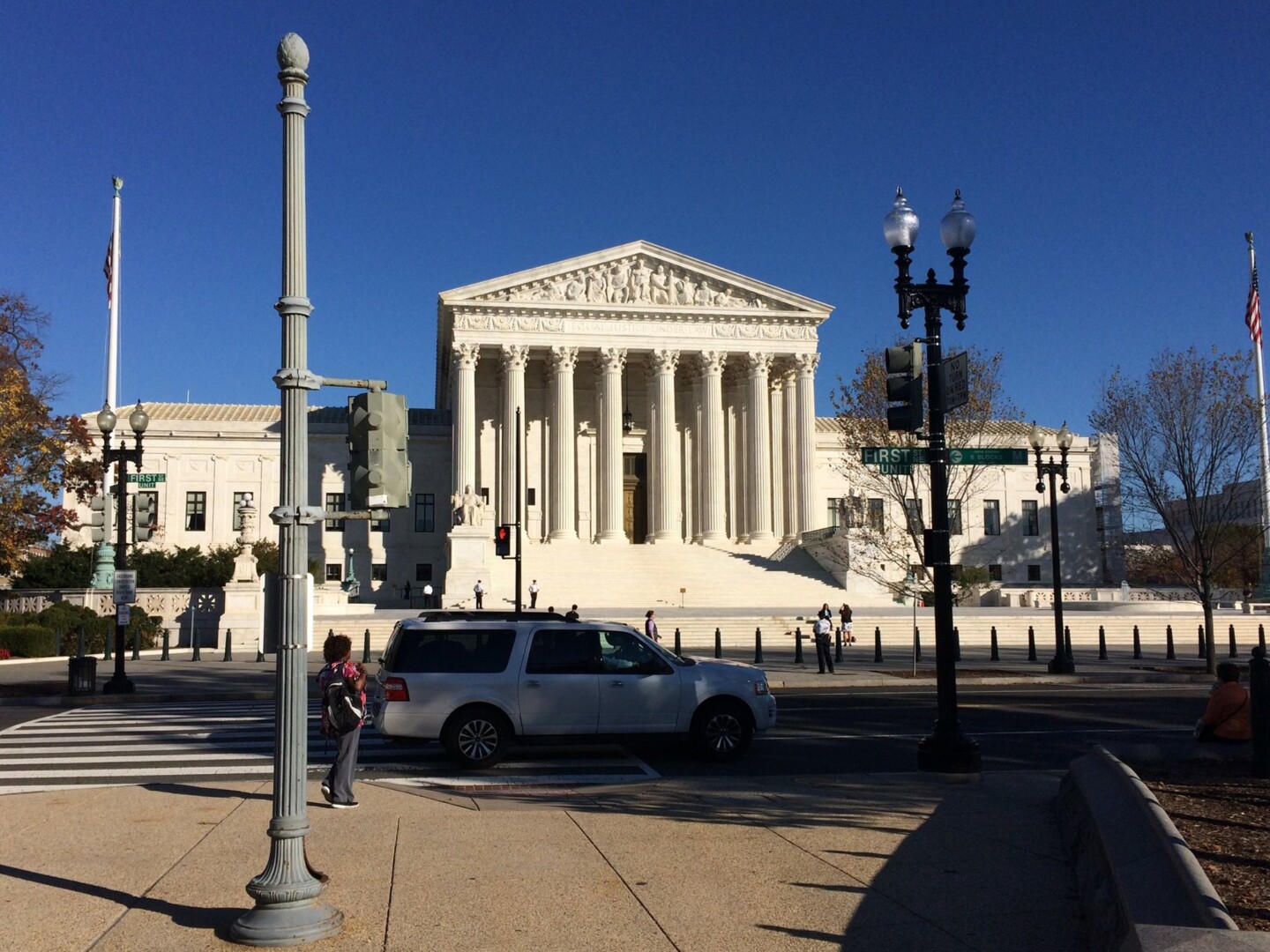
Washington 20, February, 2026- In a landmark constitutional ruling with sweeping global economic and legal consequences, the Supreme Court of the United States has declared the global tariffs imposed by President Donald Trump illegal, holding that the President lacked constitutional and statutory authority to impose them unilaterally.
The verdict was delivered by a 6:3 majority, with Justices Clarence Thomas, Samuel Alito, and Brett Kavanaugh dissenting. Chief Justice John Roberts announced the judgment of the Court and authored the principal majority opinion in large part.
Constitutional Core of the Ruling
At the heart of the decision lies a firm constitutional interpretation of Article I of the U.S. Constitution, which vests the power to “lay and collect Taxes, Duties, Imposts and Excises” exclusively in Congress.
The Court categorically held that tariffs are a form of taxation, and therefore fall squarely within Congress’s sole legislative authority.
The majority ruled that the President cannot impose tariffs without clear and explicit congressional authorization, and that such authority cannot be inferred or implied from general regulatory statutes.
IEEPA Found Insufficient for Tariff Powers
The tariffs had been imposed by President Trump under the International Emergency Economic Powers Act (IEEPA), a 1977 statute that empowers the President to regulate trade and financial transactions during a declared national emergency.
Rejecting the government’s interpretation, the Court held that IEEPA does not authorize the imposition of tariffs, as the statute contains no reference to tariff powers or taxation authority. The majority concluded that IEEPA’s grant of power to “regulate importation” does not amount to congressional authorization to impose duties.
Chief Justice Roberts observed that:
“When Congress has delegated its tariff powers, it has done so in explicit terms and subject to strict limits.”
The Court emphasized that Congress has historically transferred tariff authority only through specific statutes, such as trade acts that clearly define scope, rates, duration, and oversight — none of which applied in this case.
Background: Emergency Declaration and Tariff Regime
The case arose after President Trump declared a national emergency citing:
- The influx of illegal drugs
- Persistent trade deficits
- Economic security concerns
Invoking IEEPA, his administration imposed:
- 25% tariffs on most imports from Canada and Mexico
- 10% tariffs on many Chinese imports
- Later, reciprocal tariffs of at least 10% on imports from nearly all trading partners
- Some Chinese goods ultimately faced effective tariff rates as high as 145%
This created one of the largest unilateral tariff regimes in modern U.S. history, fundamentally reshaping global trade flows.
Legal Challenges and Judicial Journey
The tariffs were challenged in separate lawsuits by:
- Small businesses
- Trade associations
- Importers
- A coalition of U.S. states
The United States Court of International Trade granted summary judgment against the federal government, holding the tariffs unlawful.
That ruling was largely affirmed by the United States Court of Appeals for the Federal Circuit, sitting end banc.
The Supreme Court granted review, consolidated the cases, and delivered the final constitutional ruling.
Court’s Legal Reasoning
The majority judgment held that:
- Tariffs are clearly a branch of the taxing power
- The Founders deliberately vested taxation authority in Congress alone
- The Constitution does not permit open-ended delegation of taxing power to the Executive
- IEEPA cannot be used as a substitute for congressional tariff authorization
- Allowing such power would create an unconstitutional transfer of legislative authority
Lawyers for the challenging states and businesses argued that the statute used by the President “does not even contain the word tariff”, and that Congress never intended to give the President “open-ended power to junk existing trade deals and tariff regimes.” The Court expressly agreed with this interpretation.
Political and Constitutional Significance
The case had been widely viewed as a defining constitutional test of:
- Presidential emergency powers
- Expansion of executive authority
- Separation of powers doctrine
- Congressional control over taxation
- Limits of emergency governance
It also tested the willingness of a conservative-majority Supreme Court to strike down a policy central to the Trump administration’s economic agenda — a test the Court resolved firmly in favor of constitutional restraint and legislative supremacy.
Economic Impact and Market Response
The ruling triggered an immediate response across U.S. markets and industry:
- Businesses cautiously welcomed the decision
- Companies expressed hope for swift refunds of unlawfully collected duties
- Wall Street reacted positively, with the S&P 500 rising 0.6% in late-morning trade in New York
Refund Claims and Future Implications
The judgment has now opened the door for importers, multinational corporations, and businesses that paid billions in duties to file refund claims through the US Customs and Border Protection.
The lead challengers included U.S. companies and trade associations represented by Neal Katyal, former Acting Solicitor General during the Obama administration.
Reacting to the verdict, Katyal stated:
“Today the U.S. Supreme Court stood up for the rule of law. It stood up for Americans everywhere. The message is clear: the President is powerful, but our Constitution is more powerful still.”
Constitutional Message of the Court
Summing up the Court’s position, Chief Justice John Roberts declared in essence that:
“In America, only Congress can impose taxes on the American people — and that is what tariffs are.”