
From Rights to Remedies: NHRC’s Legal Lens on Spurious Medicines
(By Syed Ali Taher Abedi)
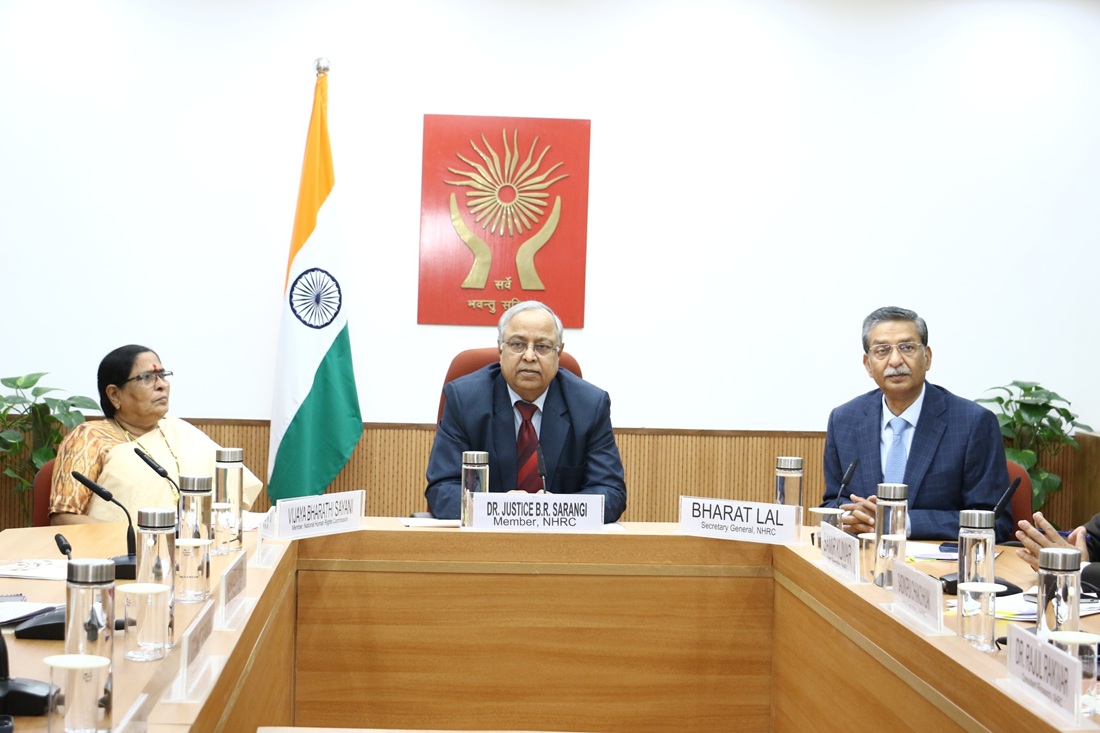
New Delhi, February 26, 2026: The National Human Rights Commission (NHRC) convened an Open House Discussion on “Measures to Curb Spurious Medicines in India,” spotlighting urgent regulatory and accountability concerns in the pharmaceutical sector.
Chairing the deliberations, NHRC Member Justice (Dr.) Bidyut Ranjan Sarangi warned that fragmented oversight could escalate into widespread human distress if not addressed with decisive, systemic reforms.
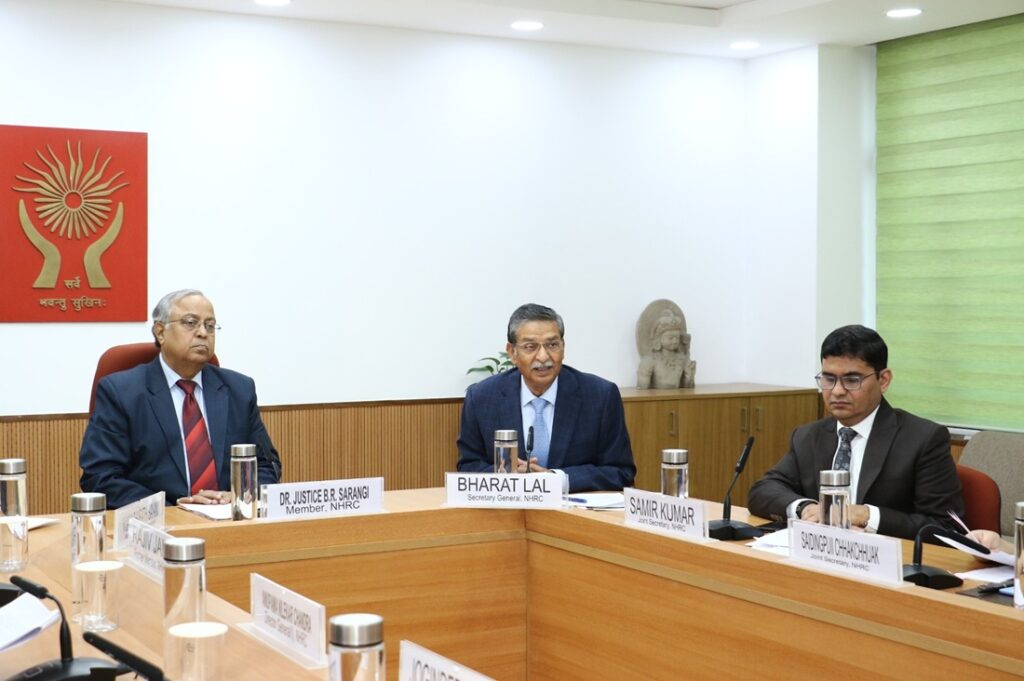
Fellow Member Mrs. Vijaya Bharathi Sayani underscored the need for strengthened monitoring and accountability mechanisms, while Secretary General Mr. Bharat Lal clarified the distinction between spurious and substandard drugs—both demanding coordinated institutional actions.
Stakeholders pressed for a centralized databank integrating inputs from regulators, enforcement agencies, and states to combat the menace comprehensively.
NHRC Member Mrs. Vijaya Bharathi Sayani underscored the human toll of substandard care, citing her family member’s permanent blindness from negligent treatment and adulterated drugs.
She demanded urgent probes into systemic lapses, mandating robust oversight and accountability across the pharmaceutical supply chain.
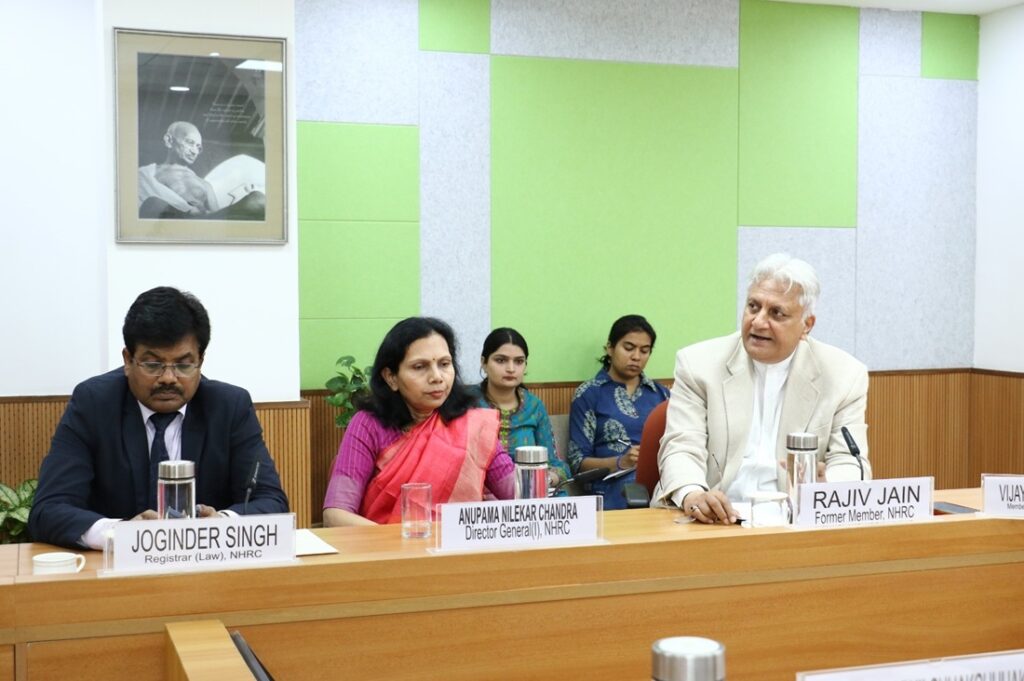
Former NHRC Member Mr. Rajiv Jain called for forensic-level enforcement: special drug courts for swift prosecutions; real-time testing protocols; QR codes and blockchain-tracked supply chains; NABL-accredited labs; AI-driven anomaly detection; unannounced raids; fortified whistleblower safeguards; digital case monitoring; a national spurious-drug database; enhanced public reporting helplines; and rigorous audits of e-prescription vulnerabilities.
Setting the tone for deliberations, NHRC Secretary General Mr. Bharat Lal underscored that the discourse on spurious medicines is inseparable from the fundamental right to life and health under Article 21 of the Constitution.
He cautioned that citizens consume medicines in good faith, relying on the State’s constitutional obligation to safeguard life and dignity, and warned that any breach amounts to a violation of human rights.
Stressing that “medicines must heal, not harm,” he drew a clear statutory distinction between ‘spurious drugs’—defined in multiple manifestations under Section 17-B of the Drugs and Cosmetics Act, 1940—and ‘substandard drugs,’ which are authorised products failing prescribed quality standards. Citing the National Survey on Drugs
Mr. Lal distinguished spurious drugs—produced via untraceable criminal networks demanding full forensic probes—from traceable substandard variants.
He highlighted NHRC’s proactive Suo motu interventions on rights violations from spurious medicines, citing its October 2025 notice to Madhya Pradesh, Rajasthan, Uttar Pradesh governments, and Union health regulators over child deaths from tainted cough syrups.
The Commission ordered end-to-end supply-chain probes and lab test reports, pressing for urgent inter-agency enforcement.
Dr. Keshav Kumar, Special Rapporteur of the NHRC, drawing upon extensive research, pressed for enhanced monitoring mechanisms, the constitution of central and state-level task forces, and the strengthening of regulatory compliance.
He urged improved inter-agency coordination, specialised training for law enforcement and judicial officers, victim compensation frameworks, and collaboration with international bodies to combat the menace of spurious medicines.
Highlighting systemic concerns, Dr. Kumar pointed to low conviction rates in spurious drug prosecutions, protracted delays in investigation and adjudication, and the higher prevalence of substandard samples in certain procurement channels.
He stressed the judicial necessity of distinguishing between “spurious drugs”—counterfeit, fake, or deliberately mislabelled products—and “substandard drugs”—genuine but failing to meet prescribed quality standards—underscoring the statutory definitions under the Drugs and Cosmetics Act, 1940.
Ms. Nishtha Tiwari, Joint Secretary, MHA, outlined key interventions by the Ministry to counter spurious drugs, stressing the urgency of the issue. Mr. Chandrashekhar Ranga, Joint Drugs Controller (DCGI), detailed regulatory measures already in place—coordinated inspections, strengthened surveillance, and enhanced training of inspectors—while emphasising sustained capacity building to meet emerging challenges.
Mr. Prashant Reddy T., author of The Truth Pill, underscored the imperative of rigorous quality assurance and transparency, raising concerns over regulatory gaps and bioequivalence, noting that not all generics necessarily mirror innovator drugs.
The deliberations also reviewed recent enforcement trends, noting coordinated inter-state investigations, the use of organised crime provisions in counterfeit drug cases, and evolving jurisprudence of the Supreme Court and High Courts on prosecution, police jurisdiction, victim rights, and trial procedures.
Participants were invited to submit detailed written suggestions to enable the NHRC to finalise its recommendations.
The other multi-sectoral participants and stakeholders included Ms. Anupama James, AIG, National Investigation Agency;
Shri P. Krishnamurthy, Chairman, NPPA; Ms. Sai Ahlladini Panda, Member Secretary, NPPA; Dr. Keshav Kumar, IPS(Retd.), Indian Pharmaceutical Alliance; Shri Om Prakash Sadhwani, Joint Commissioner (Retd.), FDA; Dr. N.R. Saiyad, Deputy Commissioner, Food and Drug Controller Administration (FDCA); Dr. Bhoomika Patel, Dean, School of Pharmacy, NFSU; Dr. P.K. Sharma, Professor and Head, Department of Pharmacology, SLB Medical College; Prof (Dr.) Yogendra Kumar Gupta, President, AIIMS Kalyani; Shri Ankit Gupta, President, ASPA; Shri Harish K. Jain, National President, Federation of Pharma Entrepreneurs (FOPE); Shri Narendra Ahooja, Regulatory Advisor, FOPE; Shri Sandeep Sikaria, FOPE; Dr. Ilyas K.P.A., Deputy Director Bureau of Police Research and Development (BPR&D); Shri Dube Patil, FDA Commissioner, Maharashtra.
Some of the other suggestions that emanated from the discussions were as follows:
• There is a need to establish a comprehensive, centralised databank on spurious and sub-standard medicines, integrating inputs from enforcement agencies, regulators and states;
• Technological interventions should be done to facilitate predictive analytics, pattern recognition, supply-chain mapping and early risk detection;
• Capacity-building of Drug Inspectors through structured and periodic training programmes should be institutionalised;
• A formal feedback mechanism may be introduced to document field-level investigative processes adopted by trained officers, including evidence collection, prosecution strategy, and inter-agency coordination to serve as a model protocol for nationwide adoption;
• A sustained and intelligence-driven vigilance framework is essential. Preventive surveillance, market sampling and coordinated inspections should be strengthened, with emphasis on identifying repeat offenders and vulnerable supply-chain nodes;
• Best practices from states demonstrating effective regulatory performance should be systematically documented, benchmarked and replicated across jurisdictions through inter-state coordination platforms;
• Consideration may be given to establishing a coordinated centre–state joint enforcement mechanism dedicated to monitoring and combating spurious and sub-standard drugs; and
• Take appropriate steps to ensure that pending cases currently before Judicial Magistrate First Class (JMFC) courts or other subordinate courts are transferred to the competent Sessions Courts in light of the Supreme Court judgment that offences under the Drugs and Cosmetics Act are triable exclusively by Sessions Courts.

