
Bridging Borders for Rights Enforcement: NHRC’s High-Level Exposure Visit to 40 Lankan Officers via ITEC
(Judicial Quest News Network)
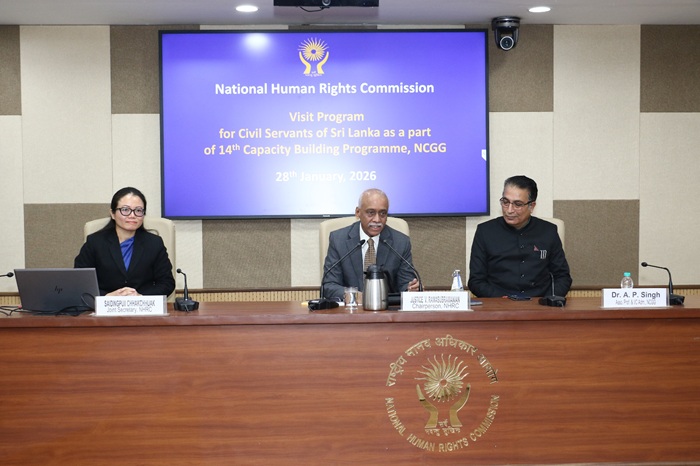
Delhi, 29, January,2026- In a significant step towards strengthening international cooperation in governance and human rights administration, the National Human Rights Commission (NHRC), India, on Tuesday hosted a delegation of 40 senior civil service officers from Sri Lanka during their exposure visit to the Commission under the Government of India’s capacity-building framework.
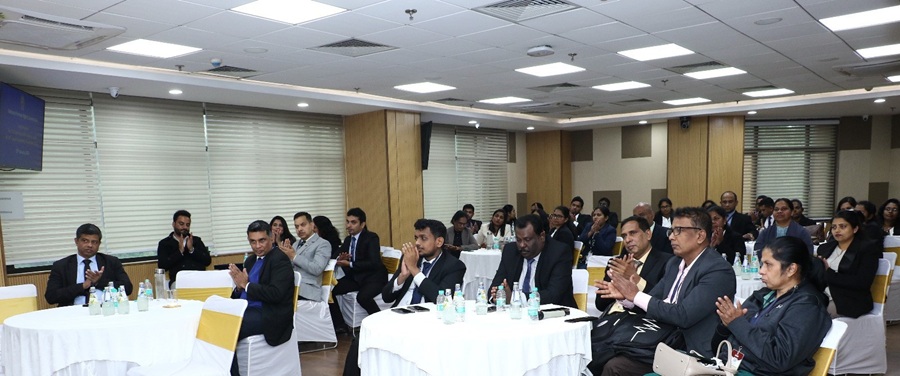
The visit formed part of the 14th Capacity Building Programme conducted by the National Centre for Good Governance (NCGG) under the International Technical and Economic Cooperation (ITEC) initiative of the Ministry of External Affairs, during which NHRC Chairperson Justice V. Ramasubramanian underscored the pivotal role of civil servants as a constitutional bridge between the legislature and the judiciary in shaping democratic governance, while Secretary General Bharat Lal highlighted India’s institutional human rights framework rooted in the civilisational values of empathy, compassion, and non-violence.
In every constitutional democracy, he emphasized, the legislature, judiciary, and executive stand as the three sacrosanct pillars—interdependent yet distinct—essential for upholding the rule of law, ensuring accountability, and propelling sustainable national growth.
Highlighting the profound synergies between India and Sri Lanka, Justice Ramasubramanian noted their shared inheritance of a common law system rooted in British colonial jurisprudence, manifested in analogous court structures, procedural paradigms, and interpretive methodologies.
He further observed that statutes and governance frameworks are invariably sculpted by interplaying economic imperatives and geopolitical exigencies, which profoundly dictate a nation’s developmental trajectory.
Justice Ramasubramanian accorded pivotal significance to civil services officers, portraying them as the vital fulcrum in democratic politics—bridging the legislature’s law-making domain with the judiciary’s interpretive authority.
By translating policy into praxis and safeguarding constitutional mandates, these officers emerge as architects of resilient governance systems, he asserted.
Civil servants, he emphasized, must remain vigilant to both external and internal dynamics that may impinge upon the sovereign interests of the State.
It is their constitutional responsibility to ensure that the nation’s resources are equitably disseminated to the citizenry, without discrimination, thereby safeguarding social harmony and averting potential unrest.
Drawing upon recent global precedents, he cautioned that civil servants must also exercise heightened awareness of social media provocations, which, if left unchecked, could precipitate disorder.
Timely and pre-emptive administrative measures, he noted, are indispensable to preserving public order and protecting the integrity of governance.
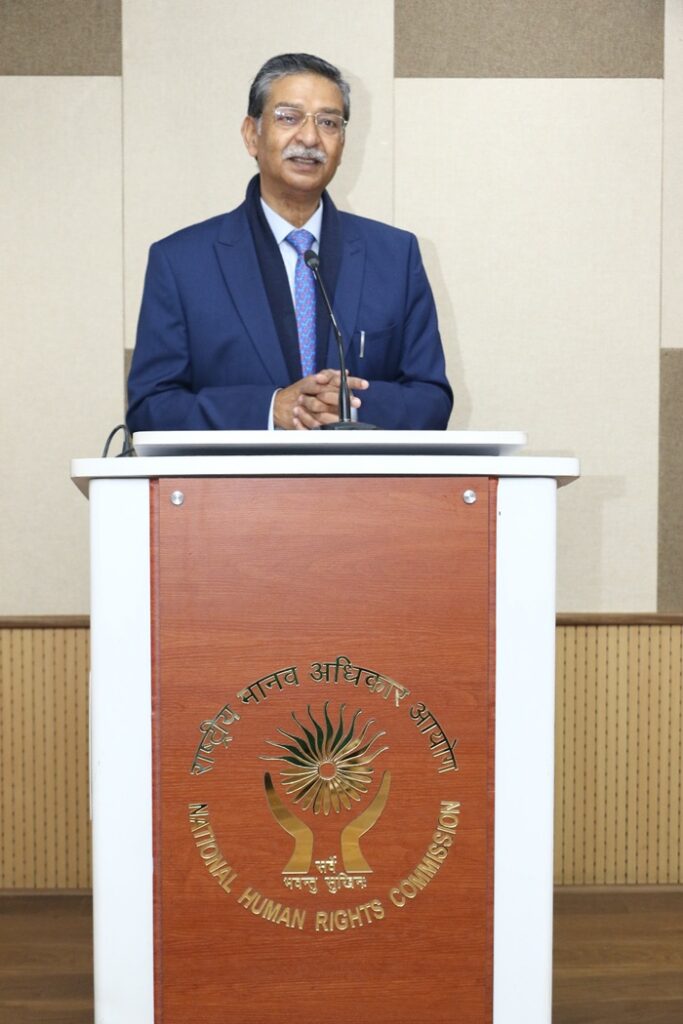
Earlier, Shri Bharat Lal, Secretary General of the National Human Rights Commission, in his address on the theme “Institutional Framework for Promotion and Protection of Human Rights in India”, underscored India’s civilisational ethos of empathy, compassion, and non-violence as the normative foundation of governance and the ethical compass for the protection of human rights.
He observed that India’s pluralistic ethos, freedom movement and social reform traditions have shaped a human rights discourse focused on the most vulnerable.
Referring to the Constitution, the Protection of Human Rights Act and the role of the judiciary, he underscored that dignity and pride are central to good governance, cautioning that corruption and institutional undermine social stability, whereas transparency and accountability enhance citizens’ quality of life.
Emphasising capacity-building as a process of learning and internalising institutional values, Shri Lal referred to India’s governance experience and cooperation with Sri Lanka, highlighting shared democratic ideals and India’s continued support.
He outlined NHRC’s role in monitoring human rights violations, issuing advisories and engaging with international mechanisms, while stressing Global South solidarity, institutional credibility and India’s contributions to human rights, women’s leadership and governance reforms.
He further noted that independent institutions, including the judiciary, human rights bodies and anti-corruption agencies, are vital to democratic stability.
Dr. A. P. Singh, Associate Professor and In-charge (Administration), NCGG, highlighted the Centre’s role in training senior civil servants from various countries to share India’s governance best practices and strengthen bilateral administrative cooperation. Earlier, Ms. Saidingpuii Chhakchhuak, Joint Secretary, NHRC, welcomed the Sri Lankan delegation and dignitaries.


