Uniform Citation Across Commonwealth: Judicial Digitalization Takes Centre Stage at CLEA International Conference 2026
(Judicial Quest News Network)
Hyderabad: 21, November,2026- Emphasizing the urgent need to standardize legal referencing in an era of artificial intelligence and digital repositories, the adoption of a Uniform Neutral Citation System across the Commonwealth emerged as a focal point during the CLEA 1st Annual International Conference on Legal Education 2026, themed “Reimagining Law Schools, Legal Learning, and the Future of the Legal Profession for a Commonwealth in Transition.”
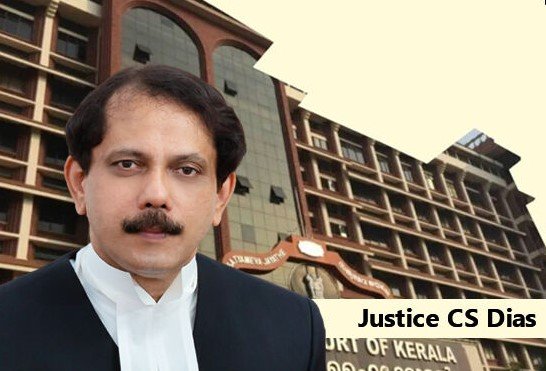
Addressing the gathering on the evolving architecture of judicial records, Justice C. S. Dias Judge Kerala High Court underscored that a court judgment is far more than a document resolving a dispute between two parties it is a vital contribution to the development of law that guides future decisions, shapes legal principles, and alters the course of jurisprudence.
For a ruling to achieve its full jurisprudential value, it must be identifiable and accessible with absolute certainty. Said the Judge
Transitioning to Digital Legal Repositories
Highlighting the rapid transformation in the administration of justice from physical case files to electronic records, and from conventional law libraries to digital repositories Justice Dias noted that the legal fraternity has entered a new phase dominated by artificial intelligence, automated research, and digital legal platforms.
In India, a major milestone in this transition occurred when the Supreme Court of India adopted the Neutral Citation System on July 6, 2023, followed closely by several High Courts, including the High Court of Kerala.
Overcoming Citation Fragmentation
Historically, the reporting of judgments rested largely at the discretion of private law journals such as Supreme Court Cases (SCC), All India Reporter (AIR), and Supreme Court Reports (SCR).
While acknowledging the invaluable contribution of these publications whose editorial rigor, headnotes, and research tools have assisted generations of judges, lawyers, and legal academics the speaker pointed out a persistent practical challenge a single judgment often carries multiple, differing citations across various reporters.
The Neutral Citation System has resolved this fragmentation by creating a paradigm shift. Under this framework:
Court-Assigned Identity: Every judgment’s official identity and neutral citation are assigned directly by the court itself, rather than by a private publisher or commercial database.
Instant Accessibility: Rulings are uploaded directly onto the court’s case management system embedded with a dedicated QR code and a permanent neutral citation.
The Kerala High Court Model: Democratizing Legal Access
Illustrating the real-world impact of this reform, the speaker detailed the success of the Kerala High Court, which introduced the neutral citation system two years ago.
Building on this digital foundation, the court launched an open-access digital initiative titled Kerala High Court Cases – Chronicles, which has grown to serve over 14,000 subscribers across 16 WhatsApp groups.
Through this streamlined workflow, the moment a judgment certified for reporting is uploaded to the system, it is routed to a team of eight dedicated reporters.
They prepare concise headnotes and disseminate the judgment free of cost to a wide spectrum of stakeholders including sitting judges, district judiciary officers, advocates, law students, academicians, police personnel, and litigants.
Concluding the session, Justice Dias affirmed that such rapid, democratized dissemination of authentic judicial precedents is only possible through court-assigned neutral citations, marking a decisive step forward for legal education and judicial transparency across the Commonwealth.