Maharashtra’s Uniform Civil Code Panel Faces Internal Dissent as Justice RC Chavan Resigns
Former Bombay High Court judge questions the committee’s decision-making process, limited public consultation and the role of an external functionary
(By Syed Ali Taher Abedi)
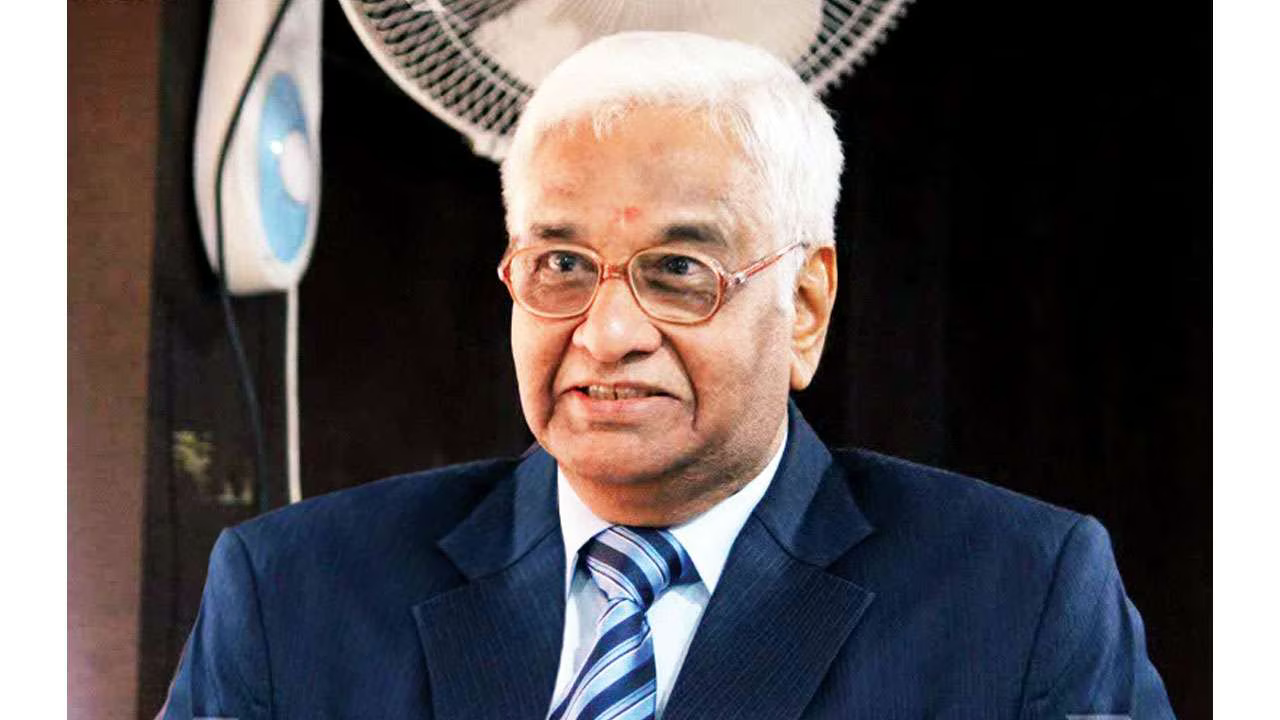
Mumbai, September 22, 2026: Maharashtra’s proposed Uniform Civil Code (UCC) exercise has come under scrutiny following the resignation of former Bombay High Court judge Justice RC Chavan from the State’s seven-member committee constituted to examine and draft a framework for a uniform civil code.
Justice Chavan’s resignation has brought to the fore concerns regarding the manner in which the committee is functioning, particularly its approach to public consultation, the finalisation of a questionnaire intended to gather citizens’ views and the participation of a person who was not formally appointed as a member of the panel.
The committee is chaired by retired Supreme Court judge Justice Ranjana Prakash Desai.
The resignation was communicated through an email addressed to the Chairperson, the committee members and the Principal Secretary of the Law and Judiciary Department following the panel’s second meeting, which was conducted online.
Questionnaire Allegedly Finalised Before Deliberations Concluded
According to Justice Chavan’s communication, some members of the committee were in the process of expressing their views on the proposed public feedback questionnaire when they were informed that the document had already been finalised by the Chairperson.
Justice Chavan reportedly supported the suggestion that the questionnaire be reviewed by academic and subject-matter experts before being released to the public.
Such a review, he indicated, could have assisted the committee in framing questions that were balanced, legally sound and capable of eliciting meaningful responses from citizens across Maharashtra.
However, the former judge stated that the questionnaire had already been circulated in final form and was expected to be uploaded once the committee’s website became operational.
This, in his view, substantially curtailed the scope for further discussion within the panel.
The episode has raised an important institutional question: whether a consultative committee can effectively discharge its mandate when substantive inputs from its members are considered only after key documents have already been finalised.
Concern over “Yes or No” consultation process
Justice Chavan also expressed dissatisfaction with what he perceived to be a narrow approach to public consultation.
The former judge reportedly understood the committee’s mandate to include a detailed examination of the views of Maharashtra’s people and an effort to build a broad-based consensus on issues connected with family law, marriage, divorce and dispute resolution.
Instead, he stated that the exercise appeared to have been reduced to collecting simple “Yes” or “No” responses.
While such a format may facilitate the compilation and analysis of statistical data, it may not adequately capture the social, cultural, religious and legal complexities involved in framing a Uniform Civil Code.
A UCC has significant implications because it concerns personal-law matters that may include marriage, divorce, maintenance, inheritance, adoption and related family-law rights.
Any legislative proposal in this field is therefore likely to require careful consultation, constitutional scrutiny and consideration of the differing practices followed by various communities.
Justice Chavan reportedly referred to concerns such as delayed marriages, unstable marital relationships, infertility, disputes within families and the time taken by existing dispute-resolution mechanisms. His position appeared to be that these issues require more nuanced public deliberation rather than responses confined to binary choices.
Questions Raised Over The Role Of An External Official
The former judge also questioned the involvement of Shatrughna Singh, a former Indian Administrative Service officer, in matters relating to the committee’s website and its modifications.
Justice Chavan reportedly sought clarity on the authority under which the former civil servant was providing directions or participating in the committee’s administrative processes.
His concern was not merely about the individual’s involvement but about the broader issue of accountability within a government-appointed body.
From a legal and administrative perspective, the question is whether a person who has not been formally appointed to a statutory or governmental committee should exercise influence over its functioning, especially in relation to public consultation and dissemination of official material.
The issue also touches upon the principles of transparency, institutional responsibility and procedural propriety.
Where a committee is entrusted with examining a matter of constitutional and social importance, its decision-making chain must ordinarily be clear, documented and capable of public explanation.
Resignation intended to remove uncertainty
Justice Chavan indicated that his decision to resign was intended to allow the State Government to fill the vacancy without delay.
He also stated that, having relinquished his position, he would no longer be bound by the restrictions applicable to a serving committee member and would be free to express his views as a private citizen.
The former judge reportedly observed that individuals who approached him with the expectation that he would place their views before the committee would now have to communicate directly with the panel.
The Maharashtra Government has accepted Justice Chavan’s resignation.
Institutional Implications for The UCC Process
Justice Chavan’s departure may not, by itself, halt the State’s UCC exercise.
However, it has introduced an element of internal disagreement into a process that depends heavily on public confidence and procedural legitimacy.
The controversy is likely to focus attention on several questions whether the committee’s questionnaire will be revised, whether wider consultations will be undertaken, how responses will be evaluated and what safeguards will govern the preparation of any eventual draft.
The framing of a Uniform Civil Code is not simply an administrative exercise.
It involves the reconciliation of constitutional principles, individual rights, personal-law traditions and the State’s obligation to ensure equality before the law.
Any resulting proposal may therefore be assessed not only on its substantive provisions but also on the fairness and inclusiveness of the process through which it is prepared.
For now, Justice Chavan’s resignation has placed the committee’s internal procedures under the spotlight and may intensify calls for a more transparent, participatory and legally rigorous consultation process.