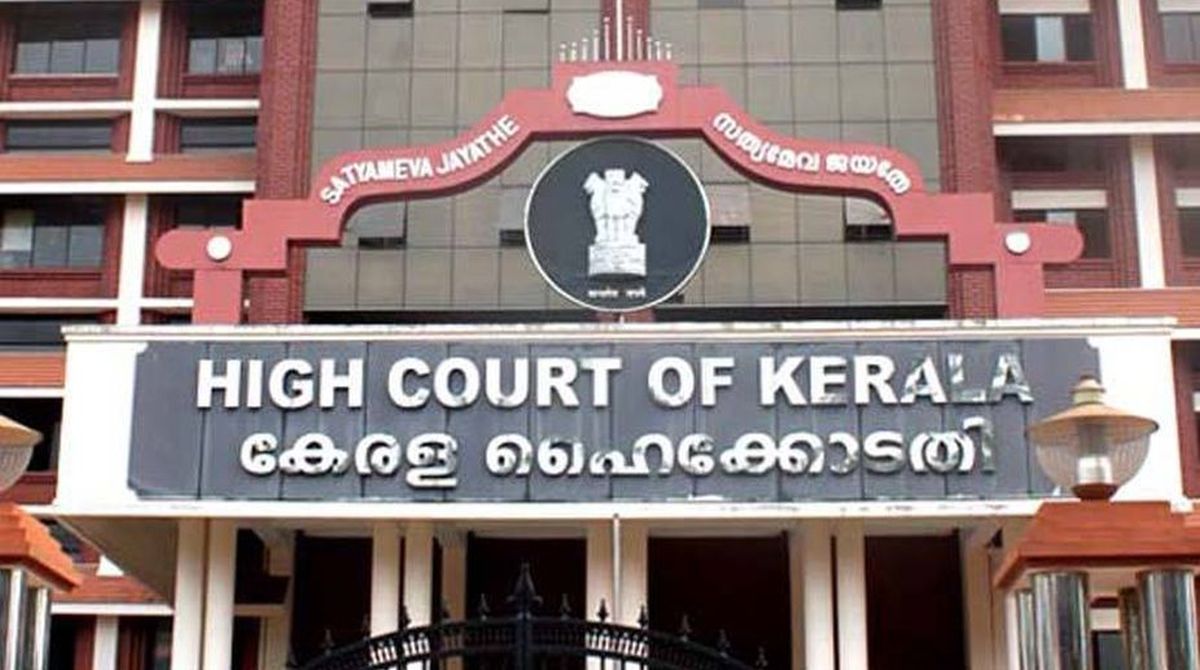
Courts Must Answer Criticism with Judgments, Not Contempt Notices: Kerala High Court Quashes Contempt Case Against Magazine Editor
Free speech takes a landmark victory as the Kerala High Court declares that the judiciary is not above outspoken public scrutiny and that courts must exercise contempt powers with restraint, not rigidity.
(Judicial Quest News Network)
Kerala, August 18, 2026-In a ruling that reverberates far beyond the borders of Kerala, the Kerala High Court has delivered a powerful reaffirmation of free speech in India, holding that the judiciary even when subjected to sharp and outspoken criticism is not immune from public scrutiny, and that such criticism, by itself, can never justify contempt of court proceedings.
The landmark observation came as a Division Bench comprising Justice Raja Vijayaraghavan V and Justice KV Jayakumar closed contempt proceedings initiated against MR Ajayan, the chief editor of the online news magazine Green Kerala News, in the case of Suo Motu v MR Ajayan.
Background: A News Report That Sparked a Contempt Battle
The saga began with a news report published by the online magazine, which examined the children of judges studying in self-financing medical colleges a subject of undeniable public interest and public curiosity.
The report drew a complaint alleging that it was baseless, scandalous, and designed to cast an adverse shadow over the functioning of the judiciary.
The complainant further alleged that the publication was intended to influence the outcome of a pending case before the High Court concerning admissions to self-financing medical colleges.
On this footing, the court-initiated contempt of court proceedings against the magazine’s chief editor setting the stage for a classic confrontation between the dignity of the judiciary and the constitutional right of citizens to speak freely.
The Court’s Verdict: Criticism Is Not Contempt
After carefully weighing the facts, the Bench dismissed the contempt case, articulating a philosophy that places public confidence in the quality of judgments above the silence of critics.
The Court observed that people hold an inherent right to make fair comments even outspoken ones about the judiciary on matters of public interest.
To anchor this principle, the Bench invoked the celebrated decision in Sheela Barse v Union of India, reminding readers that the Supreme Court has repeatedly recognised the fundamental right of citizens to criticise shortcomings in the system.
Crucially, the Court laid down a stringent standard for invoking contempt jurisdiction: contempt proceedings must be initiated only in cases where contempt is clearly established without any reasonable doubt.
Courts, the Bench clarified, should intervene only when criticism crosses the line into being excessively offensive not merely to shield the judiciary’s dignity or to mute dissent.
“It is the privileged right of every Indian citizen to hold opinions that he believes to be true and to express those opinions, even if they are not always articulated in the best of taste and are spoken with greater courage than precision.
The judiciary is not immune from criticism. Judicial institutions are expected to possess the strength and resilience to withstand fair, even if outspoken, criticism and to continue to command public confidence through the quality of their judgments, their independence, and their conduct.
As observed by VR Krishna Iyer J., the plea is not for judicial pachydermy, but for dignified detachment which ignores ill-informed criticism in its tolerant stride, but strikes when offensive excesses are established.” Justice Raja Vijayaraghavan V and Justice KV Jayakumar, Suo Motu v MR Ajayan
Why the Contempt Case Fell Apart
The Bench found that the proceedings against Mr Ajayan could not survive scrutiny on the facts themselves.
During the pendency of the case, no order had been passed recording a prima facie satisfaction that the allegations against the editor constituted criminal contempt.
The Court also noted that the online magazine did not enjoy wide circulation, further undermining the claim that the report posed any real threat to the administration of justice.
| Key Aspect of the Case | Details |
| Case Title | Suo Motu v MR Ajayan |
| Bench | Justice Raja Vijayaraghavan V and Justice KV Jayakumar |
| Respondent | MR Ajayan, Chief Editor of Green Kerala News (online magazine) |
| Triggering Report | News story on children of judges studying in self-financing medical colleges |
| Complaint Alleged | Report was baseless, scandalous, and intended to influence a pending case |
| Court’s Finding | No prima facie satisfaction of criminal contempt recorded; magazine lacked wide circulation |
| Outcome | Contempt proceedings closed |
| State Representation | Senior Public Prosecutor Jikku Jacob |
A Broader Message: Judicial Dignity Earned, Not Enforced
The judgment carries a message of enduring significance for press freedom in India.
At its heart, the ruling recognises that the judiciary’s stature rests not on the silencing of critics, but on the integrity, independence, and quality of its work.
Invoking the words of the legendary Justice VR Krishna Iyer, the Bench reminded us that the ideal is not “judicial pachydermy” a thick-skinned indifference but a dignified detachment that calmly absorbs ill-informed criticism yet acts decisively only when offensive excesses are truly established.
For editors, journalists, and citizens alike, the ruling is a clarion call the courts are public institutions, answerable to public discourse.
Fair criticism, however bold, remains the privileged right of every Indian citizen and the contempt of court jurisdiction must be wielded as a rare and surgical instrument of justice, never as a blunt weapon of censorship.