A Law Without a Body: CJI Surya Kant Questions Six-Year Delay as India Loses Arbitrations to Singapore
(Judicial Quest News Network)
New Delhi, July 11, 2026-Chief Justice of India Surya Kant delivered a pointed institutional indictment on Saturday, publicly flagging the continued failure to constitute the Arbitration Council of India a statutory body mandated by Parliament six years ago and warning that the gap between legislative announcement and executive implementation has created a credibility deficit that India cannot resolve through further legislation alone.
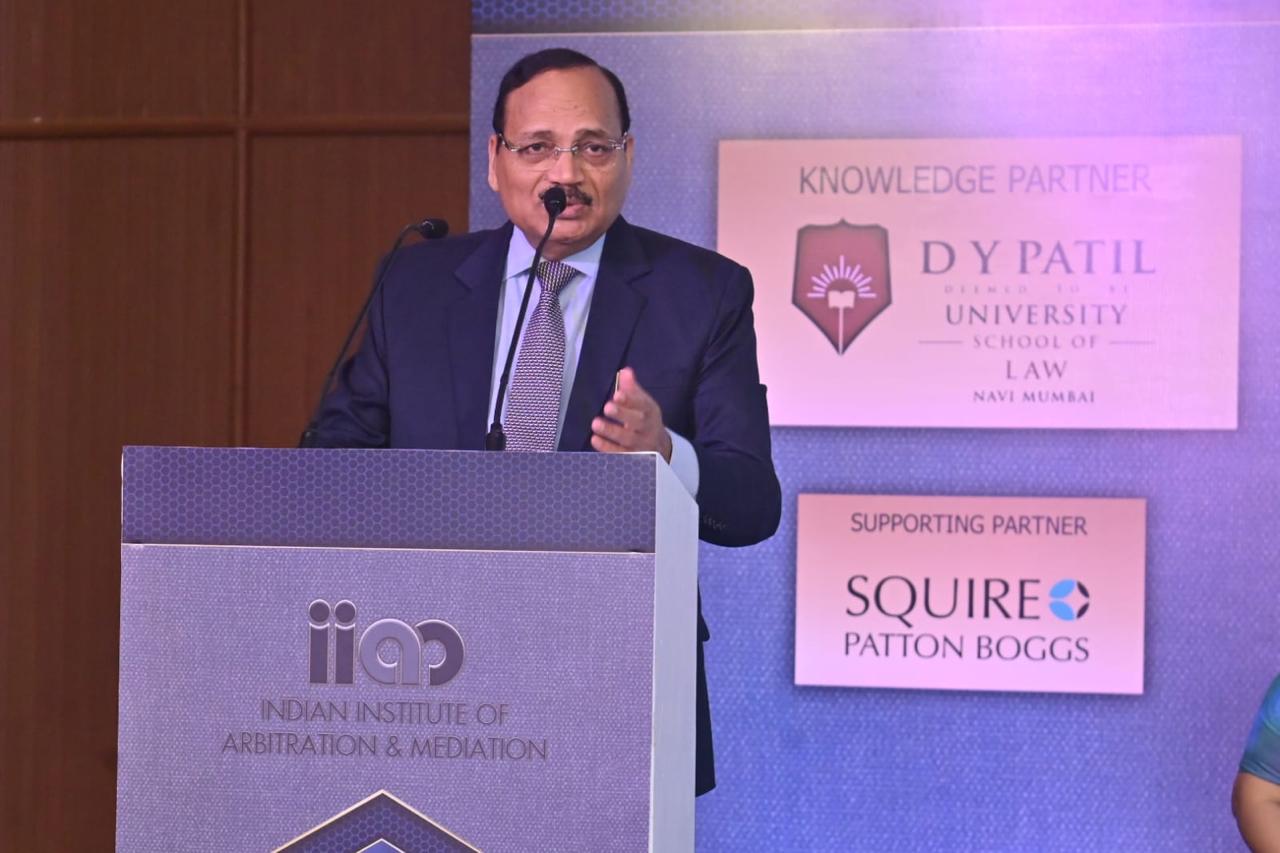
The Chief Justice was delivering the inaugural address at the Indian Institute of Arbitration and Mediation’s Silver Jubilee ADR Summit on the theme “Reimagining ADR Innovation, Technology and the Future of Justice” in New Delhi.
The Arbitration Council of India: A Statutory Body That Exists Only on Paper
The Arbitration Council of India was established under the Arbitration and Conciliation (Amendment) Act of 2019 a parliamentary enactment whose stated purpose was to grade arbitral institutions operating in India and accredit individual arbitrators, thereby creating the quality assurance infrastructure necessary to position India as a credible international arbitration hub.
Six years after that legislative mandate was conferred, the ACI has yet to be constituted.
Its members have not been appointed. Its offices have not been opened. Its accreditation functions have not commenced.
The statutory body that Parliament created to anchor India’s arbitration reform programme exists, as the Chief Justice made plain on Saturday, in legislation alone not in institutional reality.
“If our ambition is to become a preferred seat, this gap between announcement and implementation is precisely the credibility deficit we cannot legislate our way out of,” the Chief Justice said.
The observation is one of uncommon judicial candour directed at an executive failure of corresponding magnitude.
A nation that passes legislation announcing institutional reform, and then leaves that institution unestablished for half a decade, sends a message to the international commercial community that its institutional commitments cannot be relied upon a message that no subsequent amendment, no further consultation, and no additional legislative initiative can easily correct.
The Singapore Symptom: India’s Parties Choose Abroad
The Chief Justice grounded his institutional critique in a commercially specific and statistically documented observation.
He noted that Indian parties were the third-largest foreign users of the Singapore International Arbitration Centre in both 2024 and 2025 a ranking that places Indian commercial actors among the most frequent users of a foreign arbitral institution while India’s own institutions struggle for credibility and adoption.
He was careful to clarify that this was not a criticism of Singapore’s arbitration infrastructure, which has earned its reputation through decades of disciplined institutional investment.
The question he posed was more searching and more directly relevant to Indian policy what would it take for Indian companies to choose Mumbai or Delhi as their arbitration seat with the same confidence they currently reserve for Singapore?
“Singapore’s arbitration success took decades of consistent institutional practice, not a single legislative moment.
What we can usefully borrow is not any one country’s statute, but its discipline in implementation,” the Chief Justice said.
The lesson is precise: legislative ambition unaccompanied by institutional follow-through produces neither the accreditation framework that the ACI was designed to provide nor the international confidence that India’s arbitration market needs to retain domestic commercial disputes on domestic soil.
The Pending Bill: A Reform Still Awaiting Parliamentary Action
The Chief Justice also noted that the Draft Arbitration and Conciliation (Amendment) Bill released for public consultation in October 2024 on the recommendations of the Viswanathan Committee remains pending. He expressed hope that a revised version of the Bill would now be introduced in Parliament, signalling that the legislative reform process must resume and be completed if India’s arbitration ambitions are to acquire the institutional substance they currently lack.
On Mediation: Professionalisation, Contracts, and the Singapore Convention
Turning to mediation the complementary pillar of India’s alternative dispute resolution architecture the Chief Justice identified three specific conditions that must be met for mediation to fulfil its transformative potential in Indian commercial practice.
He said the future of mediation in India depends on the professionalisation of mediator training and accreditation, on greater willingness among businesses to include mediation clauses as a standard feature of commercial agreements, and critically on India’s ratification of the Singapore Convention on Mediation.
The Singapore Convention, which provides a multilateral treaty framework for the cross-border enforcement of mediated settlement agreements, is the international instrument that would place mediated settlements on a footing of enforceability comparable to arbitral awards under the New York Convention.
India’s ratification, long awaited by the commercial dispute resolution community, would signal both domestic commitment to mediation as a legitimate dispute resolution mechanism and India’s readiness to participate fully in the international framework governing its enforcement.
On Artificial Intelligence: An Assistant, never a Decider
The Chief Justice’s remarks on artificial intelligence in dispute resolution were characteristically precise in their articulation of the boundary between what technology may legitimately assist and what it must never be permitted to replace.
“Artificial Intelligence may triage a dispute, organise evidence, or draft a first translation, but the moment it begins to weigh one party’s equities against another’s, it has stopped assisting and started deciding, and no algorithm has yet earned the ability or authority to do that quietly,” he cautioned.

The formulation is a crisp and memorable restatement of the constitutional principle that the Chief Justice has articulated with increasing clarity across his recent international addresses in London, at Oxford, and now in Delhi.
The judicial function, at its irreducible core, involves the weighing of equities a process that demands human judgment, legal conscience, and the capacity for empathy that no algorithm possesses. AI may serve the courtroom. It may not govern it.
The Closing Standard: Public Trust as the Measure of ADR’s Success
Chief Justice Surya Kant concluded his address with a proposition that places the entire ADR reform agenda within its proper constitutional and social frame that arbitration, mediation, and digital dispute resolution must ultimately build public trust by ensuring fair, timely, and enforceable justice outside the traditional courtroom.
Public trust is the correct standard. It is not the number of institutions established, the volume of cases filed, or the sophistication of the technology deployed that determines whether alternative dispute resolution has succeeded.
It is whether the parties who use it the businesses, the commercial actors, and ultimately the individuals whose disputes are submitted to its processes emerge from those processes with confidence that they have received a fair hearing and a just outcome.
Without that trust, the most elaborate institutional infrastructure is an empty scaffold. With it, even modest and imperfect institutions can serve the constitutional promise of accessible justice.
The Arbitration Council of India, six years after its statutory creation, has not yet had the opportunity to build that trust.
The Chief Justice’s public flagging of that failure is itself an act of institutional accountability a judicial voice insisting, from a platform of constitutional authority, that the gap between promise and performance be closed without further delay.