No Fast-Track Probe: Supreme Court Declines Urgent SIT Probe in Ram Janmabhoomi Trust Embezzlement Allegations
(By Syed Ali Taher Abedi)
New Delhi 29,June,2026- A writ petition has been filed before the Supreme Court of India invoking the Tirumala Tirupati Devasthanam ghee-adulteration precedent to demand an independent, CBI-led investigation into reports of missing funds and alleged irregularities concerning the Shri Ram Janmabhoomi Teerth Kshetra Trust the body constituted for the construction and management of the Ram temple at Ayodhya arguing that the matter touches not merely upon questions of cognizable criminal offence but upon the faith and sentiments of countless devotees across the nation.
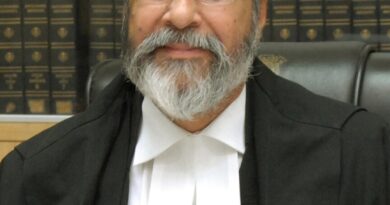
A two-judge bench of Justices M.M. Sundresh and Sheel Nagu sitting on a partial court working days roster directed that the matter be listed immediately upon the court’s reopening after the petitioner, appearing in person, sought urgent listing.
The Petition’s Opening Concern: Allegations That Wound a Generation’s Struggle
The petition begins not with legal technicality but with an acknowledgment of the emotional weight carried by the controversy it seeks to address.
It submits that whether or not the reports of missing funds and irregularities are ultimately found to be true, they have caused deep concern among the generations that struggled for decades for the restoration of Shri Ram Janmabhoomi a reclamation the petition describes as a unique and perhaps unparalleled event in world history, representing the restoration of a sacred site after centuries of dispute.
The petition places particular emphasis on the character of the funds said to be in question observing that the people of India expressed their devotion to Bhagwan Shri Ram through voluntary public contributions for the construction of the temple, and that the creation of so vast a corpus exclusively through public donation is itself an extraordinary, and perhaps unprecedented, example of collective faith and participation.
It is this collective character of the funds, the petition suggests, that elevates the question of their accounting from a matter of internal trust administration to one of legitimate public concern.
The Constitutional Argument: Dharma as the Rule of Law
In a passage of considerable philosophical reach, the petition constructs its constitutional argument through the prism of Dharma invoking Bhagwan Shri Ram as the embodiment of Dharma, and submitting that conduct considered appropriate and just by Shri Ram, having regard to time, place, and necessity, is what constitutes Dharma as a model code of conduct.
The petition draws upon the Bhagavad Gita’s declaration of divine incarnation for the establishment of Dharma, and notes that Dharma is reckoned among the six infinite attributes of the divine, alongside opulence, fame, prosperity, knowledge, and detachment.
From this foundation, the petition advances its central legal proposition that the establishment of Dharma may substantially be equated with the enforcement of the rule of law a principle the Supreme Court has repeatedly recognised as a basic feature of the Constitution of India.
On this basis, the petition submits that the general public possesses a genuine and legitimate interest in ensuring adherence to that foundational principle, and that violations thereof may warrant the Court’s intervention under Article 32 of the Constitution.
A society governed by Dharma, the petition states, invoking the maxim that justice is its own Dharma, is one in which justice remains the central object and the consistent enforcement of the rule of law, it submits, ultimately gives rise to a stable, orderly, and just social order.
The Core Grievance: An SIT Without an FIR
Having laid this constitutional foundation, the petition turns to its specific procedural objection one that goes to the evidentiary integrity of the inquiry presently underway.
The petition states that the Special Investigation Team constituted by the State of Uttar Pradesh has commenced its inquiry without the registration of any First Information Report or regular criminal case.
In such circumstances, the petition submits, the evidentiary value and admissibility of material collected during the inquiry may remain vulnerable to legal challenge potentially undermining any future prosecution that may become necessary.
The petition further submits that the scope and terms of reference of the ongoing SIT inquiry remain unclear, and argues that the initial stages of any criminal investigation are often critical to the discovery and preservation of incriminating evidence.
Delay, it submits, may create opportunities for the tampering of material evidence risks that can ordinarily be averted only through timely investigative measures such as search and seizure operations, forensic examination of records, and custodial interrogation of suspects were legally warranted.
Such measures, the petition contends, may fall beyond the effective scope of what is presently a preliminary fact-finding inquiry, conducted by administrative officers who may not possess specialised credentials in criminal investigation.
The Precedent Invoked: The TTD Ghee Adulteration Case
The petition’s most significant legal submission rests on direct analogy to a recent and closely watched precedent.
It submits that in a substantially similar factual matrix concerning allegations of the use of adulterated ghee in the preparation of prasadam (laddoos) at the Tirumala Tirupati Devasthanam the Supreme Court, by its order dated October 4, 2024 in Dr. Subramanian Swamy v. State of Andhra Pradesh & Others (Writ Petition (Civil) No. 622/2024) and connected matters, directed that the SIT constituted by the state government be substituted by an independent, multidisciplinary SIT comprising officials drawn, among others, from the Central Bureau of Investigation to function under the supervision of the Director, CBI.
The petition submits that the principles which weighed with the Court in directing that CBI-led investigation are equally attracted to the present facts given that the subject matter here, no less than in the TTD matter, concerns not only the possible commission of cognizable offences but also directly touches the faith, sentiments, and confidence of countless devotees and members of the public.
The Relief Sought: Independence, Impartiality, and Public Confidence
The petition’s ultimate prayer is for the constitution of a unified, professionally equipped investigative agency one possessing the expertise, resources, and institutional mechanisms necessary for handling complex financial and criminal investigations submitting that such an inquiry would inspire considerably greater public confidence than a preliminary probe conducted by an SIT of administrative officers.
In the interest of justice, the petition submits, an independent, impartial, and professionally conducted investigation is imperative one capable of ascertaining the truth and ensuring accountability wherever wrongdoing, if any, is found to have occurred.
A Matter of Faith Before a Court of Law
What this petition places before the Supreme Court of India are, at its heart, a request that the machinery of constitutional adjudication be brought to bear upon a controversy that lies at the intersection of public finance, religious sentiment, and institutional accountability.
Whether the Court accepts the petitioner’s invocation of the TTD precedent and whether it finds the absence of a registered FIR sufficient ground to direct a CBI-led substitution of the Uttar Pradesh SIT will turn on questions of evidentiary safeguard and investigative adequacy that the Court has addressed, in comparable circumstances, before.
What is not in dispute is the stake the petition identifies: a corpus built entirely from the voluntary devotion of millions, now the subject of unverified but unsettling reports and a petitioner’s submission that only an investigation insulated from any taint of local administrative limitation can answer, definitively, whether that devotion was honoured or betrayed.