Supreme Court Backs Women Lawyers: Nationwide Bar Rooms and Stipend Fund Proposed
(By Syed Ali Taher Abedi)
New Delhi, June 19, 2026: In a development that could reshape the institutional landscape of the Indian legal profession, the Supreme Court of India has expressed grave concern over the persistent absence of adequate facilities for women advocates across courts, tribunals, and commissions, while simultaneously proposing the creation of a national support mechanism to address the financial vulnerability of young lawyers entering the profession.
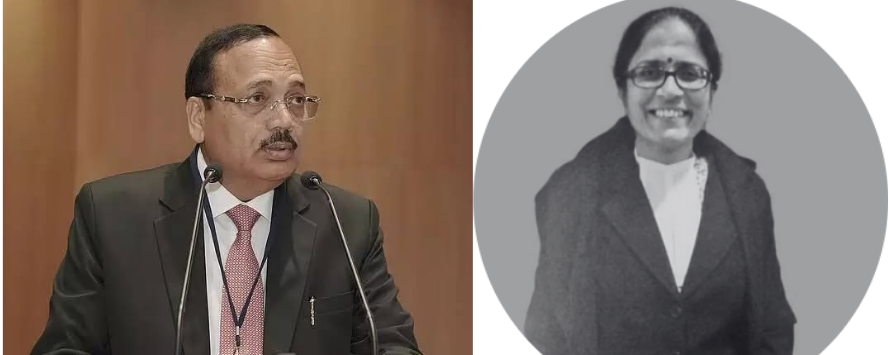
A Bench comprising Chief Justice of India Justice Surya Kant and Justice V. Mohana was hearing a petition filed by a group of women advocates practising in various courts across the country, seeking judicial intervention to address long-standing infrastructural deficiencies and systemic challenges affecting the legal fraternity.
Petition Reveals Deep-Rooted Institutional Deficiencies
The petition drew the Court’s attention to the glaring lack of dedicated and adequately equipped ladies’ Bar rooms in numerous court complexes, tribunals, and quasi-judicial bodies across India.
It further highlighted the absence of essential amenities such as proper seating arrangements, hygienic washrooms, changing facilities, and nursing rooms, thereby impeding the ability of women lawyers to function in a professional and dignified environment.
To substantiate their claims, the petitioners relied upon an extensive survey conducted through a structured questionnaire titled “Form for Basic Provisions and Amenities.”
The survey was supplemented by physical inspections of multiple court complexes, producing empirical evidence that exposed the widespread inadequacy of facilities available to women advocates.
The Bench appeared particularly persuaded by the methodical nature of the exercise, noting that the grievances raised were supported not by isolated anecdotes but by a systematic fact-finding process backed by documentary evidence and field verification.
A Question of Constitutional Dignity, Not Mere Convenience
During the hearing, the Court made it clear that the issue transcended administrative convenience and touched upon fundamental constitutional values.
The Bench observed that while the legal profession had witnessed a substantial increase in the participation of women over the years, genuine inclusivity could not be measured merely by numerical representation.
Meaningful participation, it emphasized, requires an enabling environment that permits women advocates to discharge their professional obligations safely, effectively, and with dignity.
In observations of considerable constitutional significance, the Court noted that the provision of adequate facilities for women lawyers bears a direct nexus to the right to live and work with dignity guaranteed under Article 21 of the Constitution of India. Reiterating the expansive interpretation accorded to the term “life” under Article 21 through decades of constitutional jurisprudence, the Bench indicated that dignified working conditions form an integral component of the constitutional promise of human dignity.
The observations elevate what may traditionally have been viewed as an administrative shortcoming into the realm of enforceable constitutional rights, potentially laying the foundation for a rights-based approach to judicial infrastructure across the country.
Court Recognises Financial Hardships of Young Advocates
The proceedings also brought into focus another chronic challenge confronting the legal profession the economic insecurity faced by young advocates during the formative years of practice.
The Court observed that the problem was not confined to any gender and affected a vast number of first-generation lawyers who enter the profession without the benefit of inherited chambers, established clientele, professional networks, or financial support systems.
Noting that junior advocates frequently survive on modest stipends paid by senior lawyers—often insufficient even for basic sustenance the Bench acknowledged that many talented young practitioners are compelled to abandon litigation altogether due to financial pressures.
The Court warned that such conditions contribute to a professional “brain drain,” depriving the Bar of capable legal minds and effectively restricting access to the profession to those with independent financial resources or family backing.
The observations underscore a deeper structural concern: that merit and legal aptitude are increasingly being overshadowed by economic privilege during the critical early years of legal practice.
Proposal for a National Young Lawyers’ Assistance Fund
To address this challenge, the Bench suggested the establishment of a Young Lawyers’ Professional Assistance Fund, to be administered either under the supervision of the jurisdictional High Courts or through an autonomous statutory body constituted by the Union and State Governments.
The Court envisaged a multi-source funding model, including structured contributions from successful senior advocates, allocations from court fees, and a portion of costs imposed in judicial proceedings.
To encourage participation, the Bench also suggested exploring incentives such as tax exemptions and national-level recognition for contributors.
Significantly, the proposed framework seeks to create a self-sustaining ecosystem funded substantially by stakeholders within the legal profession itself, rather than relying exclusively upon public funds.
Under the proposal, financial assistance would be extended to first-generation and economically disadvantaged advocates through monthly stipends.
Beneficiaries would simultaneously be attached to experienced senior lawyers, thereby receiving both financial support and professional mentorship.
The Court suggested that the assistance should remain available during the first three years of practice the period generally regarded as the most financially challenging for new entrants.
Thereafter, support could gradually taper off and cease altogether after six to seven years, by which stage a lawyer would ordinarily be expected to attain professional self-sufficiency.
In a particularly innovative suggestion, the Bench also proposed examining a mechanism through which beneficiaries could repay the assistance in phased instalments once financially stable, thereby replenishing the corpus and ensuring that future generations of advocates continue to benefit from the scheme.
Such a model would transform the fund from a welfare grant into a revolving institutional resource aimed at strengthening the profession’s long-term sustainability.
National Stakeholders Summoned for Assistance
Clarifying that its observations remain preliminary and illustrative in nature, the Court stated that it was not prescribing a final framework but merely identifying possible pathways for reform.
Recognising the nationwide implications of the issues raised, the Bench issued notices to all concerned respondents and requested the Attorney General for India, the Advocates General of all States, and the Standing Counsel for Union Territories to assist the Court in the matter.
The breadth of participation sought by the Supreme Court signals its intention to move beyond isolated observations and towards the formulation of a comprehensive, nationally implementable framework addressing both gender-sensitive infrastructure within the justice delivery system and the economic sustainability of the legal profession itself.
The matter is expected to assume considerable significance in the coming hearings, with the potential to influence not only court infrastructure policy but also the future architecture of professional support for young advocates across India.
Case: Sarita Tyagi v. Union of India | Court: Supreme Court of India | Bench: Chief Justice of India Surya Kant and Justice V Mohana | Date: June 19, 2026