The Sound of Silence: Why Has the BCI Not Spoken on the Hyderabad Advocate’s Killing?
(By Syed Ali Taher Abedi)
02-06-2026-The legal fraternity has long looked to the Bar Council of India (BCI) as the foremost institutional guardian of the rights, dignity, and welfare of advocates across the country.
It is for this reason that the apparent absence of any public statement from the BCI following the tragic killing of senior advocate Khaja Moizuddin in Hyderabad on May 23, 2026, has become a matter of growing concern among sections of the legal community.
Mr. Moizuddin, a respected member of the Bar, was reportedly killed in broad daylight, an incident that sent shockwaves through legal circles in Telangana and beyond.
The gravity of the occurrence would ordinarily be expected to evoke a strong institutional response, not merely as a gesture of solidarity with the bereaved family, but as a reaffirmation of the legal profession’s collective commitment to the safety and dignity of its members.
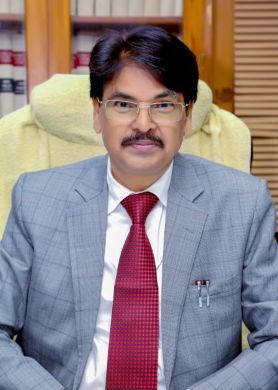
According to representations made by the Editor of Judicial Quest Magazine, several reminders were addressed to the Chairman of the Bar Council of India, Mr. Manan Kumar Mishra, and the Secretary, Mr. Srimanto Sen, seeking a formal expression of condolence and condemnation. However, no such public communication has been forthcoming thus far.
The silence assumes greater significance when viewed against the backdrop of recent events in Andhra Pradesh, where a controversy involving the arrest of a young lawyer pursuant to judicial directions elicited a prompt response from the Bar Council of India.
On that occasion, the institution acted swiftly, issuing a formal communication expressing its concerns and asserting its position on the matter.
This contrast has inevitably prompted questions within sections of the legal fraternity.
If a matter concerning the treatment of a young advocate warranted immediate institutional intervention, should not the violent death of a senior member of the Bar similarly command urgent attention and public concern?
The issue is not one of comparison between two distinct incidents. Rather, it concerns the principle of consistency in institutional response. Advocates across the country expect the apex regulatory body of the profession to speak with equal conviction whenever the safety, dignity, or welfare of lawyers is threatened, irrespective of geography, status, or circumstance.
A public statement of condolence may not alter the course of a criminal investigation, nor can it compensate for the irreparable loss suffered by a family.
Yet such statements carry symbolic significance. They reassure advocates that their representative institutions stand with them in moments of grief and crisis.
They affirm that the loss of a member of the Bar is not merely a personal tragedy but a matter of collective concern for the legal community.
The present discussion is therefore not intended as an indictment of any individual office-bearer. Rather, it is an appeal for institutional sensitivity and consistency.
The legal profession, founded upon principles of justice, fairness, and human dignity, naturally expects its representative bodies to demonstrate those values not only in moments of controversy but also in moments of tragedy.
As the legal fraternity continues to mourn the untimely death of Senior Advocate Khaja Moizuddin, many will undoubtedly hope that the Bar Council of India addresses the concerns that have arisen and reaffirms its solidarity with the members it is entrusted to represent.
For institutions, as for individuals, silence can sometimes become a subject of public scrutiny. In matters touching the life and safety of advocates, the legal community expects not silence, but a voice.