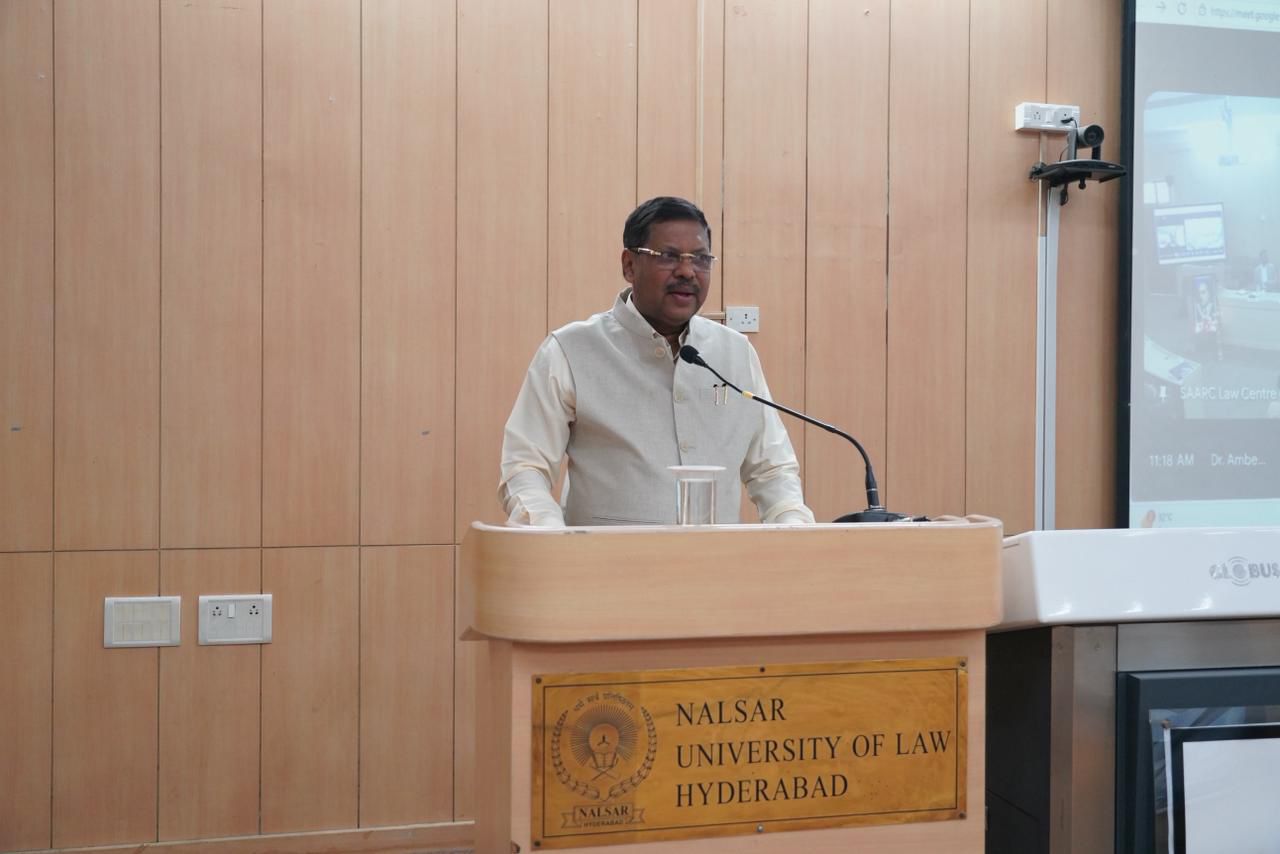
Ex-CJI Justice B. R. Gavai: Constitutional Morality Requires Tearing Down Inequitable Systems
(By Syed Ali Taher Abedi)
In a significant address linking constitutional values with contemporary development challenges, former Chief Justice of India B. R. Gavai underscored that equality under the Constitution cannot remain a mere formal guarantee but must translate into active efforts by the State and institutions to dismantle entrenched structural inequalities.
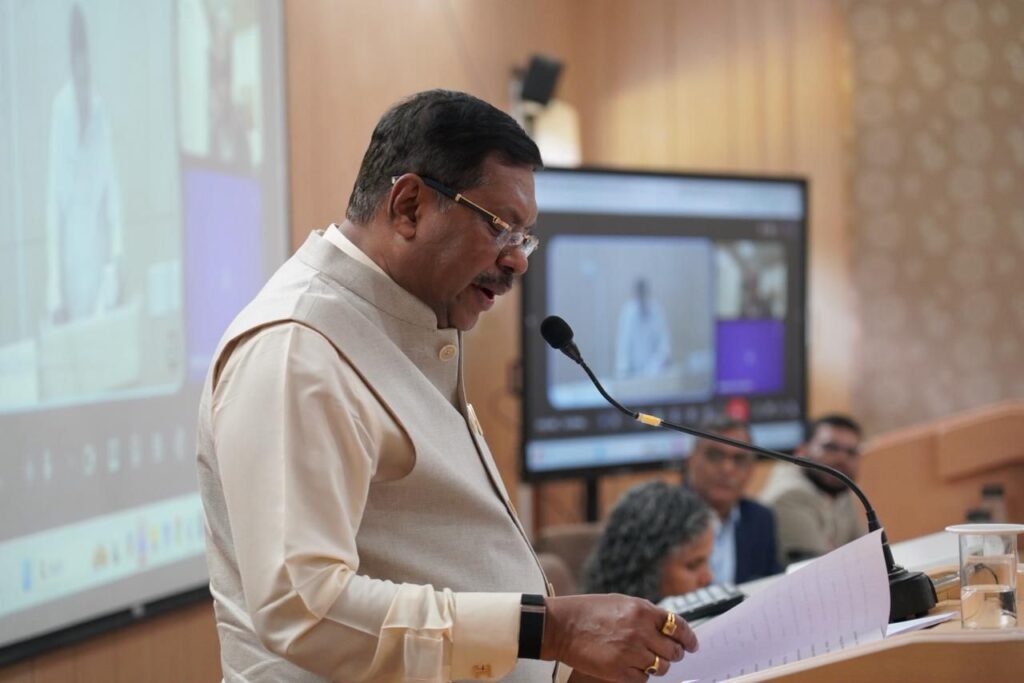
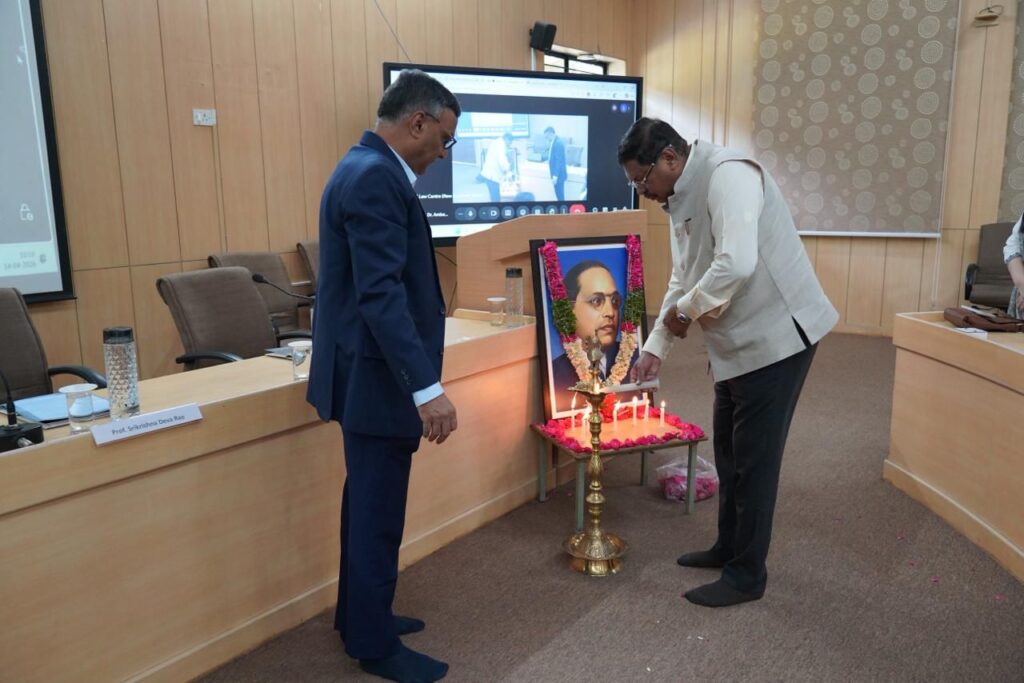
Delivering the inaugural Dr. B. R. Ambedkar Memorial Lecture titled “Sustainable Development and Substantive Equality:
“The Constitution does not envision equality as a mere formal assurance. It demands that we confront and dismantle the underlying structures that produce inequality. Substantive equality requires us to move beyond identical treatment and to recognize that those who have been historically disadvantaged require different, and often stronger, measures to ensure inclusion.”
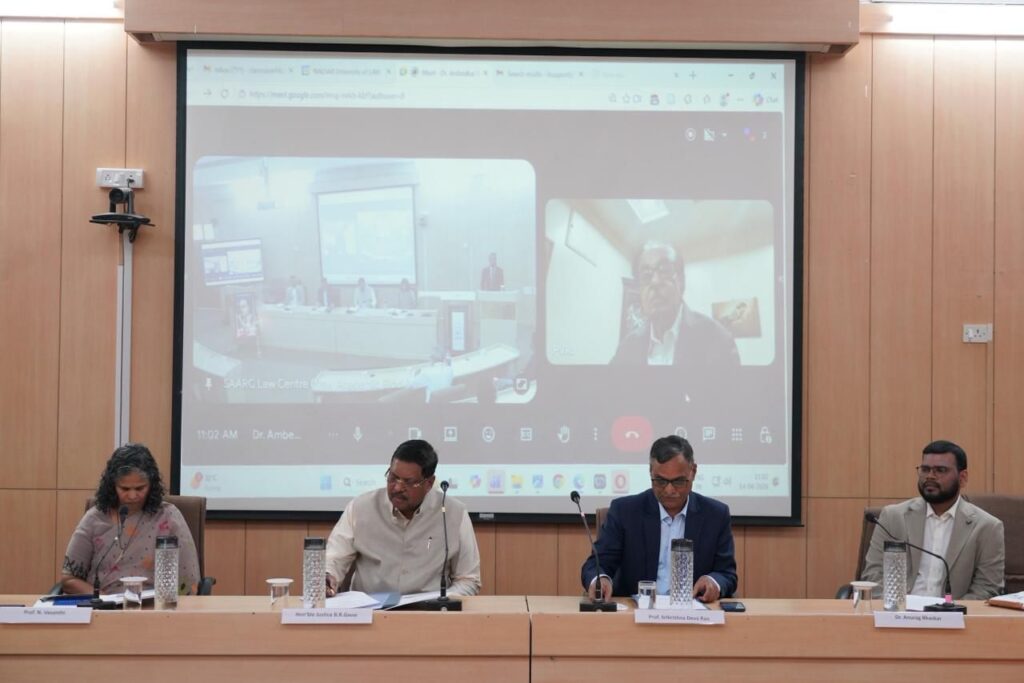
A Constitutional Dialogue” at NALSAR University of Law in Hyderabad, Justice Gavai emphasized that substantive equality lies at the core of India’s constitutional vision and must guide policymaking, governance, and development frameworks.
“Many of these women have undergone hysterectomies at a very young age, not out of medical necessity, but because the labour system effectively penalises menstruation, pregnancy, or any interruption in work.”
He explained that the constitutional promise of equality goes far beyond the formal recognition of rights. True equality, he said, requires acknowledging unequal starting points and adopting targeted measures to uplift communities historically excluded from access to opportunities and resources.
“They are exposed to extreme heatwaves, to harsh winters, to floods and droughts, without any buffer. So, whether it is 48-degree heat, extreme cold, or erratic rainfall, the experience of these conditions is fundamentally unequal.”
Justice Gavai highlighted that structural discrimination manifests in layered disadvantages affecting access to education, healthcare, employment, and institutional support.
These inequalities, he noted, are not isolated occurrences but systemic patterns that persist across generations.
“Therefore, when we think of sustainable development, we must ask more fundamental questions: development for whom, and at what cost? If development results in the displacement of marginalized communities, if it intensifies existing inequalities, or if it places disproportionate environmental burdens on those who are already vulnerable, then can it be said to be sustainable?”
Drawing attention to the “invisible cost” of development, he pointed to deeply troubling social realities.
Citing reports from Maharashtra, he referred to instances of women engaged in sugarcane harvesting undergoing hysterectomies at a young age due to harsh working conditions.
“The disparities that we see today, rooted in caste, class, gender, and geography, must not be reproduced in the environmental futures we are seeking to build.”
Similarly, he noted that Adivasi communities bear the brunt of droughts, while farmers face extreme distress including suicides due to crop losses from erratic rainfall.
“Substantive equality requires that we identify who is most affected, who is systematically excluded, and who is least able to absorb shocks, whether economic, environmental, or social.”
He further observed that water scarcity in tribal regions disproportionately impacts women, who already contend with malnutrition, limited healthcare access, and physically demanding labour.
Addressing climate change, Justice Gavai stressed that environmental degradation does not affect all sections of society equally.
“The construction worker, the sanitation worker, the domestic worker, the security guard, each of them is essential to the functioning of these urban ecosystems. Yet, they are expected to commute long distances or to live in informal settlements, often without access to basic amenities. Why is housing for workers treated as an afterthought, rather than as an integral component of development? The reality therefore is that we use their labour, but exclude them from the spaces that their labour sustains.”
While privileged groups may shield themselves from extreme heat using air conditioning, those engaged in manual or outdoor labour have no such protection, exposing stark inequalities in resilience and adaptation.
“Universities can take the lead by creating pooled insurance mechanisms, ensuring access to primary healthcare, periodic health camps, and emergency support systems. The fact that workers are “outsourced” should not become a justification for excluding them from institutional care structures.”
He argued that sustainable development must be intrinsically linked with substantive equality.
While courts have recognized various dimensions of sustainable development, he said it should be viewed as a constitutional imperative one that not only preserves resources but actively works to dismantle existing hierarchies rather than reinforce them.
Justice Gavai cautioned against adopting “one-size-fits-all” policies, warning that such approaches risk perpetuating inequalities by ignoring the diverse realities of different communities.
Critiquing current governance models, he called for a fundamental rethinking of development planning.
As an example, he noted that gated housing projects often lack policies addressing where the workers who sustain these spaces will live.
He also highlighted inequalities within academic institutions, pointing out that daily wage and contractual workers in universities frequently lack basic protections during extreme weather conditions, even as students and faculty benefit from air-conditioned facilities.
“A university committed to substantive equality,” he said, “must ensure access to shaded rest areas, clean drinking water, and humane working conditions for all workers.”
He further suggested that institutions should provide group health insurance for outsourced staff and create educational pathways for their children through scholarships, schooling support, and bridge programmes.
Justice Gavai, who also serves as Chair Professor of Constitutional Law and Social Inclusion at the Dr. B. R. Ambedkar Centre at NALSAR, revealed that he accepted the position on the condition that he would not receive any remuneration.
The lecture, grounded in the legacy of B. R. Ambedkar, reinforced the urgent need to align India’s development trajectory with the constitutional promise of justice, dignity, and equality for all.