Bridging Beggary’s Abyss: NHRC Open House Discussion Urges Judicial Lens on Rights and Reform
(By Syed Ali Taher Abedi)
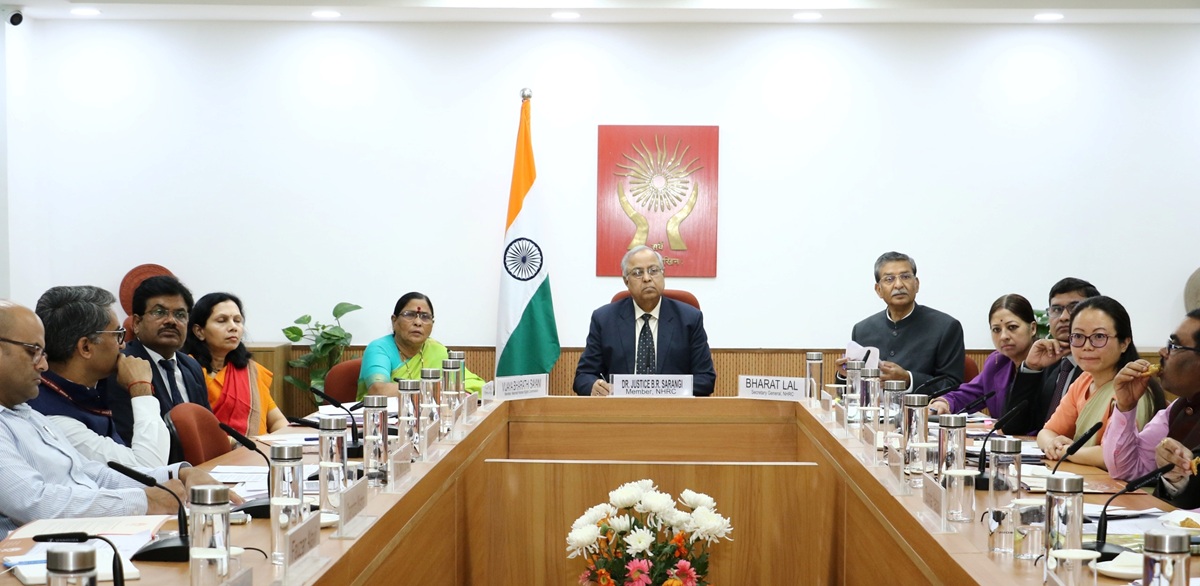
Delhi,25, February,2026- The NHRC, India on Tuesday convened a high-level Open House Discussion on “Rethinking Beggary: Bridging Gaps between Policy, Practice and Dignity”, calling for a comprehensive, rights-based response to the issue rooted in constitutional values.
Chairing the session, NHRC Member Justice (Dr.) Bidyut Ranjan Sarangi underscored that the eradication of beggary must move beyond punitive approaches and be anchored in rehabilitation, equality, dignity and social justice.
NHRC Member Smt. Vijaya Bharathi Sayani pressed for stringent action against beggary mafias and trafficking networks, stressing the primacy of long-term rehabilitation over ad-hoc, temporary measures.
Echoing the institutional resolve, Secretary General Shri Bharat Lal highlighted the urgent need to strengthen identification mechanisms and ensure the systematic linkage of individuals engaged in begging with government welfare and social security schemes.
Justice Sarangi termed begging a “social evil” and a continuing national concern, noting its persistence even in one of the world’s largest economies.
He underscored that begging is not merely an economic issue but a social malady striking at the dignity and constitutional rights of the vulnerable.
Invoking Article 14, he stressed that equality before law must extend meaningfully to those forced into begging, affirming every citizen’s right to a safe and dignified life.
While several states have enacted anti-begging laws, he cautioned that legislation alone is inadequate without tangible outcomes in rehabilitation, reintegration, and measurable social uplift.
Justice Sarangi called for a critical review of the NHRC Advisory (2024) and the Government’s SMILE-B Scheme (Support for Marginalised Individuals for Livelihood and Enterprise), questioning whether their objectives of protecting and rehabilitating impoverished children, women, and differently-abled persons engaged in begging have translated into meaningful change.
He emphasised that eliminating beggary demands a rights-based, rehabilitation-oriented approach rooted in constitutional guarantees of equality, dignity, and social protection.
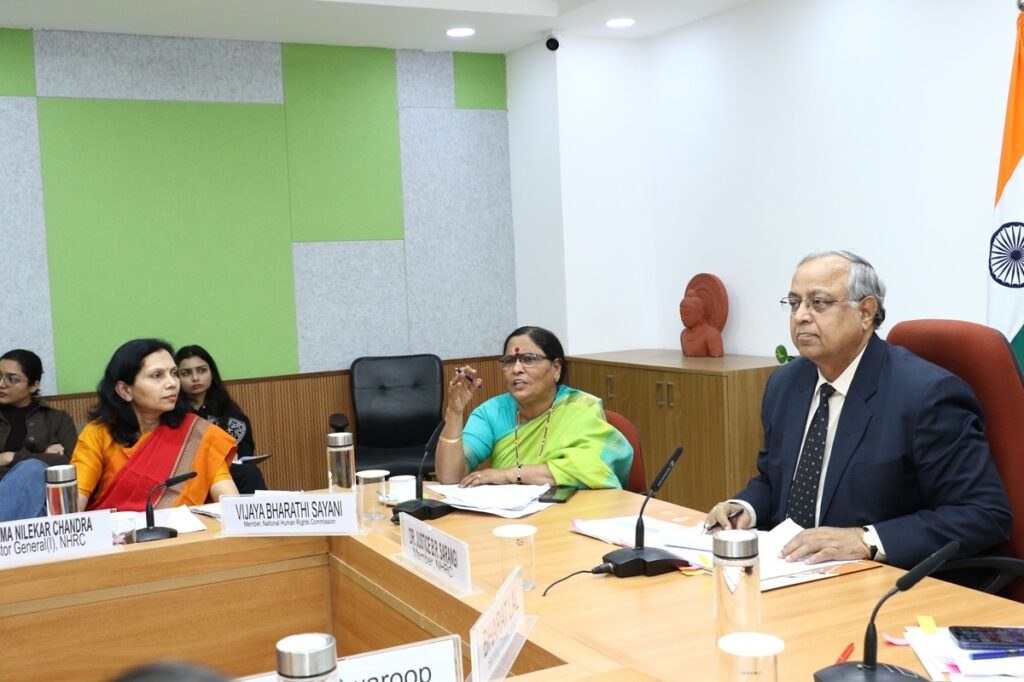
NHRC Member Vijaya Bharathi Sayani pressed for a coordinated national strategy with clear timelines and accountability, highlighting the need for a national portal and comprehensive data survey to enable effective policymaking.
She urged strict action against beggary mafias and trafficking networks, stressing that long-term rehabilitation must take precedence over temporary measures.
NHRC Secretary General Shri Bharat Lal has called for a strategic shift toward a ‘bottom-up’ collaborative model to uphold constitutional guarantees of dignity and social inclusion.
Highlighting the limitations of unilateral state action, he urged government authorities to partner with civil society in a ‘campaign mode’ to rehabilitate marginalized groups.
Specifically, the Secretary General advocated for a proactive outreach mandate—prioritizing the on-site issuance of Aadhaar cards and the systematic mapping of ‘hotspots’—to ensure the seamless integration of vulnerable individuals into the national welfare framework.
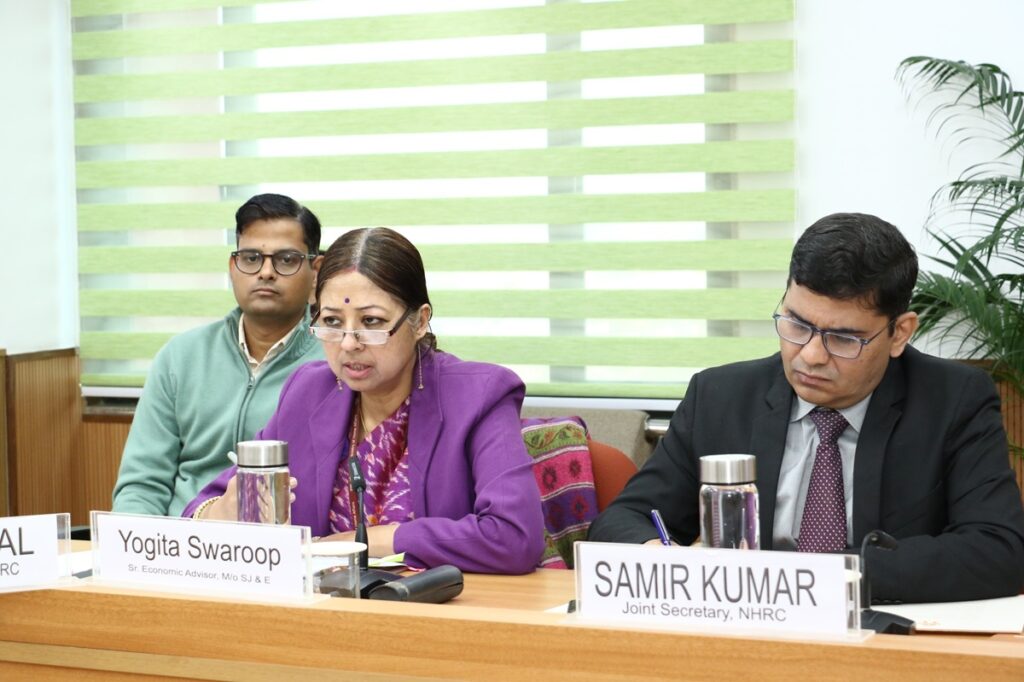
Smt. Yogita Swaroop, Senior Economic Advisor, Ministry of Social Justice and Empowerment, placed on record the 2011 Census data relating to persons engaged in begging and outlined the Government’s flagship interventions, including the SMILE Scheme, aimed at their rehabilitation, education and skill development.
She apprised the forum of the Union Government’s compliance with binding directions issued by the Supreme Court of India in beggary-related matters, reiterating the national vision of a “Begging-Free India” founded on dignity, constitutional morality and sustainable social reintegration.
Shri Shailendra Singh, Deputy Director General, Unique Identification Authority of India, highlighted UIDAI’s institutional measures to extend Aadhaar coverage to destitute persons—particularly children and persons with disabilities—so as to enable their access to statutory welfare entitlements.
He informed the gathering about two Standard Operating Procedures (SOPs framed in consultation with the Ministry of Women and Child Development and the Ministry of Social Justice and Empowerment to streamline enrolment processes, stressing the need for their wider dissemination alongside expanded UIDAI outreach camps in shelter homes to ensure inclusion through lawful identification mechanisms.
Mohd. Tarique, Founder of Koshish Trust, urged a shift in state authorities’ perspective towards beggars, emphasising the need for training and capacity-building of officials to ensure a sensitive and effective approach.
Earlier, setting the agenda, NHRC Joint Secretary Saidingpuii Chhakchhuak outlined three technical sessions: Addressing the Scope and Challenges of Beggary, Data, Documentation and Ground Realities, and Rehabilitation, Employment and Long-Term Solutions.
The participants included Shri Ajay Chaudhary, Special Commissioner of Police, Delhi;
Shri Shailendra Singh, Dy. DG UIDAI;
Shri Snehil Kumar Singh, District Collector, Kozhikode, Government of Kerala;
Col. Nikhil Sinha, Director UIDAI;
Dr. R. Giri Raj Dy. Director (T&B) NISD;
Reena Sharma, Additional Director, Social Welfare, Govt. of Rajasthan;
Smt. Sunita Yadav, Dy. Director, Department of Social Welfare, Govt. of Uttar Pradesh;
Shri Zakir Hussain, Superintendent, Social Defence;
Rahul More, Joint Commissioner, WCD, Maharashtra;
Fauzan Alvi, Advocate, NHRC;
Prof. Vijay Raghavan, Tata Institute of Social Sciences; Shri Chandra Mishra, Director, Beggars Corporation;
Mohd. Tarique, Founder, Koshish Trust; Shri Ram Kishore, Founder, Gramin Evam Nagar Vikas Parishad, Patna;
Shri Naveen Kumar, Director, Atchayam Trust;
Shri Sharad Patel, Founder, Badlaav and Ms. Shweta Sehgal, Consultant, NISD.
Some of the other suggestions that emanated from the discussions were as follows:
• Shift from penal provisions to decriminalisation and social protection-based interventions;
• Conduct periodic impact assessments of existing legislation and schemes;
• Develop a National Strategy on Beggary with defined timelines, roles, inter-ministerial convergence and measurable outcomes;
• Establish a National Portal on Beggary integrating identification, service delivery, tracking and rehabilitation outcomes;
• Undertake a nationwide survey and hotspot mapping exercise to generate disaggregated, real-time data (gender, age, disability, region);
• Accelerate Aadhaar enrolment through camp-based outreach in shelters and hotspots, ensuring inclusion of children and persons with disabilities;
• Link identified individuals with welfare databases through secure digital convergence;
• Implement the strategy in campaign mode with time-bound targets;
• Strengthen implementation of SMILE–B (Support for Marginalised Individuals for Livelihood and Enterprise) with clear rehabilitation pathways;
• Initiate strict action against organised beggary rackets and trafficking networks.
• Institutionalise training and capacity-building programmes for police, municipal authorities, social welfare officers and shelter staff to promote attitudinal change from a punitive to a dignity-centric approach; and
• Formalise partnerships with NGOs for identification, outreach, counselling and last-mile delivery.